The recent tragedy at a U.S. base in Kuwait didn't happen in a vacuum. Six American service members are dead because a facility meant to protect them lacked the basic fortifications required for a high-threat environment. When you look at the details emerging from recent media reports, it's clear this wasn't just a lucky strike by an adversary. It was a systemic failure of preparation.
We often think of American overseas bases as impenetrable fortresses. We imagine layers of concrete, advanced interceptors, and high-tech sensors. The reality on the ground is frequently much grimmer. Many "non-enduring" sites or smaller outposts operate with minimal physical protection. In this case, that lack of "hardening" turned a manageable threat into a mass casualty event.
Why Some Bases Stay Vulnerable
Military planners have a tough job. They have to balance speed, cost, and safety. But sometimes they get the math wrong. In Kuwait, the site in question reportedly lacked the T-walls and reinforced bunkers that are standard at larger hubs like Al Udeid or Camp Arifjan.
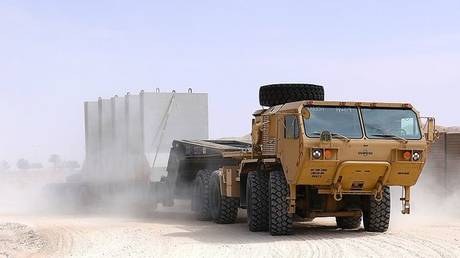
T-walls are those massive, L-shaped reinforced concrete slabs you see in every documentary about the Iraq War. They don't just look intimidating. They're designed to stop shrapnel and blast waves from traveling horizontally across a camp. Without them, a single explosion doesn't just hit one tent; it shreds everything in a 50-meter radius.
Smaller outposts often rely on "Hesco barriers"—large wire-mesh baskets filled with sand. These are great for stopping small arms fire. They're honestly pretty useless against a direct hit from a heavy drone or a ballistic missile. If the reported lack of fortifications is accurate, these troops were essentially living in soft-sided structures in a region where the threat level hasn't been "low" for decades.
The Drone Problem No One Solved
The nature of warfare changed while the bureaucracy was still filling out paperwork. For years, the biggest threat to a base in the Middle East was a stray mortar or a low-tech rocket. Today, it's the One-Way Attack (OWA) drone. These things are cheap, they're precise, and they're incredibly hard to catch if you don't have the right electronic warfare (EW) suite or kinetic interceptors.
Reports suggest the Kuwaiti base didn't just lack physical walls. It lacked the active defense layers needed to swat these drones out of the sky. This creates a "perfect storm" for disaster. If you can't stop the drone from arriving, and you don't have the concrete to survive the impact, you're just a sitting duck. It's a harsh way to put it. But it's the truth.
Pentagon officials often talk about "integrated air and missile defense." It sounds impressive. In practice, it's expensive. Most of that tech stays at the big bases where the high-ranking officers and expensive jets live. The logistics troops, the maintainers, and the "boots on the ground" at secondary sites often get the leftovers.
Budget Cuts and Political Optics
Why wouldn't we just fortify every base? It usually comes down to two things: money and the host nation's feelings.
Kuwait is a close ally. However, building a massive, permanent-looking fortress can sometimes be politically sensitive for a host government. It looks like a permanent occupation rather than a temporary partnership. This leads to a "light footprint" strategy. You stay in tents. You keep the walls low. You try not to look too settled.
Then there's the "Enduring vs. Non-Enduring" designation. If a base is labeled "non-enduring," it doesn't get the same funding for permanent construction. This is a bureaucratic loophole that kills people. If you're in a combat zone or a high-threat area, the dirt you're standing on doesn't care what the Pentagon's accountants call it. A drone strike feels the same whether the base is permanent or "temporary."
The Human Cost of Policy Gaps
Six families just got the worst news of their lives. These weren't casualties of a frontline charge or a daring raid. They died while likely resting or working in a place they were told was safe.
When media outlets report that a base "lacked fortifications," they're pointing to a choice. Someone, somewhere, decided that the risk of an attack was lower than the cost of shipping in concrete and specialized defense systems. That's a gamble made by people in offices, paid for by people in uniform.
The U.S. military has the best technology on the planet. There's no excuse for an American base in 2026 to be defenseless against drones. We have the Directed Energy (DE) weapons. We have the microwave counters. We have the concrete. We just didn't have them in Kuwait.
Fix the Perimeter or Close the Base
There's no middle ground anymore. The era of the "safe" rear-area base is over. Drones have erased the front lines.
If the U.S. is going to maintain a presence in Kuwait or anywhere else in the Middle East, every single site needs a minimum standard of protection. This means:
- Mandatory T-wall enclosures for all sleeping and dining facilities.
- Dedicated counter-UAS (Unmanned Aircraft Systems) platforms at every "non-enduring" site.
- Hardened bunkers within 10 seconds of every workstation.
If we can't afford to protect the site, or if the host nation won't allow the necessary fortifications, the mission isn't worth the risk. We can't keep sending troops to sit in plywood sheds and canvas tents in a region filled with precision-guided threats. It's time to stop treating base security like a luxury upgrade and start treating it like the baseline requirement it is.
The investigation will likely find "procedural errors" or "intelligence gaps." Don't let that distract from the physical reality. The lack of walls was a choice. The lack of air defense was a choice. We need to make better ones before the next drone launches.
Check the current threat levels and deployment standards through the Department of Defense's public briefings or the Government Accountability Office (GAO) reports on overseas base infrastructure. Demand transparency on why "temporary" sites are still being used as long-term hubs without proper hardening.