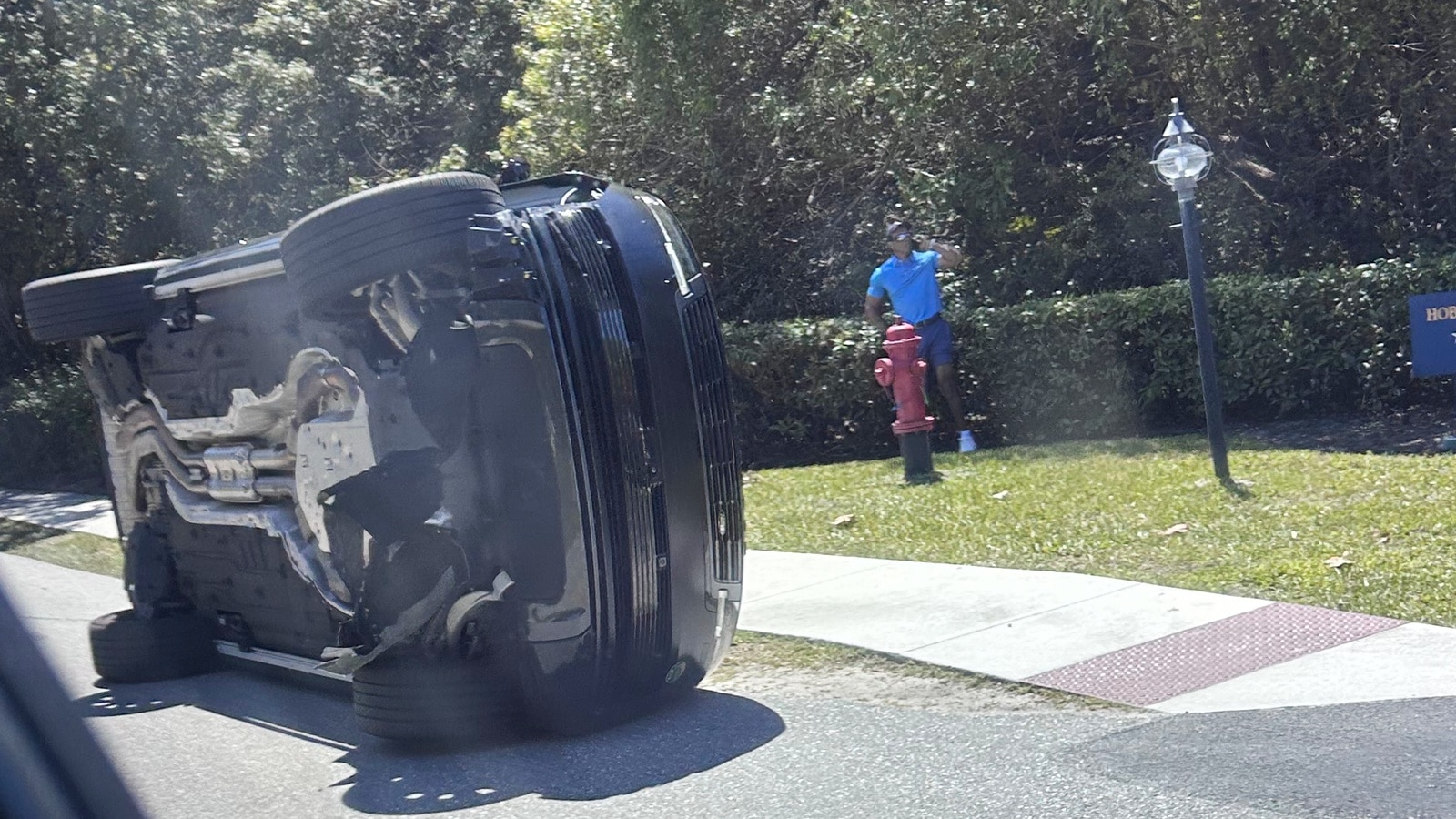
Tiger Woods isn't just a golfer. He’s a walking case study in human resilience and, frankly, the brutal physical toll of greatness. When the news broke that Woods decided to step away and seek treatment following his recent single-car crash in Los Angeles, the sports world didn't just gasp. It paused. We’ve seen this movie before, but the script keeps getting heavier.
The decision to seek professional help for "pain management" and the emotional fallout of another devastating injury isn't a sign of weakness. It’s the most logical move he’s made in years. You can't outrun a shattered leg with willpower alone. You definitely can't outrun the mental weight of realizing your body is no longer a temple, but a collection of surgical pins and scar tissue.
The physical reality of the Los Angeles crash
Let’s get real about the injuries. We aren't talking about a twisted ankle or a sore back. The rollover crash in Rancho Palos Verdes resulted in "comminuted open fractures" to both the upper and lower portions of his tibia and fibula. In plain English? His bones were broken in multiple places and pierced through the skin.
Surgeons at Harbor-UCLA Medical Center had to insert a rod into the tibia to stabilize it. They used a combination of screws and pins to put his foot and ankle back together. This kind of trauma doesn't just heal in a few months. It changes how you walk, how you stand, and certainly how you rotate your hips at 120 miles per hour.
Most people would be happy just to walk to the mailbox after an accident like that. Tiger, being Tiger, was already thinking about the Masters. That drive is what made him the GOAT, but it's also what makes this "stepping away" phase so necessary. You can't rehab a limb like that while the world is counting down the days to your next tee time.
Why the treatment focus is different this time
In the past, Tiger’s absences were usually about the "glitch" in his back or the scandal in his driveway. This time feels more somber. By seeking treatment specifically for the medications involved in his recovery, he’s acknowledging a trap that many athletes fall into.
Chronic pain is a monster. When you've had five back surgeries and now a reconstructed leg, the "standard" recovery path is paved with heavy-duty painkillers. Woods has been down this road. Remember the 2017 DUI? He had five different drugs in his system, including Vicodin and Xanax. He admitted then that he was trying to manage "back pain and insomnia."
Choosing to seek treatment now suggests he’s learned from the 2017 incident. He’s getting ahead of the problem. It’s a proactive strike against the cycle of dependency that often follows catastrophic orthopedic surgery. Honestly, it’s a move that shows more maturity than any trophy ceremony ever could.
The mental burden of the comeback trail
Imagine being the most recognizable athlete on the planet. Every time you limp, it’s a headline. Every time you miss a cut, it’s a "is he finished?" op-ed. That pressure is exhausting.
I’ve talked to sports psychologists who work with elite athletes facing career-ending injuries. They’ll tell you the hardest part isn't the physical therapy. It's the loss of identity. For thirty years, Tiger Woods has been a machine designed to win golf tournaments. When the machine breaks, who is the man left behind?
Stepping away gives him the space to answer that without a camera lens shoved in his face. He needs to be a father to Charlie and Sam. He needs to be a person who can walk without a cane. If he never wins another Major, he’s still the man who changed the sport forever. But to get to a place where he’s okay with that, he has to step out of the spotlight.
What this means for the PGA Tour
The Tour is in a weird spot. They’ve spent decades leaning on Tiger’s gravity to pull in ratings and sponsors. Without him, there’s a vacuum. Sure, we have Scottie Scheffler and Rory McIlroy, but they don't move the needle like the red shirt on a Sunday.
However, the "Tiger Effect" is currently a distraction. Every tournament he enters becomes a circus centered on his gait rather than the leaderboard. His absence allows the younger generation to actually own the stage, even if the TV ratings take a temporary hit. The sport needs to learn how to live without him, because this "stepping away" might be a permanent transition into a new phase of his life—one where he’s a host and a legend rather than a competitor.
What you should actually watch for
Don't look for practice range videos. Don't look for "anonymous sources" saying he’s hitting 300-yard drives again. Those are distractions.
The real indicators of his progress will be much quieter:
- Presence at his TGR Foundation events without looking physically drained.
- Public appearances where he isn't leaning heavily on his "good" leg.
- A lack of news—silence is usually a good sign that he’s actually doing the work in private.
Woods is 48 years old. In "golf years," that’s late middle age. In "broken body years," it’s much older. Ben Hogan came back from a horrific car wreck in 1949 to win the U.S. Open, but Hogan was 36 and didn't have five prior back surgeries. We have to stop comparing Tiger to the legends of the past and start looking at the reality of his present.
If you're a fan, the best thing you can do is stop asking when he's coming back. The man has given the sport everything. He’s earned the right to go quiet, get his head right, and manage his pain in a way that doesn't involve a pharmacy.
Take a look at his career stats if you need a reminder of why he doesn't owe us anything. 82 PGA Tour wins. 15 Majors. 683 weeks at World Number One. He’s already completed the game. Everything from here on out is a bonus, and if the "bonus" is just him living a healthy, pain-free life with his kids, we should all be rooting for that.
Stop checking the entry lists for the next three months. He won’t be there. Instead, pay attention to the youth movement on the Tour and let the man heal in peace. He’s finally prioritizing his humanity over his highlights, and that’s a win in itself.