The rain in Belfast doesn’t just fall; it inhabits the air, a grey, clingy weight that makes every streetlight look like a smudge on a dirty window. For a delivery driver, this is the environment of the "final mile." It is a technical term used by logistics companies to describe the last leg of a journey, the transition from a sterile warehouse to a stranger's front door. On a Tuesday night in the north of the city, that final mile didn't lead to a porch light or a polite "thank you." It led to the cold, oily press of a handgun against a temple.
We often view the people who bring us our parcels as extensions of an algorithm. We see the van, we hear the doorbell, we find the cardboard box on the mat. We rarely see the person. But that night, the person was everything. He was a man just trying to finish a shift, perhaps thinking about a late dinner or the warmth of his own home, when the world fractured. For an alternative look, check out: this related article.
The Anatomy of a Hijacking
It happened in an instant. There is no slow-motion buildup in real life. One moment, you are checking a GPS; the next, the interior of your cabin is crowded with the presence of someone who shouldn't be there. Two men. A weapon. A demand that defied the logic of a standard robbery.
Usually, when a delivery vehicle is targeted, the motive is the cargo. Thousands of pounds worth of electronics, clothes, or household goods sit in the back, waiting to be fenced. But these men didn't want the boxes. They wanted the driver to navigate. They didn't want him to exit the vehicle; they wanted him to become their unwitting chauffeur, a human shield behind the wheel of a branded van. Similar reporting regarding this has been shared by BBC News.
The order was chilling in its directness: "Drive to the police station."
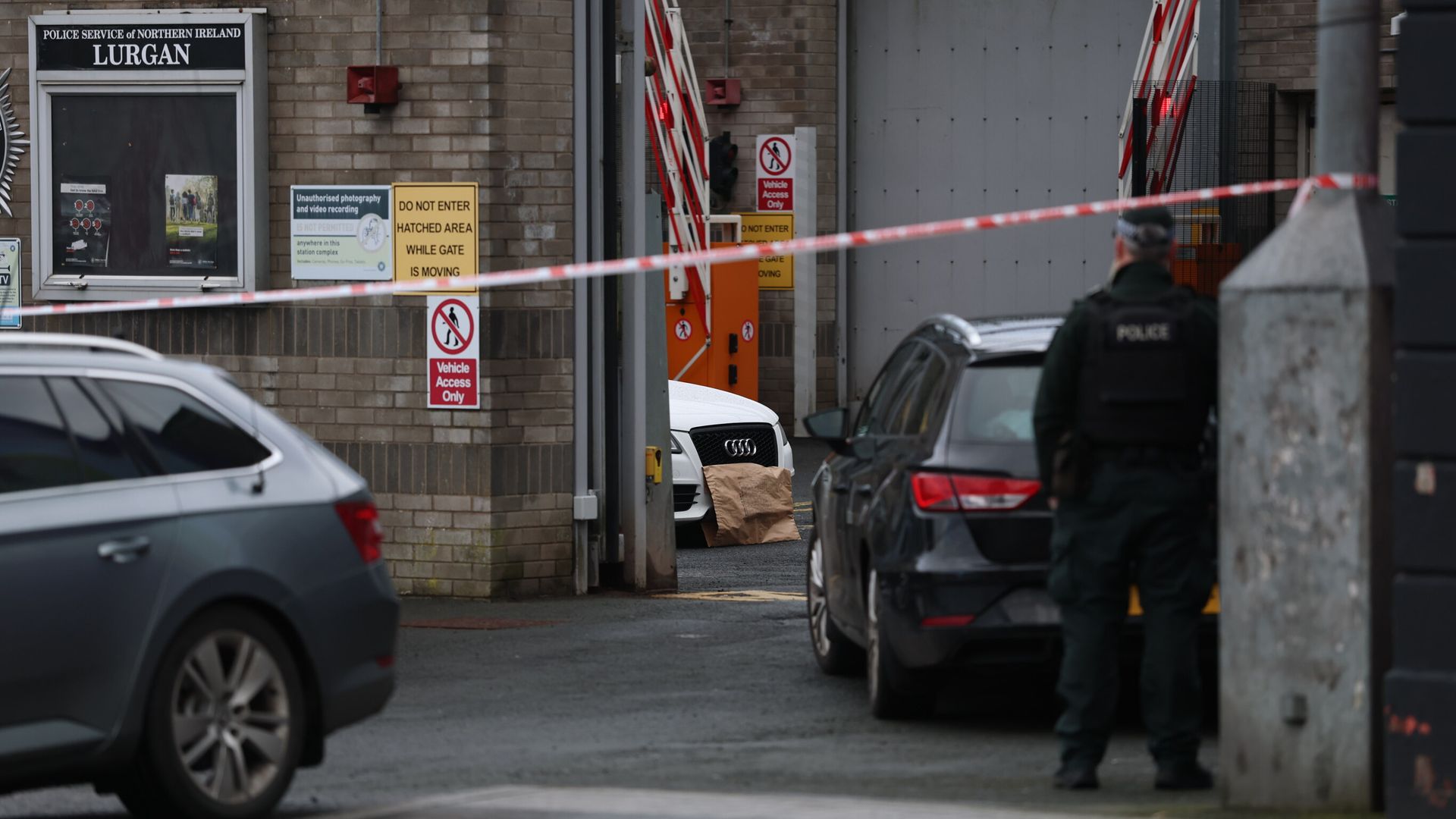
Think about the psychological toll of that command. To be forced at gunpoint to approach a high-security government building. In a region where history is written in the scars of its streets, a hijacked vehicle moving toward a police station carries a weight that far exceeds a simple theft. It carries the ghost of a car bomb. It carries the shadow of the Troubles.
The Weight of the Invisible Passenger
The driver was forced to navigate the familiar turns of North Belfast with a barrel pointed at his head. Every red light must have felt like an eternity. Every pedestrian crossing the street was a witness who didn't know they were looking at a kidnapping in progress.
The attackers were using the driver’s professional invisibility as a weapon. No one looks twice at a delivery van. They are the background noise of modern capitalism. By hijacking this specific vehicle, the perpetrators weren't just stealing a car; they were weaponizing the trust we place in the mundane.
This is the hidden cost of our "everything-on-demand" culture. We have created a massive, decentralized fleet of workers who are essentially lone wolves in the urban wild. They carry high-value goods, they work late hours, and they often operate in neighborhoods where the social fabric is frayed. While we track our packages on a map with a little digital icon, the real human being represented by that icon is navigating a reality that can turn lethal in a heartbeat.
A Community Under Pressure
The police eventually described the incident as "abhorrent." It is a word that feels too small for the experience. When the van finally reached its destination near the North Queen Street station, the hijackers fled, leaving behind a man whose life had been permanently altered in the span of a twenty-minute drive.
The physical vehicle was recovered. The packages, presumably, were eventually delivered or returned to a depot. But how do you repair the sense of safety for the person behind the wheel?
In the aftermath, the local community reacted with a mixture of fatigue and fury. This wasn't just a crime against one man; it was a strike against the neighborhood's fragile peace. When a delivery driver is targeted, the service to that entire area often stops. Companies, understandably, pull their staff out. The result is a form of "logistical redlining," where the most vulnerable citizens are cut off from the modern conveniences the rest of us take for granted because of the actions of a few.
The Human Logic of Survival
There is a specific kind of bravery in simply doing your job after something like this. We talk about frontline workers in hospitals or fire stations, but we rarely afford that same respect to the person delivering a replacement charging cable. Yet, they are the ones who interface with the unpredictability of the street every single day.
The driver in this hijacking did exactly what he had to do. He survived. He followed the instructions of the men with the gun. He moved the vehicle through the city, heart hammering against his ribs, balancing the life-and-death stakes of his own survival against the terrifying possibility of what those men intended to do once they reached the station.
In the industry, they call it "situational awareness." Drivers are trained to look for suspicious behavior, to keep their doors locked, to never leave the engine running. But no amount of corporate training prepares you for the moment the "final mile" turns into a hostage situation.
The Ghost in the Machine
The investigation continues, but the perpetrators are often long gone by the time the sirens arrive. They melt back into the labyrinth of the city, leaving the victim to pick up the pieces of a shattered nerves.
We must ask ourselves what we owe to the people who power our convenience. Is it enough to just pay the delivery fee? Or do we have a collective responsibility to ensure that the streets they navigate are safe? This incident wasn't an isolated fluke; it was a symptom of a deeper volatility.
When we hear about a hijacking, we often look at the statistics. We look at the "what" and the "where." But the "who" is the only thing that truly matters. Behind every headline about an "abhorrent" crime is a person who had to go home that night and try to explain to their family why they were trembling. A person who has to decide, the very next morning, if they can bear to turn the key in the ignition one more time.
The rain continues to fall in Belfast. Somewhere out there, another van is pulling up to a curb. A side door slides open. A package is scanned. The "final mile" begins again, silent and fraught, a journey through a world that is far more dangerous than the tracking app suggests.
The engine idles. The driver checks the mirror. The shadows on the street corner remain just shadows, for now.