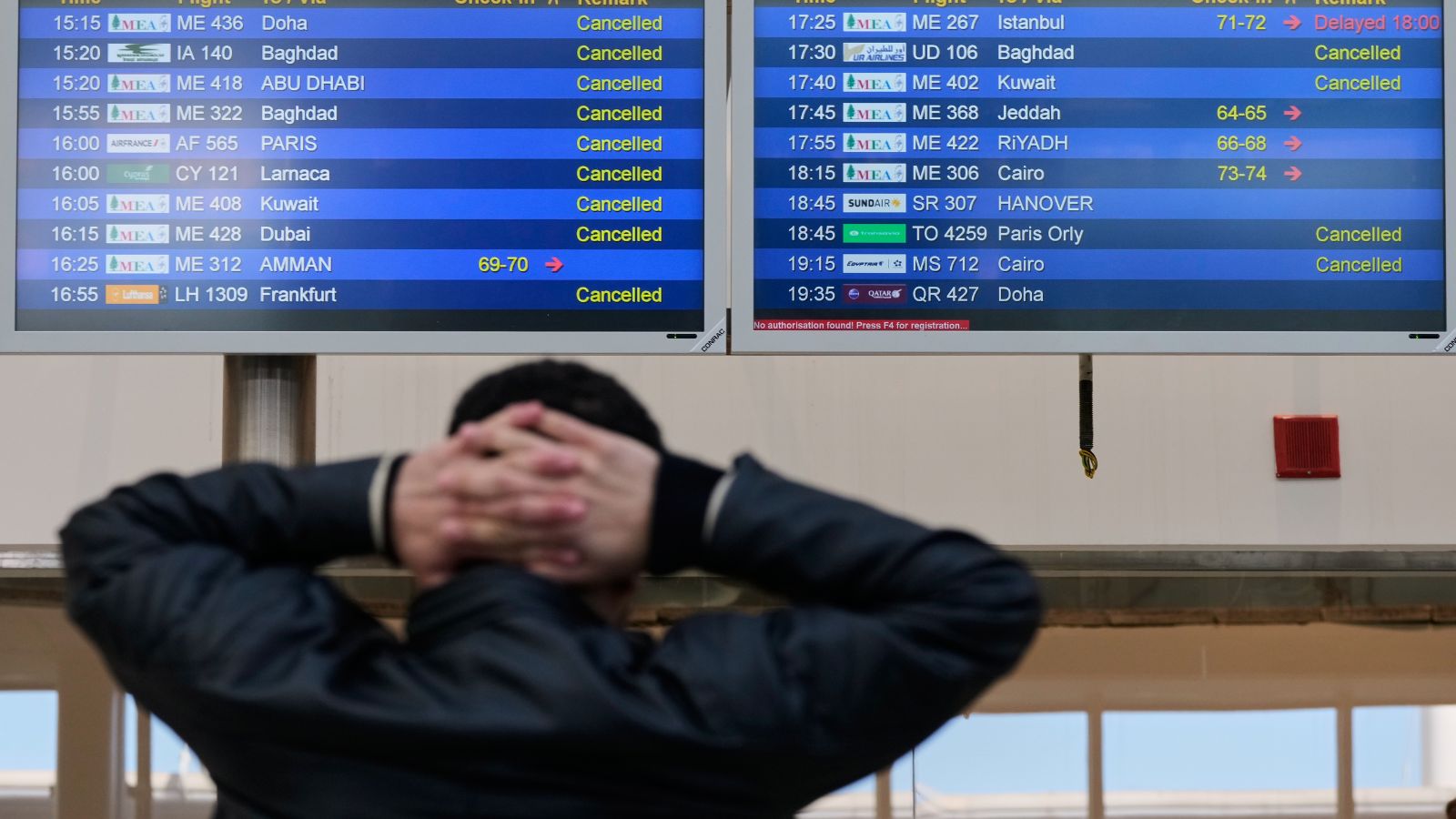
The air inside Zayed International Airport doesn’t smell like jet fuel. It smells like expensive oud, pressurized oxygen, and the sharp, metallic tang of collective anxiety. Beneath the soaring, undulating arches of the roof—a structure designed to mimic the desert dunes—thousands of people are performing a silent ritual. They are staring at the flicking lights of the departure boards.
For a few days, those boards were a sea of red. Canceled. Delayed. Indefinite.
Now, the letters are beginning to dance again. Etihad Airways has resumed its schedule. The flight paths to Amman, Tel Aviv, and Beirut are flickering back into existence. On paper, this is a press release about operational logistics and risk assessment. In reality, it is a story about the fragile threads that keep our fractured world stitched together.
The Anatomy of a Standstill
When a region catches fire, the first thing to disappear isn't the news; it's the movement. Aviation is the circulatory system of the modern age. When the skies over the Middle East darken with the shadow of conflict, the heart of global travel skips a beat.
Abu Dhabi sits at the literal crossroads of the planet. If you are flying from London to Sydney, or Mumbai to New York, there is a high statistical probability that your life will intersect with this specific patch of sand. When Etihad grounds a fleet, it isn't just a corporate hiccup. It is a severance of ties for the student trying to get home for a funeral, the surgeon traveling for a life-saving transplant, and the family caught in the wrong city at the absolute worst time.
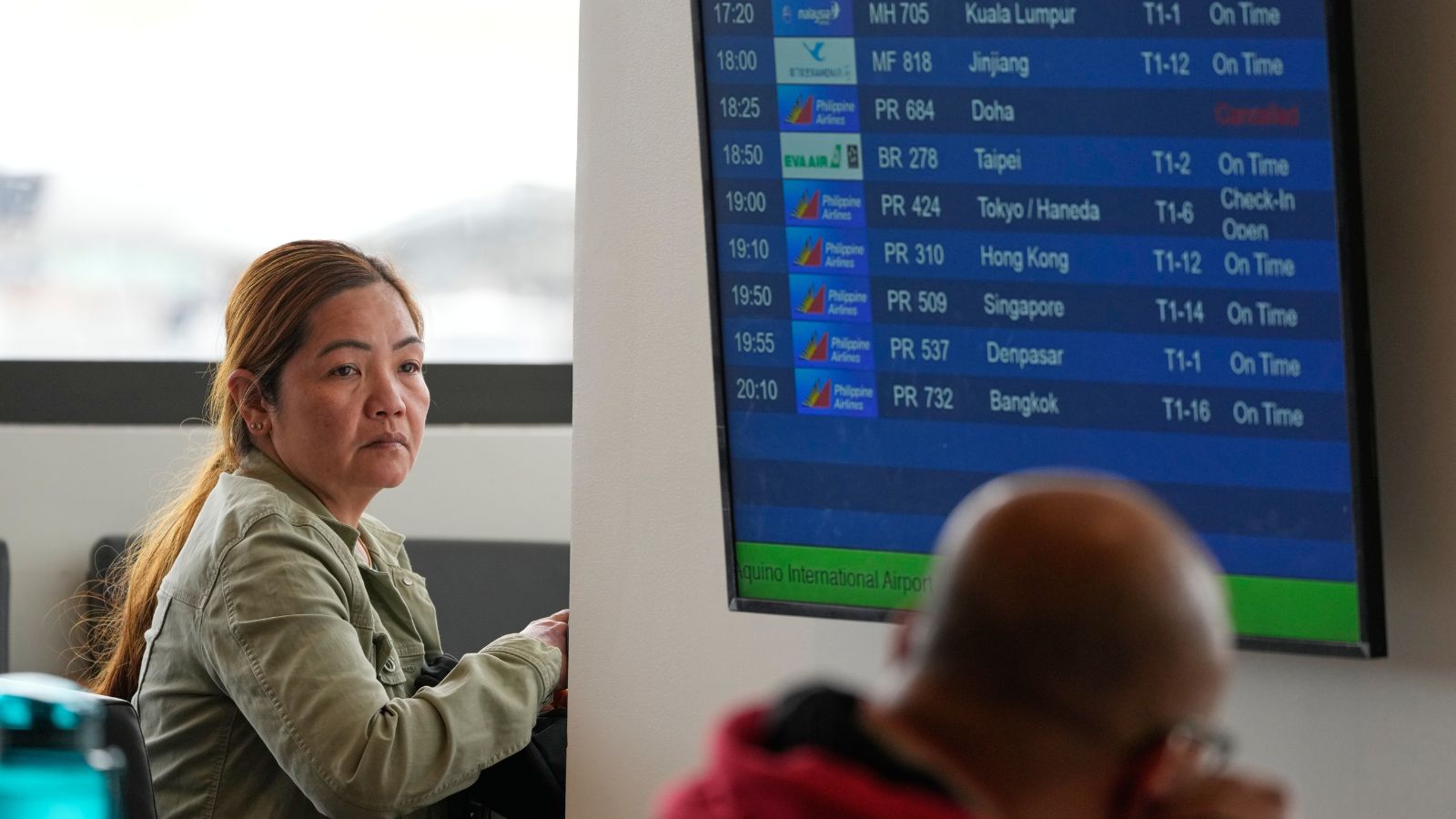
Imagine a passenger named Sarah. This is a hypothetical scenario, but she represents thousands who sat on the cold floor of Terminal A last night. Sarah isn't thinking about "geopolitical instability" or "strategic airspace management." She is thinking about her phone battery, which is at 12%. She is thinking about her daughter in Amman. She is wondering if the vibration she feels in the floor is a heavy luggage cart or something much more sinister happening hundreds of miles away.
For Sarah, the announcement that flights are resuming isn't a business update. It is a gasp of air after being underwater.
The Invisible War of Logistics
We often view airlines as massive, impersonal machines. We see the logo, the uniform, and the price tag. We rarely see the room where the decisions are made. Picture a bunker-like command center where meteorologists, former fighter pilots, and data scientists stare at screens that look like a high-stakes game of Tetris.
Every time a missile is launched or a drone enters restricted airspace, these planners have to redraw the map of the world in real-time. They aren't just looking for the fastest route; they are looking for the safest one.
The decision to resume flights into a conflict zone is a calculated gamble, backed by millions of dollars in intelligence. It requires a level of confidence that borders on the prophetic. If they fly too soon, they risk a catastrophe that would dwarf any financial loss. If they wait too long, they leave thousands stranded and lose their grip on the global market.
Resuming service to places like Tel Aviv or Beirut during an escalation is an act of defiance. It is a statement that the machinery of civilization will not be ground to a halt by the machinery of war.
The Cost of the Empty Middle Seat
The financial reality is staggering. An airline like Etihad operates on margins that would make a tightrope walker nervous. When airspace closes, fuel costs skyrocket because planes have to take "the long way around."
Think of it like a detour on a highway. If the main bridge is out, you might have to drive an extra fifty miles. Now, imagine that "car" is a Boeing 787 Dreamliner that burns thousands of pounds of fuel every hour. Multiply that by a hundred flights a day. The numbers stop being math and start being a crisis.
Yet, the resumption of flights is also a psychological turning point. In the Middle East, the airport is the barometer of peace. If the planes are landing, there is hope. If the runways are empty, the worst is yet to come.
When the first Etihad flight touched down in Amman following the recent hiatus, it wasn't just delivering mail and tourists. It was delivering a message: the gates are open. The world is still turning.
A Sky Divided
The complexity of these routes is mind-bending. The sky is not a free-for-all; it is a meticulously gridded territory of "Flight Information Regions" (FIRs). Some of these grids are currently "black zones."
Navigating from Abu Dhabi to Europe right now is like trying to walk through a room full of moving lasers without touching one. Pilots are essentially diplomats in cockpits, communicating with air traffic controllers across borders that are, on the ground, deeply hostile to one another.
This is the hidden miracle of aviation. In the sky, the animosities of the earth are—by necessity—set aside. A controller in an enemy nation still guides a commercial jet through their airspace because the alternative is chaos that no one can afford.
The Human Weight of the Return
The resumption of service brings a specific kind of chaos to the terminal. It is the chaos of relief.
You see it in the check-in lines. There is a frantic energy, a desperate need to be on the first plane out, just in case the window of peace slams shut again. The ground staff at Zayed International aren't just processing passports; they are managing human trauma. They are looking into the eyes of people who haven't slept in forty-eight hours, people who are terrified that their home might not be there when they land.
It is easy to get lost in the statistics of "passenger load factors" and "on-time performance." But those metrics fail to capture the sound of a grandmother weeping as she finally boards a plane to see her family in Lebanon. They don't record the silence of a businessman who has lost a week of work but gained a lifetime of perspective on what truly matters.
The "resumption of flights" is a sterile phrase. A better one would be "the restoration of the bridge."
The Desert’s New Gate
Abu Dhabi’s new terminal was built to be a monument to the future. It is a palace of glass and steel, designed to handle 45 million passengers a year. It represents the UAE's pivot away from oil and toward a future as the world’s central nervous system.
But a gate is only as good as the path it leads to.
When the conflict escalated, this multi-billion dollar masterpiece felt like a gilded cage. Now, as the engines roar back to life on the tarmac, the building regains its purpose. It ceases to be a destination and becomes a transition.
The pilots walking through the terminal today carry a heavier burden than usual. They aren't just flying a machine; they are navigating a geopolitical minefield. They are the ones who have to look out the window and see the flares of conflict in the distance, while maintaining a calm voice over the intercom to tell passengers that they will be landing in twenty minutes.
The Fragile Normal
We live in a world that assumes connectivity is a birthright. We expect to be able to book a ticket and be on the other side of the planet by tomorrow morning. We treat the sky as an infinite, empty highway.
Events like this remind us that the highway is paved with diplomacy, luck, and the tireless work of people we will never meet. The resumption of Etihad’s flights isn't a return to "business as usual." There is no "usual" in a region that is constantly shifting like the dunes that inspired the airport’s roof.
Instead, it is a return to a fragile normal. It is a victory of the mundane over the catastrophic.
As the sun sets over the Persian Gulf, painting the glass of the terminal in shades of violet and gold, a heavy jet lifts off the runway. It retracts its gear and banks toward the west. Below it, the lights of the city glitter like fallen stars. Inside, three hundred people are finally exhaling. They are moving again. They are crossing borders that, for a few days, were impassable.
The board in the terminal flickers. Another flight has changed from "Delayed" to "Boarding."
The rhythm of the world continues, one takeoff at a time, held together by nothing more than a shared, desperate need to keep moving toward home.
Would you like me to analyze the specific economic impact these route changes have on the wider aviation industry in the Gulf?