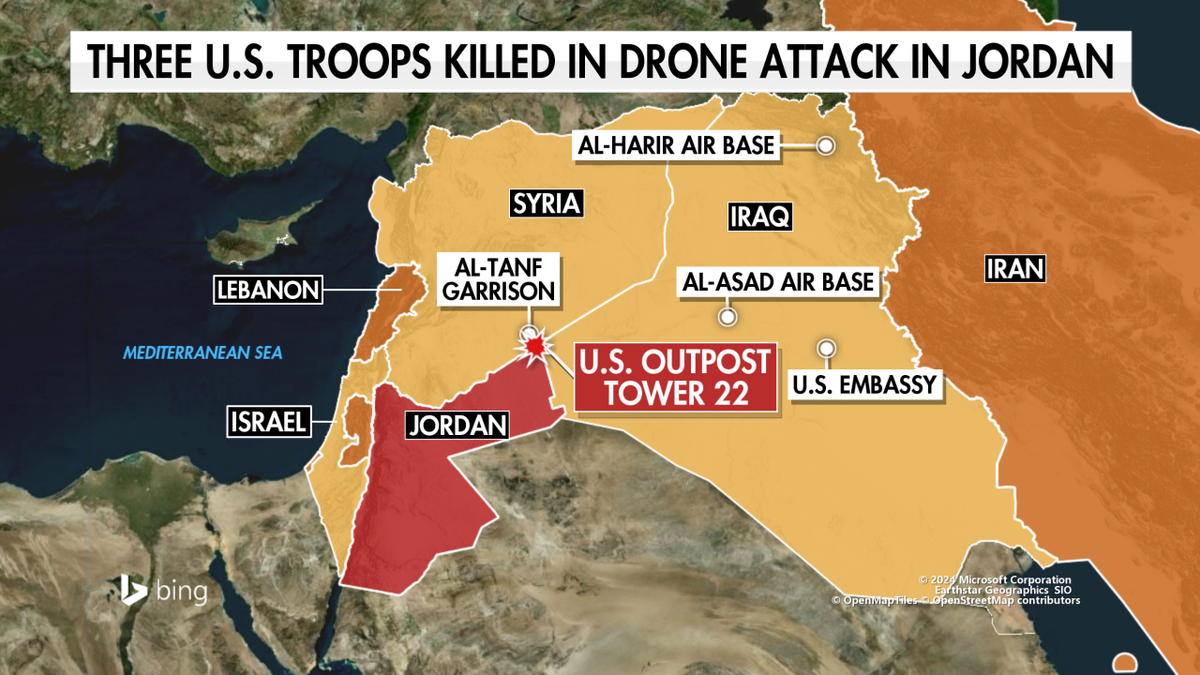
The precision strike that leveled a high-security facility in Tehran was not just another tactical exchange in the long-running shadow war between Israel and Iran. This operation hit at a moment of extreme political fragility. For months, the Assembly of Experts has been quietly debating the line of succession for the Supreme Leader. By timing an kinetic action against a site linked to the internal security apparatus during these sensitive deliberations, the message sent was clear. Total surveillance is a myth.
The targeted building served as a node for the Islamic Revolutionary Guard Corps (IRGC) communications, specifically those used to secure high-level political meetings. While initial reports focused on the physical destruction, the deeper impact lies in the psychological breach. When a state cannot guarantee the safety of its most guarded corridors during a transition of power, the foundation of its authority begins to crack.
Intelligence Breaches and the Myth of Fortress Tehran
The technical execution of this strike suggests a profound level of local intelligence. For a missile or drone to penetrate the multi-layered air defenses of the capital and hit a specific structure without collateral damage to neighboring residential blocks requires real-time data. This isn’t just about satellite imagery. It is about "human on the ground" confirmation.
The IRGC has spent the last decade building what they described as an impenetrable domestic security grid. They invested heavily in Russian-made S-300 systems and indigenous variants like the Bavar-373. Yet, the strike bypassed these hurdles with an ease that suggests the defensive software was either spoofed or the flight paths were calculated using blind spots known only to those with internal access.
This creates an atmosphere of paranoia within the Assembly of Experts. If the building next door can be vaporized, every cleric and general in the room must wonder who among their staff is on a foreign payroll. The "selection" process for a new Ayatollah is already a cutthroat game of clerical maneuvering. Now, it is being played in a room where the walls have ears and the ceiling might disappear at any moment.
The Succession Vacuum
Ali Khamenei is 86. The urgency to find a successor is no longer a matter of long-term planning; it is a daily crisis. The IRGC wants a hardliner who will maintain the status quo and protect their vast economic interests. More traditional clerical factions want to preserve the religious legitimacy of the office.
The strike complicates this math by making the "security" candidates look weak. If the IRGC’s primary job is to protect the heart of the revolution and they fail to do so in the middle of Tehran, their leverage in the succession debate weakens. We are seeing a shift where the military wing’s failure to prevent Israeli incursions allows civilian or more moderate religious figures to argue for a change in strategy.
Historically, when the Iranian regime feels cornered, it lashes out. However, the current economic state of the country limits their options. Inflation is rampant, and the rial has hit record lows. A full-scale war would likely trigger the very domestic uprising the IRGC fears most. Consequently, the response to this strike will likely be asymmetric—cyberattacks, proxy strikes in the Levant, or accelerated enrichment—rather than a direct military confrontation that they are ill-equipped to win.
Cyber Warfare and the Infrastructure of Control
The kinetic strike was likely preceded by a massive, unseen cyber operation. To blind the radars over Tehran for even a few minutes requires a level of digital infiltration that most nations cannot fathom. Israel’s Unit 8200 has long been rumored to have mapped the Iranian power grid and communication backbones.
- Signal Jamming: The use of localized electronic warfare to disrupt drone sensors.
- Data Exfiltration: Extracting the guest lists and meeting minutes from the targeted facility before its destruction.
- Physical Sabotage: The possibility of "pre-planted" components within the Iranian supply chain that can be activated remotely.
This isn't speculative fiction. The Stuxnet virus showed the world that the Iranian nuclear program was vulnerable from the inside. This recent strike proves that the vulnerability extends to the very buildings where the future of the country is being decided.
The Role of Modern Munitions
The debris at the site indicates the use of low-collateral, high-precision ordnance. These are not the "dumb bombs" of the previous century. We are looking at munitions that use a combination of GPS, inertial guidance, and terminal or optical sensors to hit a specific window.
By using such precise tools, the attacker avoids the international outcry that follows civilian casualties. It is a surgical removal of a political and military asset. This precision allows for a "clean" assassination or destruction that serves as a grim advertisement for Western and Israeli defense technology. It tells the Iranian leadership that their bunkers are merely high-priced tombs.
Regional Realignment and the Silence of Neighbors
Perhaps most telling is the reaction—or lack thereof—from the rest of the Middle East. Years ago, a strike on Tehran would have prompted immediate and fiery condemnations from every capital in the region. Today, there is a palpable silence.
The Abraham Accords changed the chemistry of regional politics. Many Gulf states now view Iran as a greater threat than Israel. While they will never publicly applaud a strike on a sovereign capital, the back-channel communications suggest a different story. There is a quiet satisfaction in seeing the IRGC’s wings clipped, especially as Iran continues to fund Houthi rebels and other destabilizing proxies.
The Assembly's Dilemma
The men sitting in the Assembly of Experts are now facing a choice between two paths:
- Double Down: Appoint a militant leader who will escalate the "Resistance" and risk a total war that could end the regime.
- Retreat and Reform: Seek a candidate who can de-escalate with the West to save the economy, even if it means sacrificing some of the revolution's more aggressive goals.
The strike was a vote for the latter, delivered by fire. It was designed to show that the cost of the "Double Down" path is personal and immediate.
The Intelligence Gap
The failure of Iranian counter-intelligence cannot be overstated. For a strike like this to happen, there had to be a total breakdown in internal security. The IRGC has spent years purging "infiltrators," yet the breaches only seem to get more audacious.
This suggests that the dissatisfaction within the Iranian state is not limited to the students on the street. It has reached the mid-to-high levels of the military and intelligence services. When the people responsible for your safety are the ones handing over the blueprints to your enemies, no amount of anti-aircraft batteries will save you.
The next few weeks will be telling. Watch the obituaries in the state-run media. Watch the "unexplained" fires at other government facilities. The strike in Tehran was a single event, but it is part of a broader unraveling. The transition of power in Iran is no longer a private affair conducted in a smoke-filled room. It is a public demonstration of a regime's declining ability to control its own destiny.
The Assembly of Experts must now decide if they want to lead a nation or rule over a target. Every hour they spend debating the next Supreme Leader is an hour their adversaries spend refining the coordinates for the next strike. The clock is not just ticking; it is being synchronized with a satellite.
Verify your own security protocols before assuming the person next to you is an ally.