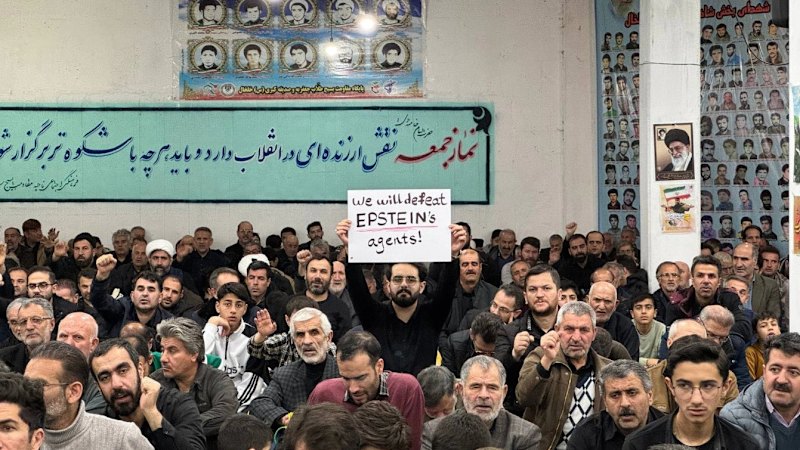
The Iranian regime has found its most potent weapon of the decade, and it has nothing to do with uranium enrichment. By weaponizing the lingering trauma and explosive conspiracy theories surrounding the Jeffrey Epstein sex trafficking scandal, Tehran’s digital operatives are successfully eroding Western institutional trust at a rate traditional propaganda never could. This is not just a flurry of angry tweets; it is a sophisticated, multi-layered psychological operation designed to rebrand Western leadership as a "pedophile elite" to justify Iranian military escalation and delegitimize democratic response.
The timing is surgically precise. As the conflict between the United States, Israel, and Iran reached a fever pitch in early 2026—following the strikes on Iranian nuclear facilities and the subsequent death of Supreme Leader Ali Khamenei—Tehran needed a narrative that resonated beyond its borders. They found it in the unsealed DOJ files related to Epstein. By flooding social media with AI-generated videos and doctored documents, Iranian state-linked accounts have convinced a startling percentage of the global public that the current Middle Eastern war is merely a "smokescreen" to protect high-level predators.
The Operation Epstein Fury Blueprint
Internal intelligence reports and independent digital forensic audits reveal a massive uptick in coordinated activity using the hashtag #EpsteinFury. The goal is simple: transform a complex geopolitical conflict into a visceral, moral crusade against what Iranian media calls the "Epstein regime."
The machinery operates through three primary channels:
- Shadow News Networks: Organizations like "HDX News" and "GPX News"—later identified by the Institute for Strategic Dialogue (ISD) as pro-Iran fronts—churn out high-production value clips. These videos often feature AI-generated likenesses of Western leaders in compromising, albeit fictional, settings on Little St. James island.
- The Distraction Narrative: This is the most effective hook. It posits that the U.S. military’s "Operation Epic Fury" was launched solely to bury a new wave of Epstein evidence. Data for Progress polling from March 2026 suggests this narrative is working; over 50% of surveyed Americans now believe the war is at least partially a distraction from domestic scandal.
- Antisemitic Synthesis: Leveraging Epstein’s Jewish background, the propaganda machine has successfully fused old-world tropes with modern rage. They present the conflict not as a defense of national interests, but as a "Zionist-rooted" conspiracy to protect a global blackmail ring.
Beyond Bots: The Asymmetric Advantage
What makes this campaign more dangerous than Russian "troll farms" of the past is its ability to co-opt existing Western skeptics. Iranian operatives no longer need to invent a grievance. They simply find a raw nerve—like the public's very real frustration over the lack of accountability in the Epstein case—and apply salt.
When the medical technology giant Stryker Corp was hit by a suspected Iran-linked cyberattack in March 2026, the hackers, operating under the persona "Handala," didn't just claim a technical victory. They issued a manifesto calling Stryker a "central ring in the New Epstein chain." This blending of hard cyberwarfare with psychological operations (PsyOps) creates a feedback loop where every physical strike is interpreted through a conspiratorial lens.
The Iranian Ministry of Intelligence and the IRGC have essentially outsourced the heavy lifting of their propaganda to the Western "alt-media" ecosystem. High-profile commentators and podcasters, often inadvertently, amplify these Tehran-seeded talking points because they drive engagement. A 30-second clip alleging a connection between a drone strike in Isfahan and a "missing" Epstein hard drive is more likely to go viral than a dry analysis of regional power dynamics.
The Architecture of the Fake
The technical sophistication of these "deepfakes" has crossed a threshold. In February 2026, a video began circulating that appeared to show a high-ranking U.S. official admitting on a hot mic that the Iran invasion was "the only way to keep the names in the files redacted."
Forensic analysis later proved the audio was a high-fidelity synthetic clone, and the "leaked" document shown in the background was a composite of real DOJ headers and fabricated text. Yet, by the time the debunking occurred, the video had 4.7 million views on X and had been shared by several state-level politicians in Europe and South America.
Why the West is Losing the Information War
Western responses have been predictably sluggish. While tech platforms like X and Meta have suspended dozens of accounts, the Iranian strategy is built for resilience. For every "HDX News" that is shuttered, three more "independent" citizen-journalist accounts emerge, often operating from server clusters in jurisdictions that ignore Western legal requests.
Furthermore, the "Epstein Distraction" narrative is effectively "uncancelable." If a government agency denies the connection, the propaganda machine labels the denial as further proof of the cover-up. It is a closed-loop logic system.
The Iranian regime has recognized that in 2026, you don't need to win a dogfight over the Persian Gulf if you can win the battle for the American subconscious. By tying their survival to the most polarizing scandal of the century, Tehran has ensured that as long as the Epstein mystery remains unsolved, their propaganda will have a permanent, fertile home in the West.
Would you like me to analyze the specific AI tools used by the Handala group to generate these deepfake narratives?