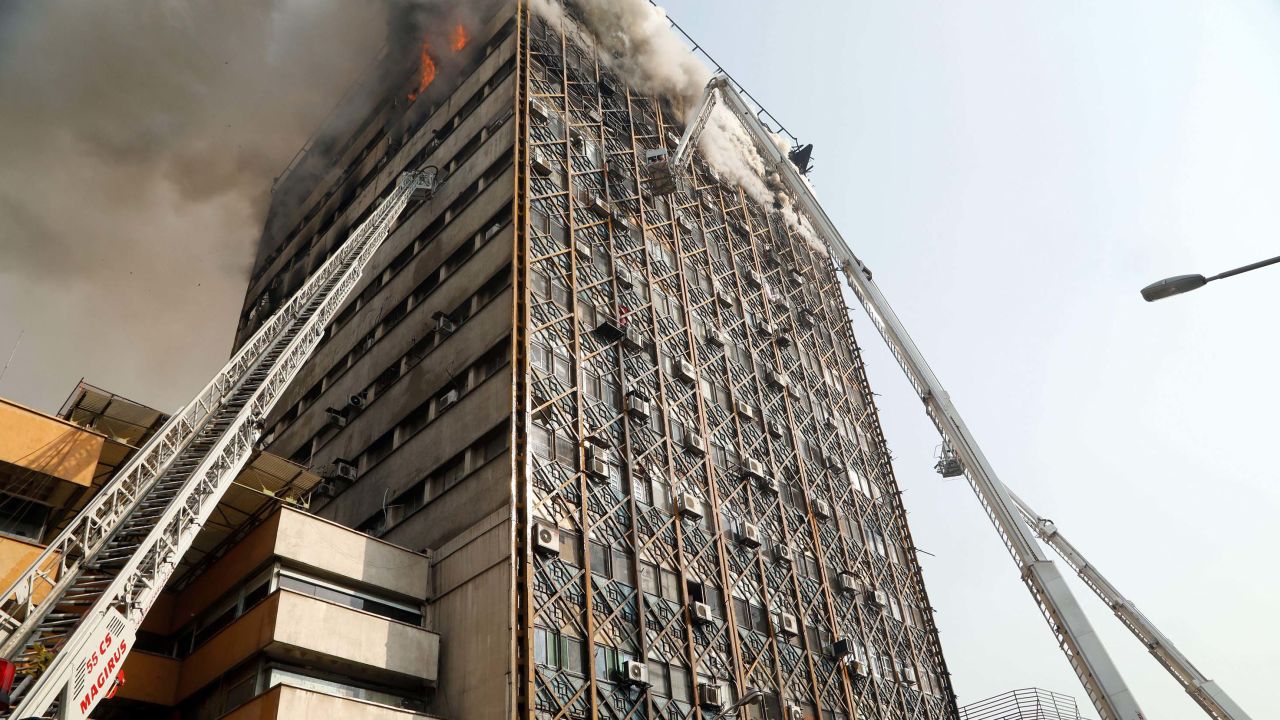
Survival isn't about luck. It's about physics, cellular resilience, and the sheer grit of search teams who refuse to stop digging when the world says it’s over. When a multi-story building in Tehran pancaked recently, the clock started ticking against the weight of several hundred tons of reinforced concrete. Most people assume that being buried under a collapsed structure is an immediate death sentence. It isn't. The moment rescuers pulled a man alive from the Tehran rubble, they proved once again that the human body can endure the unthinkable if a few specific variables align.
This wasn't just a "feel-good" news snippet. It was a masterclass in urban search and rescue (USAR) and the brutal reality of the "Golden 72 Hours." If you’re following these stories, you need to understand that finding someone alive after two days isn't just a miracle—it's the result of highly technical seismic listening and the way concrete fractures during a structural failure. For an alternative view, see: this related article.
Why some people survive while others don't
Structural collapses in Tehran often involve older masonry or poorly reinforced concrete. When these buildings come down, they don't always turn to dust. They create what experts call "void spaces."
A void space is a pocket of air formed when large slabs of floor or wall lean against each other rather than laying flat. Think of it like a house of cards. If a heavy wardrobe or a refrigerator takes the weight of a falling ceiling, it creates a triangular gap. That gap is the difference between life and death. The man found in Tehran was likely shielded by one of these accidental structural anchors. Related insight on this matter has been provided by Reuters.
Survival depends on three main things. First, you need air. If the dust is too thick, you suffocate in minutes. Second, you need to avoid "crush syndrome." This happens when limbs are compressed for too long, causing toxins to build up in the muscles. When the pressure is finally released, those toxins hit the heart and kidneys like a freight train. Rescuers have to be incredibly careful. They don't just lift the debris; they often have to start IV fluids before the person is even fully out.
The tech that found him under the dust
You might have seen the footage of rescuers calling for silence. It’s a haunting moment. Everything stops—the heavy machinery, the shouting, the sirens. They use seismic acoustic sensors that can pick up a heartbeat or a faint scratch through meters of debris.
In the Tehran rescue, the team used a combination of these sensors and specialized K9 units. Dogs are still better than most machines at catching the scent of "live " cells. While drones and thermal imaging are great for surface finds, they can't see through six feet of solid concrete. That’s where the "listening" comes in. The man survived because he had the presence of mind to tap on a pipe or a piece of metal. Never scream if you're trapped. It wastes oxygen and wears you out. You tap. You rhythmically hit something metallic.
The psychological wall
We often forget the mental state of someone buried in total darkness. You lose track of time within three hours. The cold starts to set in. In Tehran, night temperatures can drop significantly, and being pinned against cold concrete leeches the heat right out of your core.
The man rescued wasn't just physically strong. He was mentally disciplined. Survivors of long-term entrapment often report "segmenting" their time—focusing only on the next ten minutes, then the ten after that. It's a brutal test of the human psyche.
Lessons from the Tehran building codes
Tehran sits on several major fault lines. It’s one of the most seismically active urban areas on the planet. This specific collapse highlights a massive issue with "pancake" failures. When the vertical supports fail, the floors stack directly on top of each other.
If you live in an earthquake-prone city, you've got to stop believing the "Triangle of Life" myth blindly. Sometimes the best move is "Drop, Cover, and Hold On" under a sturdy table. The goal is to avoid being hit by "non-structural" falling objects like bookshelves or light fixtures, which actually kill more people than total building collapses do.
Rescuers in this instance had to move "top-down," which is agonizingly slow. You can't just bring in a crane and start ripping slabs away. If you move the wrong piece, the whole pile shifts and crushes the person you're trying to save. Every stone is moved by hand or with small hydraulic jacks.
What to do if the floor disappears
It sounds like a nightmare because it is. But if you're ever in a structural failure, your actions in the first ten seconds dictate the next forty-eight hours.
- Cover your nose and mouth immediately. Use a shirt, a rag, anything. Silicosis and dust inhalation kill faster than thirst.
- Look for a "hard" object. A heavy desk or a structural pillar. Get next to it.
- Conserve energy. Do not shout unless you hear rescuers directly above you.
- Find a rhythmic way to make noise. Use a ring on a pipe or a rock against a slab.
The Tehran rescue shouldn't just be a headline you scroll past. It's a reminder that "impossible" is a moving target. The rescue teams worked through exhaustion because the data shows that people can and do survive beyond the two-day mark.
Check your own home’s "heavy" furniture. Bolt your bookshelves to the wall. Make sure your "go-bag" isn't buried at the bottom of a closet where you can't reach it in a hurry. Preparation feels silly until the moment it becomes the only thing that matters.