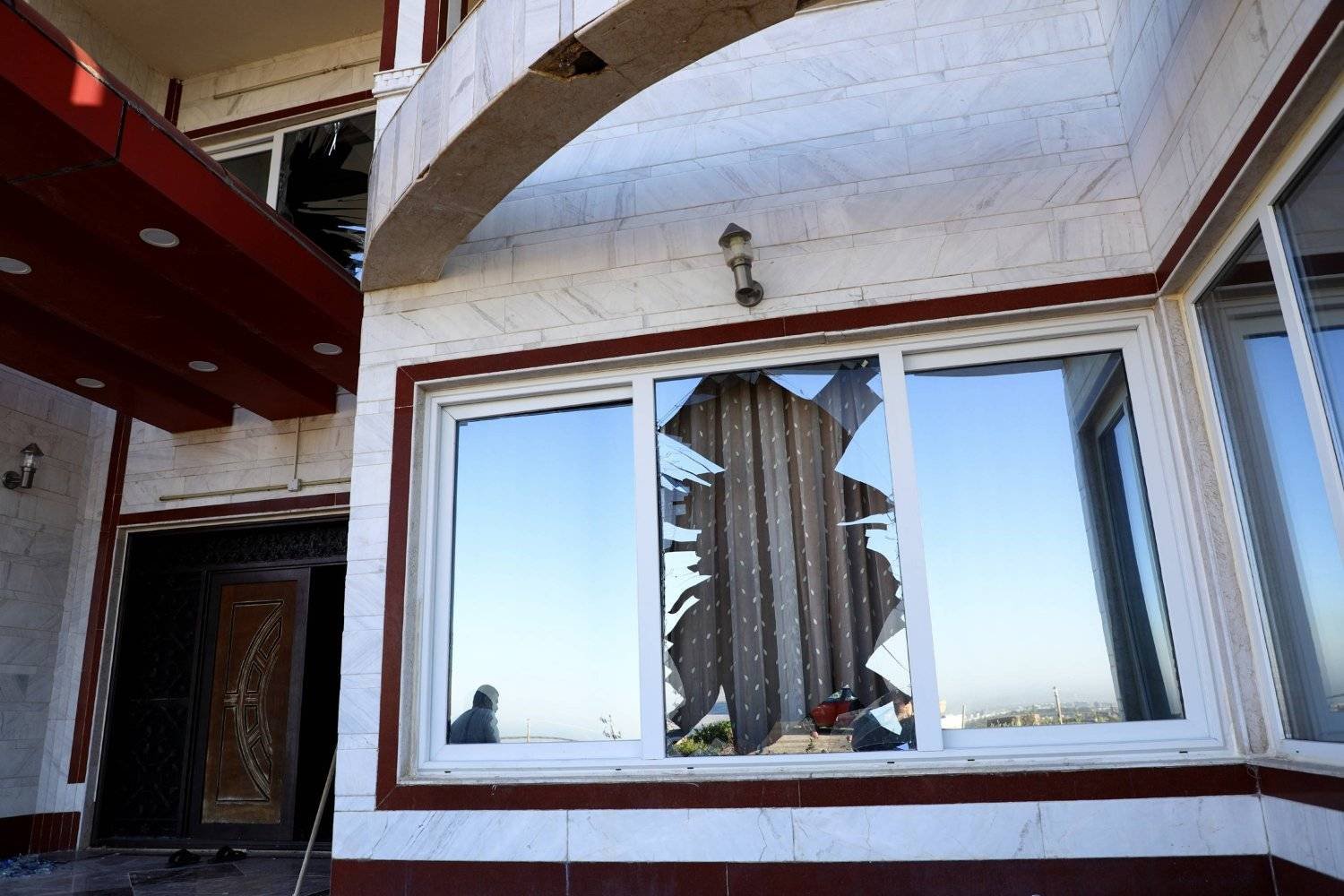
The red line for academic neutrality in the Middle East didn't just fade; it was incinerated. Following a precision strike on a campus facility in Tehran, Iranian officials have officially declared that every American and Israeli university within the region is now a legitimate military target. This isn't just standard saber-rattling from a regime backed into a corner. It is a fundamental shift in how modern asymmetric warfare views the intellectual and research hubs of its adversaries. By categorizing classrooms as combat zones, Tehran is signaling that the era of the "safe harbor" university is over.
This escalation transforms student bodies and faculty into geopolitical chess pieces. For decades, the tacit understanding among intelligence services was that while universities might be breeding grounds for dissent or recruitment, they remained off-limits for kinetic strikes. That unspoken treaty died the moment smoke cleared over the Tehran campus. Iran’s justification rests on a specific, albeit dangerous, logic: if a university hosts state-sponsored research, develops defense-related software, or maintains ties to intelligence agencies, it loses its civilian immunity.
The immediate fallout is a security crisis for American satellite campuses in Qatar, the UAE, and Jordan. These institutions, often viewed as symbols of soft power and Western liberal values, are now blinking neon signs for regional proxies. The threat is no longer theoretical. It is a logistical nightmare for every security detail tasked with protecting thousands of Western students and academics living in a region where the definitions of "combatant" and "civilian" are being rewritten by the hour.
The Dual Use Trap and the End of Academic Immunity
The core of Iran's argument hinges on the "dual-use" nature of modern academic research. In any high-tier university today, the line between civilian innovation and military application is paper-thin. A lab developing autonomous drone navigation for crop monitoring in the Midwest can easily be repurposed for loitering munitions in the Levant. Iran is exploiting this ambiguity to justify potential strikes against institutions like NYU Abu Dhabi or Texas A&M at Qatar.
Western universities have long profited from massive defense contracts. This revenue stream, while essential for funding high-level physics and engineering departments, has created a massive vulnerability. When a university accepts millions from the Department of Defense or the Israeli Ministry of Defense, it essentially puts a target on its own back in the eyes of an adversary that no longer respects international norms of proportionality. Tehran is betting that by threatening these hubs, they can force a domestic political backlash in the U.S. and Israel, as parents and taxpayers question why their children are being placed in the crosshairs of a regional war.
We are seeing a move away from the traditional battlefield and toward the "knowledge front." In this framework, a professor specializing in cybersecurity or materials science is viewed with the same strategic weight as a mid-level commanding officer. If the brain trust of an adversary can be neutralized or intimidated into silence, the long-term military capability of that state is effectively hobbled.
A Network of Proxies Ready to Act
Tehran rarely acts alone. Their strategy relies on a sophisticated web of proxies—Hezbollah in Lebanon, the Houthis in Yemen, and various militias in Iraq—who are more than capable of executing "asymmetric" responses against soft targets. For these groups, a university campus is a low-risk, high-reward target. It lacks the hardened defenses of a military base or a diplomatic green zone, yet an attack there generates ten times the international media coverage.
Security experts are currently scrambling to assess the perimeter defenses of Western-affiliated schools across the Gulf. Most are woefully unprepared for a coordinated drone strike or a sustained siege. The psychological impact of even a failed attempt on a campus would be catastrophic for the regional education market, potentially leading to a mass exodus of Western faculty and a collapse of the "educational diplomacy" that has been a cornerstone of U.S. policy in the Middle East for twenty years.
The risk isn't limited to physical violence. We are also looking at a massive increase in state-sponsored cyberattacks targeting university databases. Iran has already proven its capability to breach high-security networks. By targeting the personal data of students and the intellectual property of faculty, they can create a climate of fear that makes the daily operation of these institutions nearly impossible.
The Failure of Proportionality
International law is notoriously murky when it comes to "legitimate targets" in a technological age. Under the Geneva Conventions, civilian objects are protected, but that protection vanishes if the object is used to make an "effective contribution to military action." By claiming that U.S. and Israeli universities are hubs for intelligence gathering and military R&D, Iran is attempting to wrap its threats in a veneer of legalism.
This is a classic "gray zone" tactic. It forces the West into a defensive crouch. If the U.S. increases the military presence around these campuses to protect them, it only reinforces Iran's claim that they are military outposts. If the U.S. does nothing, it leaves thousands of civilians exposed to a regime that has shown it is willing to break every rule of engagement to ensure its survival.
The reality is that there is no clean way to separate a modern research university from the state that funds it. When a strike hits a campus in Tehran, it isn't just hitting a building; it’s hitting the regime’s future. Iran’s response is a mirror image of that logic. They are telling the West: "If our future is fair game, so is yours."
The Logistics of a New Academic Cold War
Moving forward, we should expect to see a radical decoupling of Western academic institutions from the Middle East. The cost of insurance alone will become prohibitive. Major providers are already re-evaluating the risk profiles of campuses in "at-risk" zones, and the premiums are expected to skyrocket. Some institutions may be forced to close their doors simply because they can no longer afford to mitigate the risk of a ballistic missile or drone swarm.
This shift will have a profound impact on the "brain drain" from the region. For decades, Western campuses in the Middle East served as a pressure valve, allowing the best and brightest to receive a world-class education without leaving their home countries. If these campuses become war zones, that talent will either flee to the West or, more likely, be funneled into domestic institutions that are even more closely aligned with anti-Western ideologies.
Security Protocols Under Review
- Hardened Infrastructure: Expect to see "blast-proof" architecture becoming the norm for new campus buildings in the Gulf.
- Surveillance Integration: Universities will likely be forced to integrate their security systems directly with local military commands, further blurring the line between civilian and combatant.
- Vetting of Personnel: A much more rigorous—and invasive—vetting process for faculty and students will become standard to prevent internal sabotage or intelligence leaks.
The tragedy of this escalation is the loss of the university as a space for dialogue. When every person on campus is viewed as a potential target or a potential spy, the open exchange of ideas ceases to exist. It is replaced by a bunker mentality where survival takes precedence over scholarship.
A Global Precedent with No Easy Exit
What starts in Tehran and the Gulf will not stay there. By normalizing universities as military targets, Iran is setting a precedent that other nations will surely follow. Imagine a future where a conflict between India and Pakistan, or China and Taiwan, involves the systematic targeting of research labs and student dormitories. We are entering a period where the "intellectual infrastructure" of a nation is considered just as vital—and just as vulnerable—as its power plants and bridges.
There is no simple diplomatic fix for this. As long as universities are involved in the development of the technologies that define modern warfare, they will remain in the crosshairs. The only way to truly protect these institutions would be a complete withdrawal from military-funded research, a move that is financially and strategically impossible for any top-tier school in the 21st century.
The strike in Tehran was a spark in a room full of gasoline. The resulting fire is now threatening to consume the very idea of the university as a protected space. We are no longer talking about "incidental damage" or "collateral casualties." We are talking about a deliberate strategy to turn the pursuit of knowledge into a death sentence.
Mapping the New Danger Zones
The geography of risk has shifted overnight. While the focus remains on the Middle East, the rhetoric coming out of Tehran suggests a much wider scope. Iranian state media has hinted that any institution globally that partners with the Israeli defense sector could be subject to "retribution." This expands the threat to campuses in Europe and even the continental United States through cyber means or "lone actor" incitement.
We must also consider the role of the arms industry in this equation. Major defense contractors often have satellite offices or heavily funded labs within university settings. These areas are now the most volatile points on any campus map. The presence of a single classified project can now endanger an entire student population of 20,000 people.
This isn't a problem that can be solved with more security guards or better encryption. It is a fundamental collapse of the norms that have governed modern conflict for nearly a century. When the "legitimate target" list includes the place where a 19-year-old goes to study biology, the world has entered a very dark chapter.
The immediate task for university boards is to decide if the prestige of a regional presence is worth the potential body count. For many, the answer is rapidly becoming a resounding no. The exodus has already begun, not in the form of moving trucks, but in the quiet cancellation of research programs and the sudden "sabbaticals" of high-profile faculty members.
The university was supposed to be the one place where the wars of the world stopped at the gate. Those gates are now wide open, and the war is already inside.
You should investigate the specific ties between your institution's research grants and regional defense contractors to assess your own risk profile.