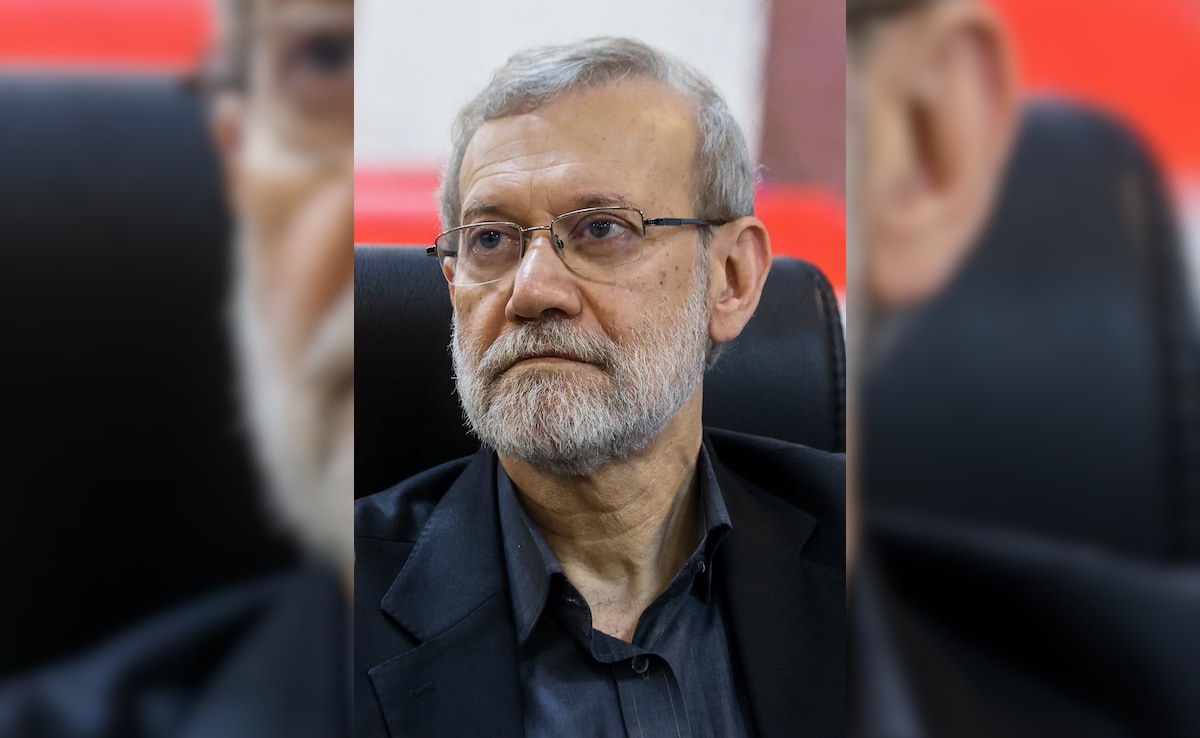
Ali Larijani is not a man known for emotional outbursts. As the former Speaker of the Iranian Parliament and a perennial fixture in the Islamic Republic’s inner sanctum, his recent declaration that Iran will not negotiate with the United States is more than a rhetorical flare. It is a calculated hardening of a geopolitical position that has been oscillating for years. By shutting the door on diplomatic engagement, Larijani is signaling that the era of the "Grand Bargain" is effectively dead, replaced by a strategy of strategic patience and internal fortification that ignores Western pressure.
This stance is a direct response to a decade of perceived American betrayal. From the collapse of the 2015 nuclear deal to the targeted assassination of Qasem Soleimani, the Iranian leadership has reached a consensus that talking to Washington yields high risks with diminishing returns. Larijani’s words serve as the official seal on a policy of "Maximum Resistance," designed to prove that the Iranian economy can survive under a permanent state of sanctions.
The Calculus of Silence
For decades, the West viewed Ali Larijani as a "pragmatic conservative." He was the man who could bridge the gap between the unyielding Office of the Supreme Leader and the more reform-minded elements of the Iranian bureaucracy. When he says there is nothing to discuss, it means the middle ground has been eroded. This shift isn't just about pride. It’s about the fundamental survival of the current power structure in Tehran.
The Iranian leadership has watched the shifting political tides in the United States with growing cynicism. They see a country where an agreement signed by one administration is shredded by the next. In their view, entering a new round of talks is like buying a ticket for a train that is guaranteed to derail. Larijani’s refusal is a recognition that the political cost of a failed negotiation is now higher than the economic cost of continued isolation.
The internal dynamics are equally sharp. Larijani has faced intense pressure from hardline factions within the Islamic Revolutionary Guard Corps (IRGC). These groups view any hint of diplomacy as a sign of weakness. By taking a firm "No" position, Larijani is reclaiming his standing among the elite, ensuring that he remains a viable power broker in a post-Khamenei era. He is playing a long game where the audience isn't the U.S. State Department, but the security apparatus in his own backyard.
The Myth of Economic Collapse
Western analysts often predict that sanctions will eventually force Iran to the table. This has proven to be a fundamental misunderstanding of the Iranian "Resistance Economy." While the rial has plummeted and inflation has hammered the middle class, the state has built a sophisticated network of "shadow banking" and gray-market oil sales that keep the lights on.
The China Connection
The primary reason Larijani can afford to be defiant is the growing tether to Beijing. Iran is no longer looking West for its economic salvation.
- Oil Exports: Despite sanctions, millions of barrels of Iranian crude find their way to independent Chinese refineries every month.
- Infrastructure Investment: The 25-year cooperation agreement between Tehran and Beijing provides a blueprint for long-term survival without a single dollar from the IMF or World Bank.
- Technology Transfers: From surveillance to telecommunications, China is filling the void left by European companies that fled after 2018.
This eastward tilt has fundamentally changed the leverage. If you can sell your oil and buy your tech from the world’s second-largest economy, the threat of being cut off from London or New York loses its sting. Larijani knows this. He is betting that as long as the Eastern corridor remains open, Iran can outlast any American administration’s appetite for sanctions.
Domestic Stability and the Shadow of Unrest
We cannot ignore the fact that this defiance comes at a time of internal friction. The "Woman, Life, Freedom" protests showed deep-seated resentment toward the status quo. However, the regime has concluded that external concessions would only embolden domestic dissent. In their eyes, giving in to Washington looks like the first step toward the collapse of the entire system.
By maintaining a hardline foreign policy, the state can continue to frame all internal opposition as the work of foreign agents. It is an old tactic, but it remains effective for consolidating the base. Larijani’s refusal to negotiate is a signal to the Iranian public that the government is not backing down, regardless of the pressure. It is a projection of strength meant to discourage those hoping for a sudden pivot in state policy.
The Nuclear Escalation Trap
The most dangerous aspect of this diplomatic freeze is the vacuum it creates in the nuclear sphere. Without a channel for dialogue, the "breakout time"—the period needed to produce enough weapons-grade uranium for a bomb—has shrunk to a matter of weeks. Larijani is well aware that this reality is Iran’s only real bargaining chip.
By refusing to negotiate, Iran is forcing the West to choose between a nuclear-armed Tehran or a high-risk military intervention. They are betting that the U.S., weary from decades of Middle Eastern wars, has no stomach for the latter. This is a game of chicken where the stakes are regional stability. Every month that passes without a meeting is another month Iran uses to refine its centrifuge technology and harden its underground facilities.
The technical progress is undeniable. They have moved far beyond the limits of the 2015 agreement, experimenting with advanced IR-6 centrifuges and enriching uranium to 60 percent purity. At this level, the jump to 90 percent—weapons grade—is a short, technical step rather than a major hurdle. Larijani’s rhetoric provides the political cover for this steady advancement.
The Regional Power Play
Iran’s refusal to talk to Washington does not mean it is isolating itself from its neighbors. On the contrary, Tehran has been aggressively pursuing a policy of regional de-escalation with the Arab world. The restoration of ties with Saudi Arabia, brokered by China, was a masterclass in bypassing American influence.
Larijani is part of a faction that believes Iran’s security is best guaranteed through local alliances rather than global treaties. If Tehran can convince Riyadh and Abu Dhabi that it is a stable, if difficult, partner, the U.S. policy of isolation becomes irrelevant. This "Regionalism First" approach is the true replacement for the nuclear deal. It seeks to create a Middle East where the U.S. is a distant observer rather than the central arbiter.
The Role of Proxies
While the diplomats are silent, the "Axis of Resistance" remains active. From Hezbollah in Lebanon to the Houthis in Yemen, Iran’s network of non-state actors provides a layer of forward defense. These groups serve as a reminder of what happens when Iran is pushed too far. Larijani’s refusal to negotiate is backed by the implicit threat that Iran can project power across the entire region without ever firing a missile from its own soil.
The Failure of Modern Sanctions Theory
The situation with Larijani proves that the traditional theory of sanctions—that economic pain inevitably leads to political concessions—is flawed when applied to ideological states. For the clerical elite, the preservation of the revolutionary identity is more important than the GDP. When a veteran like Larijani says negotiations are off the table, he is reflecting a worldview where hardship is a badge of honor and compromise is a form of spiritual defeat.
The U.S. has spent decades refining the art of financial warfare, but it has failed to develop an "off-ramp" that the Iranian leadership finds credible. Every time Tehran has moved toward the center, they feel they have been punished for it. This has created a psychological barrier that no amount of economic incentive can easily overcome. The trust is not just broken; it has been pulverized.
Looking Beyond the Rhetoric
What does a world without U.S.-Iran negotiations look like? It is a world of constant friction, shadow wars, and a steady march toward nuclear ambiguity. It is a world where the Middle East's most populous and technologically advanced nation remains an outlier, tied to the East and hostile to the West.
Larijani’s stance is a reminder that the window for a diplomatic solution is not just closing; it might already be locked from the inside. The assumption that Iran "must" eventually talk because it needs the money is a dangerous Western projection. They have found other ways to get the money, and they have found other ways to maintain their grip on power.
The next few years will test whether the U.S. can adapt to a reality where its primary tool of influence—the dollar—no longer holds the same sway in Tehran. If the goal was to force a surrender, Larijani’s latest pronouncement suggests the strategy has achieved the exact opposite. Iran is not preparing for a deal; it is preparing for a future where a deal is no longer necessary.
Governments that rely on the hope of a "moderate" return to the table are ignoring the clear signals coming out of the Iranian capital. The architecture of the Middle East is being rebuilt, and for the first time in a century, the plans are not being drawn in a Western language. Stop waiting for a phone call that is never going to come.