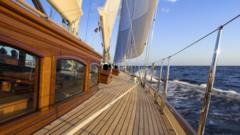
The yachting world is obsessed with a dead tree. Specifically, Tectona grandis. We call it teak. We treat it like a religious relic. If you walk onto a 50-meter superyacht and don’t see golden-brown timber underfoot, the "purists" act like you’ve parked a Kia in the middle of Monaco.
The industry media is currently flooded with hand-wringing articles about the "teak crisis." They talk about the Myanmar sanctions. They talk about "sustainable alternatives" like they’re discovering fire. They’re missing the point. The problem isn’t that we’re running out of teak. The problem is that teak is an objectively inferior material for the way people actually use boats in 2026.
We are clinging to a 19th-century deck solution for 21st-century engineering. It’s expensive, it’s heavy, it’s ecologically disastrous, and—here is the part no broker will tell you—it’s a maintenance nightmare designed to keep shipyard bills high.
The Myth of the "Superior" Material
The common argument for teak is its natural oils and silica content. People claim it’s the only wood that can survive the marine environment. This was true when we were building HMS Victory. It is a lie today.
Teak is high-maintenance vanity. To keep that "honey" look, you have to scrub it with harsh chemicals that eat away the soft grain, or you sand it down until the deck is paper-thin. If you let it go gray, you’re dealing with a surface that absorbs heat like a charcoal grill. Try walking barefoot on a silvered teak deck in the Mediterranean July sun. You’ll be looking for a bucket of ice within three steps.
The industry’s "search for alternatives" is a farce because it’s still trying to mimic the look of wood. Why? We don’t make hulls out of wood anymore. We don’t make masts out of wood. Why are we obsessed with walking on it?
The Fallacy of "Sustainable" Teak
Every shipyard representative will look you in the eye and tell you their teak is "FSC certified" or "plantation-grown."
Here is the cold reality: Plantation teak is trash.
Wild-growth teak from Myanmar is the only version with the density and oil content required for a deck that lasts twenty years. Plantation teak is grown too fast. It’s porous. It’s light. It lacks the heartwood properties that made the wood famous in the first place. When you buy "sustainable" teak, you are buying an inferior product that will warp and rot faster, ensuring you’re back in the yard for a refit in half the time.
The industry isn't looking for alternatives because they care about the rainforest. They are looking for alternatives because the supply chain for the "good stuff" (the stuff that actually works) is now legally radioactive.
The Synthetic Snobbery
Mention synthetic decking—PVC or composite—to a traditionalist and they’ll recoil. They’ll call it "plastic."
I have seen owners spend $300,000 on a teak deck, only to spend another $40,000 a year maintaining it. Meanwhile, high-end composites like Esthec or Bolidt offer thermal stability that teak can only dream of. You can choose a color that doesn't turn your deck into a frying pan. You can spill red wine on it without a heart attack. You can pressure wash it without destroying the grain.
The argument against synthetics is always "aesthetic value." It’s a circular logic trap. We like the look of teak because it looks expensive. It looks expensive because it’s a pain to maintain. We are valuing the struggle, not the performance.
The Real Physics of the Deck
Let’s look at the numbers. A standard teak deck on a 40-meter yacht adds significant weight. We’re talking tons of dead weight positioned high above the waterline.
$$W = \sum (Area \times Thickness \times Density)$$
When you add 15mm to 20mm of teak plus the bedding compound, you are actively sabotaging the vessel's center of gravity. You increase the roll period. You decrease fuel efficiency. You’re paying millions for a performance boat and then strapping a lead weight to the roof because you like the way a Victorian-era floor looks.
Why the Industry Hates the Solution
If we moved to advanced polymers or vacuum-infused composites tomorrow, shipyards would lose a massive recurring revenue stream. Teak decks are the "planned obsolescence" of the maritime world. They require specialized labor, constant recaulking, and eventual replacement.
The "alternatives" the industry currently pushes—like thermally modified maple or ash—are just stop-gaps. They are still wood. They still move. They still rot if the bedding fails.
The real disruption isn't finding a new wood. It’s admitting that wood is the wrong material for a high-performance luxury machine.
The Counter-Intuitive Truth
The best deck isn't wood. It isn't even a "wood alternative."
The best deck is a high-tech, engineered surface that prioritizes:
- Thermal Reflectivity: Keeping the interior of the boat cool and the exterior walkable.
- Weight Reduction: Improving the yacht’s carbon footprint and stability.
- Longevity: A deck that lasts the life of the hull, not ten years.
We see this in racing yachts. They don't use teak. They use functional, high-grip, lightweight surfaces. Why does "luxury" have to mean "inefficient"?
The "People Also Ask" Problem
People ask: "What is the best alternative to teak?"
The question is flawed. You’re looking for a substitute for a bad habit. You should be asking: "Why am I putting a high-maintenance, heavy material on my boat in the first place?"
People ask: "Does synthetic decking hurt resale value?"
Only because brokers are trained to sell the "romance" of timber. In five years, a gray, splintering teak deck will hurt your resale value far more than a pristine, modern composite deck that looks exactly as it did the day it was installed.
Stop Trying to Save the Aesthetic
The "lazy consensus" is that we need to find a way to keep the yachting aesthetic while being "green."
Forget being green for a second. Be selfish. A teak deck is a liability. It’s a sponge for heat and a vacuum for your bank account. The future isn't a different species of tree. It’s the end of the timber era entirely.
If you want to be a pioneer, stop asking which wood is "ethical." Start asking why you’re still decorating your $50 million carbon-fiber masterpiece with the floor of a 1700s tea clipper.
Rip up the tradition. The wood is holding you back.