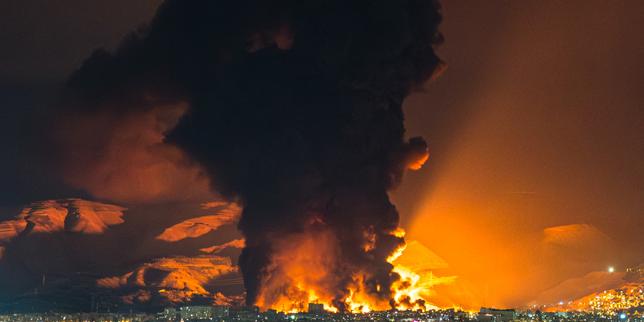
Western observers often focus on the flashy side of modern warfare like missile intercepts or drone swarms. But the real story of the current escalation involving Iran isn't just about who has the better air defense system. It’s about the deliberate, systematic targeting of the things that keep a society functioning. When power grids, water treatment plants, and fuel refineries become the primary targets, the goal isn't just military "neutralization." It’s about breaking the spirit of 85 million people by making daily life unbearable.
We’re seeing a shift in strategy that moves away from traditional battlefield wins toward a doctrine of "total pressure." If you take out a country’s ability to keep the lights on or provide clean water, you aren't just fighting an army. You're fighting the civilian population. It’s a gamble that hopes to turn a nation against its leaders. In the case of Iran, this approach is more than just a theory—it’s a reality that's playing out in real-time.
The Strategy Behind Attacking Life Support
The basic idea here is simple. If you want to make a country stop doing something, you don't necessarily have to invade. You just have to make staying the course more painful than giving in. This is why infrastructure is so high on the target list.
Military planners look at what they call "dual-use" facilities. These are things like power plants that provide electricity to both a military base and a local hospital. When these are hit, the excuse is often that they were supporting the war effort. But the reality is that the civilian population bears the brunt of the impact.
Take a look at Iran’s energy sector. It’s the lifeblood of the country’s economy and its daily life. If a major refinery goes offline, it’s not just about losing fuel for tanks. It’s about people not being able to heat their homes during a cold winter. It's about food transport coming to a halt because trucks don't have diesel. It's about a cascading failure of the entire social structure.
Why Power Grids Are the Ultimate Target
Electricity is the foundation of everything we do. Without it, everything else fails.
In Iran, the power grid is already under significant stress from years of sanctions and lack of investment. It’s a fragile system. A few well-placed strikes could cause a national blackout that lasts for weeks. This isn't just a minor inconvenience.
Without power, water pumps stop working. Most of Iran's water comes from deep wells or desalination plants that require massive amounts of electricity. When the pumps stop, the water stops. Within 48 hours, you have a massive public health crisis on your hands.
Hospitals rely on backup generators that only have a limited fuel supply. Once that's gone, life-saving equipment like ventilators and dialysis machines become useless. This is how you "put a country on its knees" without ever sending a single soldier across the border.
The Human Cost of Economic Warfare
When we talk about "strategic targets," it’s easy to forget the people on the ground. We use clinical terms like "kinetic impact" or "operational degradation." But for a family in Tehran or Isfahan, it means something very different.
It means a mother wondering how she’s going to get her kids to school if the metro isn't running. It means a small business owner watching his entire inventory rot because the refrigerators are off. It means the constant, low-level stress of not knowing if the basic services you've always relied on will be there tomorrow.
This kind of psychological warfare is a deliberate choice. The hope is that the population will eventually decide that the cost of their government’s policies is too high. They’ll start to protest, and the internal pressure will force a change in behavior or even a change in regime.
But history shows this doesn't always work the way planners think it will. Often, a population that feels under attack from the outside will rally around its leaders, even if they didn't like them much before. It creates a "siege mentality" that can actually make a country more resilient and more defiant.
The Regional Ripple Effect
Targeting Iranian infrastructure isn't something that happens in a vacuum. It has massive implications for the entire Middle East and beyond.
Iran is a major player in the global energy market. Any significant disruption to its oil and gas production will be felt at gas stations in Europe and Asia. We saw this in 2019 when the Abqaiq–Khurais attack in Saudi Arabia temporarily knocked out 5% of the world’s daily oil production. A similar strike on Iranian facilities would have a comparable, if not greater, impact on global prices.
Then there’s the risk of retaliation. If Iran’s infrastructure is targeted, they aren't just going to sit back and take it. They have their own capabilities to target the infrastructure of their neighbors. This could lead to a tit-for-tat escalation that ends up destroying the very things that keep the entire region's economy afloat.
Think about the desalination plants in the Persian Gulf. Most of the water for the Gulf states comes from these facilities. If they were to be targeted in a retaliatory strike, it would create a humanitarian disaster of epic proportions. The stakes are incredibly high, and the margin for error is razor-thin.
The Cyber Frontline
We shouldn't just think about physical bombs and missiles. Some of the most effective attacks on infrastructure are digital.
Cyber warfare is a constant, ongoing reality. We’ve seen reports of malware targeting industrial control systems, designed to make turbines spin out of control or valves shut down unexpectedly. These attacks are often harder to attribute and can be just as devastating as a physical strike.
For Iran, which has a sophisticated but often outdated industrial base, the threat of a major cyberattack on its grid or its oil facilities is a constant concern. It’s a new kind of frontline where the "bombs" are lines of code and the "pilots" are sitting in an office thousands of miles away.
What Happens Next for Iran?
Iran finds itself in an incredibly difficult position. On one hand, it needs to project strength and maintain its regional influence. On the other, it knows its domestic infrastructure is vulnerable.
The government has been trying to diversify its energy sources and modernize its grid, but sanctions make this a slow and painful process. They're also investing heavily in their own cyber defenses and offensive capabilities.
The Iranian people, meanwhile, are stuck in the middle. They’ve already endured decades of economic hardship, and the prospect of a major conflict that targets their basic needs is a terrifying one. Most just want to live their lives, raise their families, and have a bit of stability.
The Moral and Legal Grey Area
The targeting of civilian-adjacent infrastructure raises serious questions about the laws of armed conflict. International law is supposed to protect civilians and the "objects indispensable to the survival of the civilian population."
But in the heat of a conflict, these rules are often stretched or ignored. The definition of a "legitimate military target" becomes broader and broader until it includes almost everything. We’ve seen this in conflicts all over the world, and it seems like we’re heading in that direction with Iran.
Is it "legal" to bomb a power plant if it also powers a drone factory? Is it "just" to deprive a city of water to pressure its government? These aren't just academic questions. They're the real-world dilemmas that will define the next phase of this struggle.
The strategy of putting a country on its knees by targeting its life support is a high-stakes, high-risk approach. It might achieve short-term goals, but the long-term consequences are unpredictable and often disastrous.
For anyone watching this play out, the focus shouldn't just be on the missiles and the rhetoric. Keep an eye on the power plants, the water mains, and the refineries. That’s where the real battle for the future of Iran is being fought.
If you're following these developments, don't just look at the headlines about military strikes. Pay attention to the reports of power outages, water shortages, and fuel lines. These are the true indicators of how this strategy is working—or failing. Understanding the mechanics of infrastructure warfare is the only way to see the full picture of what’s happening on the ground.
Monitor the reports from international monitoring agencies like the IAEA or the World Bank's economic assessments of the region. They often provide a more grounded view of the actual impact on the country's functionality than the heated rhetoric from either side. Stay informed, stay critical, and look beyond the immediate noise of the news cycle. The real impact of these actions is measured in the daily lives of millions of ordinary people, and that's a story that needs to be told.