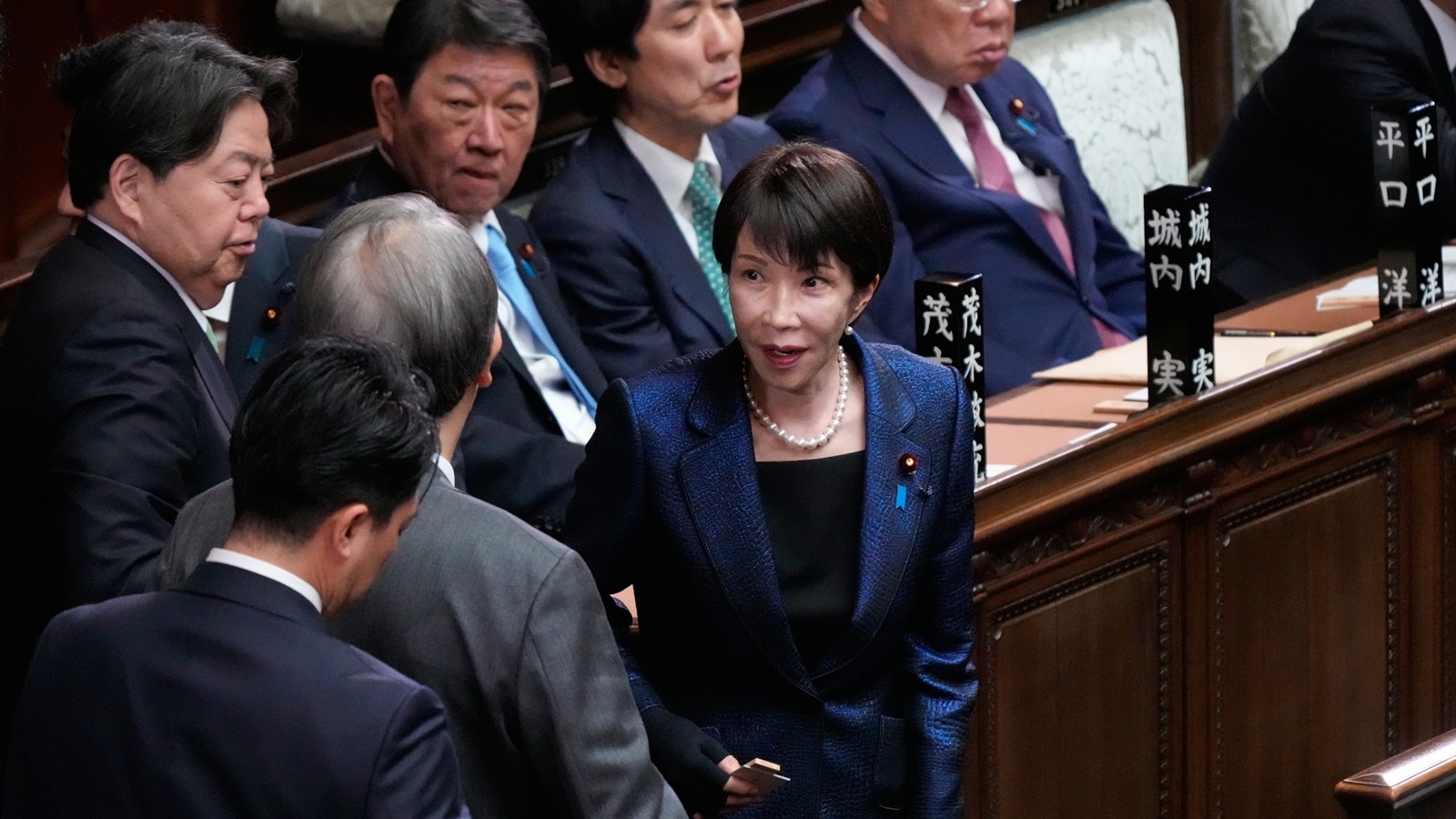
The landslide victory of the Liberal Democratic Party (LDP) in the February 2026 snap election represents a definitive rejection of bureaucratic inertia. Prime Minister Sanae Takaichi now possesses a parliamentary supermajority, a mandate that shifts the operational focus of the Japanese government from defensive containment to aggressive economic and security stabilization. This shift is not merely political; it is a calculated response to the G7-wide crisis of stagnant wages, inflation, and the fragility of supply chain dependencies. The Takaichi administration’s operating system relies on three distinct technical pillars: fiscal expansion as a supply-side mechanism, economic security through industrial friend-shoring, and an intensified posture on regional defense.
The Fiscal Paradox: Revenue vs. Stimulus
The core of Takaichi’s domestic economic agenda involves a 21 trillion yen stimulus package coupled with a proposal to zero-rate the consumption tax on food for two years. Analysts frequently characterize this as standard populism, yet the mechanism is more complex. The government is attempting to combat deflationary psychology by directly lowering the cost of living for middle-class households, thereby increasing disposable income for consumption of non-food goods and services.
The structural limitation, however, is the impact on the primary budget surplus. Japan maintains the highest debt-to-GDP ratio among advanced economies. Reducing consumption tax revenue by approximately 5 trillion yen annually creates a direct funding shortfall.
The administration’s strategy to mitigate this shortfall is twofold:
- Investment Catalysis: Relying on the private sector to fill the productivity gap through increased domestic capital expenditure.
- Yield Curve Management: Navigating the rising long-term interest rates (which hit 2.2% in early 2026) by maintaining a yield curve that does not choke off corporate growth while preventing a debt-service explosion.
This creates a high-stakes bottleneck. If the stimulus fails to generate sufficient GDP growth to offset the revenue loss, the resulting fiscal deterioration will force the Ministry of Finance into a position of fiscal contraction later in the term. The success of the Takaichi fiscal model hinges on the velocity of money generated by these targeted tax cuts. If the households opt for precautionary savings rather than consumption, the inflationary goal will remain unmet, and the sovereign debt profile will sharpen.
Economic Security Mechanics
Takaichi has transformed the concept of "economic security" from a rhetorical framing into an operational industrial policy. Her administration is actively dismantling dependencies on non-allied supply chains, specifically in critical sectors such as semiconductors, pharmaceuticals, and rare-earth minerals.
The mechanics of this strategy utilize three distinct tools:
- Asset Protection: Legislative frameworks to screen or restrict land and infrastructure acquisition by foreign entities deemed a risk to national security.
- Friend-Shoring Subsidies: Direct government grants and low-interest loans for domestic corporations that relocate production from unstable or adversarial regions to Japan or allied Southeast Asian nations.
- Dual-Use R&D: The integration of civilian research budgets with national defense priorities. By funding "dual-use" technologies, the government aims to achieve technological parity in sectors like AI and unmanned aerial vehicles without purely relying on traditional defense budget increases.
This approach acknowledges a fundamental constraint: Japan cannot maintain its industrial base through market forces alone, given the disparity in labor costs and domestic demographic shrinkage. By codifying industrial policy into national security, the administration justifies the allocation of state resources to industries that would otherwise be considered uncompetitive on a purely open-market basis.
The Geopolitical Hedge
The external posture of the Takaichi administration is characterized by strategic realism. The government has prioritized a significant expansion of the Self-Defense Forces, citing the deteriorating Indo-Pacific security environment. This is not purely ideologically driven; it is an effort to maximize "allied scale."
The government’s strategy relies on the following logic:
- Deterrence Through Capability: Increasing defense expenditures to a level that forces regional adversaries to recalculate the cost of potential kinetic action.
- Interoperability: Deepening ties with the United States and other regional stakeholders not as a secondary partner, but as an indispensable technological and logistics hub.
- Diplomatic Autonomy: While maintaining the US-Japan alliance, the administration is actively seeking to act as a bridge-builder for Southeast Asian nations, positioning Japan as a reliable alternative to the binary choice between China and the West.
The friction point for this strategy is the constitutional reality. Takaichi has historically supported the revision of Article 9. However, the current parliamentary supermajority, while powerful, does not automatically translate to a public mandate for constitutional change. The administration is instead utilizing "operational flexibility," pushing the boundaries of what is considered defensive capability under existing constitutional interpretations to avoid a direct, potentially divisive, confrontation with the electorate on the issue of pacifism.
Strategic Vulnerabilities and Operational Constraints
The administration’s path is not without structural obstacles. The primary internal threat is the aging demographic, which reduces the labor pool and places persistent upward pressure on social security expenditures. Even if Takaichi achieves short-term GDP growth, the long-term sustainability of the Japanese economy is tied to immigration policy and automation.
The administration’s current stance on immigration is "controlled functionality." They are not attempting to address the labor shortage through mass migration, but through targeted recruitment of high-skill labor and the increased automation of the service sector. This creates a reliance on technological breakthroughs to bridge the labor gap, a strategy that assumes high-speed progress in robotics and AI implementation.
Furthermore, the government’s dependence on the Japan Innovation Party for its supermajority introduces a layer of coalition instability. While they currently align on economic security and reform, the coalition partners may diverge on the specifics of fiscal management or the speed of defense policy implementation. Takaichi must balance the demands of this coalition with the necessity of maintaining the LDP’s internal cohesion.
Strategic Forecast
The Takaichi administration is betting the political future of the LDP on the assumption that the Japanese public prioritizes economic resilience and national safety over ideological homogeneity. The strategic play for the next 24 months is to avoid long-term ideological crusades that would alienate the moderate wing of the electorate, focusing instead on quantifiable results in three areas:
- Inflationary Control: If the cost-of-living reduction measures show measurable impacts on household spending before the end of the 2026 fiscal year, the administration secures the political capital needed for more contentious structural reforms.
- Defense Integration: Success will be measured by the speed at which Japan can demonstrate industrial-military interoperability with the United States and other partners.
- Institutional Hardening: The ability to push through the proposed "National Intelligence Agency" and other security-related institutional changes will define the administration’s success in moving Japan toward a more assertive, and less reactive, foreign policy.
The administration must maintain a narrow focus on these industrial and security objectives. If the government allows itself to be pulled into secondary social issues or becomes bogged down in protracted parliamentary gridlock despite its supermajority, it will likely see its approval ratings—currently bolstered by the initial novelty and decisive action—evaporate as the underlying economic pressures remain unresolved. The final strategic play is to institutionalize these shifts before the next electoral cycle, ensuring that the structural changes to Japan's economic security architecture are too deeply embedded to be reversed by subsequent cabinets.