Artificial intelligence can now spot malignant clusters in breast tissue that the human eye routinely misses, but this technical victory is colliding with a healthcare system unprepared for the consequences of perfect vision. We are entering an era where the software is no longer the bottleneck. The crisis lies in what happens after the machine flags a pixel. While algorithms consistently outperform mid-career radiologists in controlled trials, the transition to the clinic is exposing a massive disconnect between statistical accuracy and patient outcomes. We are finding more "cancer," but we aren't always saving more lives.
The Math of the Hidden Mass
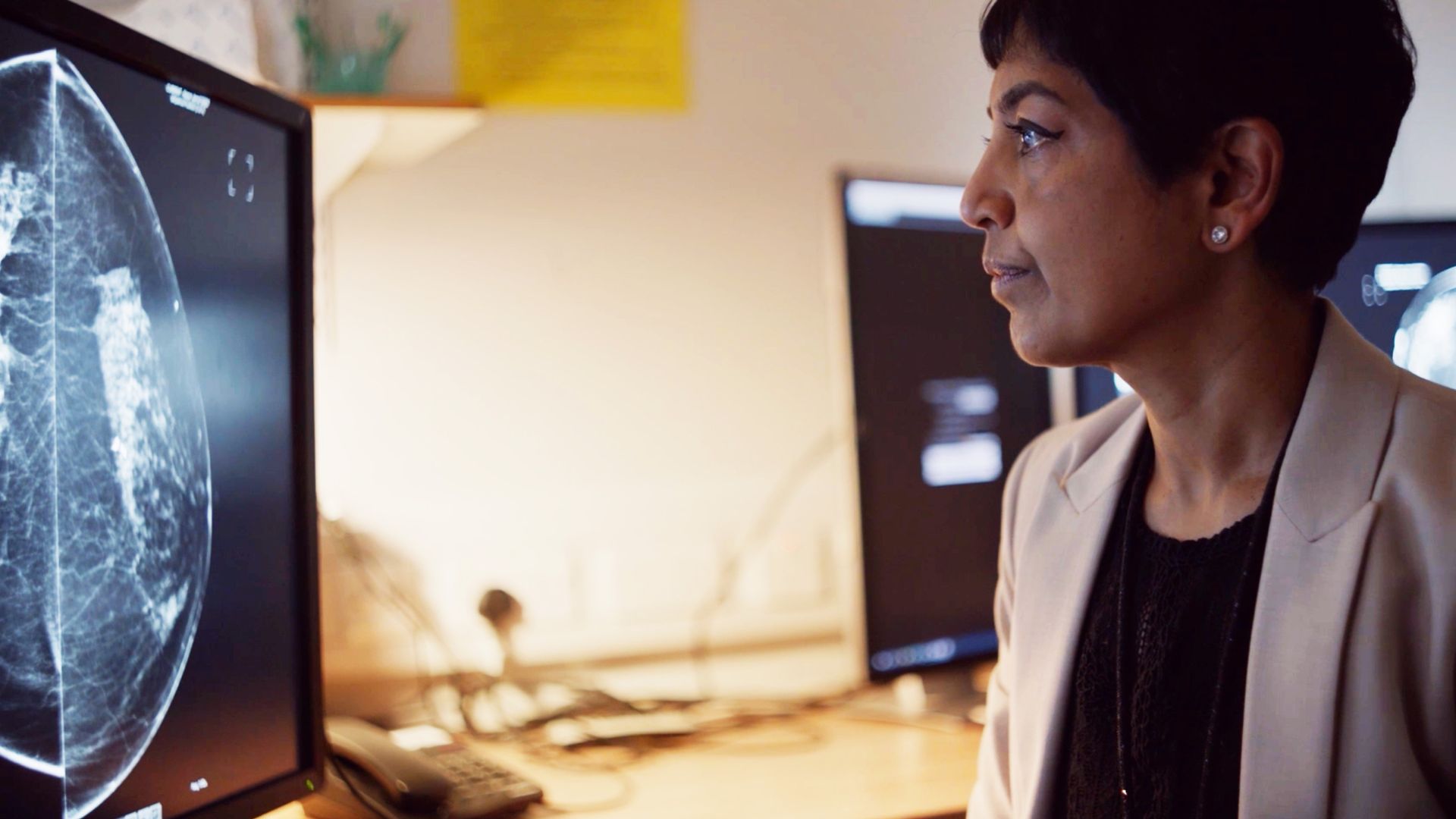
The fundamental promise of AI in mammography is the reduction of human fatigue. A radiologist at the end of an eight-hour shift, having stared at hundreds of grayscale images, is prone to "satisfaction of search"—the tendency to stop looking once one abnormality is found, or to glaze over the subtle architectural distortions that signal early-stage ductal carcinoma.
AI doesn't blink. It applies the same rigorous mathematical scrutiny to the last scan of the day as it does to the first. Using deep learning architectures, these systems are trained on millions of historical images where the ground truth—whether the patient actually had cancer—is known. The software learns to identify features that are invisible to humans, such as high-frequency textures and specific vascular patterns.
In a landmark study published in Nature, an AI system developed by Google Health reduced false positives by 5.7% and false negatives by 9.4% in a US-based dataset. On paper, this is a triumph. In practice, reducing a false negative means finding a cancer that would have stayed hidden for another year. That sounds like an unalloyed good until you consider the biological reality of breast cancer.
Not every shadow is a killer.
The Overdiagnosis Trap
The industry is currently grappling with a phenomenon known as overdiagnosis. This is not the same as a false positive. A false positive is a mechanical error where the AI says "cancer" and a biopsy proves it is healthy tissue. Overdiagnosis is far more insidious. It occurs when the AI correctly identifies a real, malignant cluster of cells that is so slow-growing it would never have caused symptoms or death during the patient's lifetime.
By sharpening our diagnostic tools, we are casting a wider net. We are catching the "turtles"—the indolent cancers that barely move—along with the "birds" that fly away and spread before they can be caught.
The Cost of Perfection
When an algorithm identifies a tiny, low-grade lesion, the standard of care usually dictates intervention. This leads to:
- Unnecessary surgeries: Lumpectomies and mastectomies for tumors that weren't a threat.
- Radiation fatigue: Exposing patients to the side effects of treatment for "cancers" that would have remained asymptomatic.
- Psychological trauma: The lifelong burden of being a "cancer survivor" when the biology of the lesion was essentially benign.
If we integrate AI without changing our threshold for treatment, we risk a surge in medical intervention that improves our "detection" statistics while potentially lowering the overall quality of life for the population. We are essentially victims of our own precision.
The Black Box Problem in the Reading Room
Radiologists are being told to trust a tool that cannot explain itself. When a senior physician looks at a mammogram, they can point to a spiculed mass or pleomorphic calcifications and explain their reasoning to a colleague. Most current AI models operate as black boxes. They provide a "probability score" but often struggle to articulate the why behind the red flag.
This creates a dangerous dynamic in the clinic. If the AI flags a spot and the radiologist disagrees, who wins? If the doctor ignores the AI and the patient later develops a tumor, the liability is crushing. Consequently, many doctors default to the AI’s suggestion, leading to a defensive medicine loop where "more testing" becomes the only safe legal path, regardless of clinical necessity.
Data Bias and the Demographic Gap
The effectiveness of these tools is strictly limited by the diversity of the data used to train them. If an algorithm is built primarily on images from Caucasian women in affluent suburban clinics, its accuracy can degrade significantly when applied to women of different ethnicities or those with different breast tissue densities.
Dense breast tissue is a notorious hurdle in radiology. On a standard mammogram, both dense tissue and cancerous tumors appear white, making the process akin to looking for a polar bear in a snowstorm. AI is touted as the solution to this, but if the training sets don't include enough examples of high-density tissue across diverse age groups, the "better than a doctor" claim starts to crumble.
We see a recurring pattern in medical tech where the "state-of-the-art" is calibrated for a narrow slice of the population. Without radical transparency in how these datasets are constructed, we are simply automating existing healthcare inequities.
The Liability Shift
The legal framework for AI in medicine is a wasteland. Currently, the "human in the loop" model acts as a legal shield for software developers. As long as a doctor signs off on the final report, the doctor remains the primary target for malpractice.
However, as AI becomes more integrated, we will reach a point where a human rejecting an AI's correct diagnosis is seen as more negligent than a human following an AI's incorrect one. This shift will fundamentally change the profession of radiology. The role will move from "interpreter of images" to "manager of algorithmic outputs." Many veterans in the field are already expressing concern that this will erode the diagnostic skills of the next generation of doctors. If you spend your entire residency nodding at what the computer suggests, what happens when the computer is wrong?
The Hardware Bottleneck
While we discuss the software, the physical infrastructure of screening remains rooted in the past. To truly utilize the "perfect vision" of AI, we would need to move beyond 2D mammography toward universal access to 3D tomosynthesis or even automated breast ultrasound (ABUS).
$$Sensitivity = \frac{True Positives}{True Positives + False Negatives}$$
Increasing sensitivity through AI is useless if the initial image quality is poor. Many rural clinics are still using aging equipment that produces low-resolution captures. Running a sophisticated neural network on a grainy image is like putting a Ferrari engine in a lawnmower. The output is limited by the input.
The Path Toward Biological Intelligence
The solution isn't to dial back the AI. It is to make the AI smarter about biology, not just patterns. The next generation of tools must go beyond "Is it there?" and start answering "Does it matter?"
We need "prognostic AI"—systems that don't just identify a mass, but predict its behavior. By integrating genomic data and longitudinal history, an algorithm could theoretically tell a doctor: "This is a 2mm lesion, but its molecular profile suggests it will stay dormant for twenty years. Monitor, do not biopsy."
Until we reach that level of nuance, the "catch" remains. We have built a machine that sees everything, but we haven't yet learned how to ignore the things that don't hurt us. The burden of choice still rests on the human, and right now, the human is overwhelmed by the machine's clarity.
Audit your local clinic's use of CAD (Computer-Aided Detection) and ask if the software being used was validated on a population that looks like you.