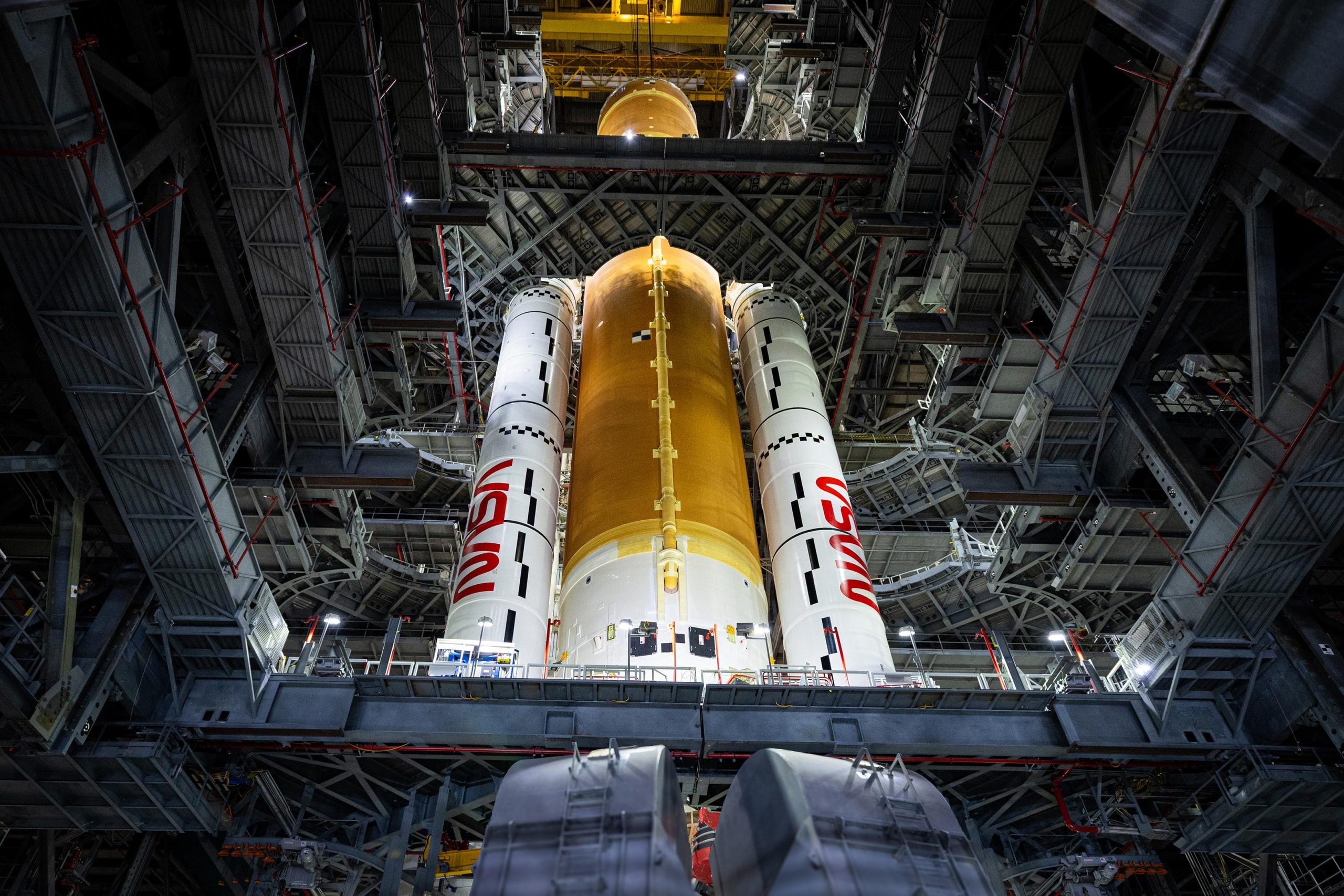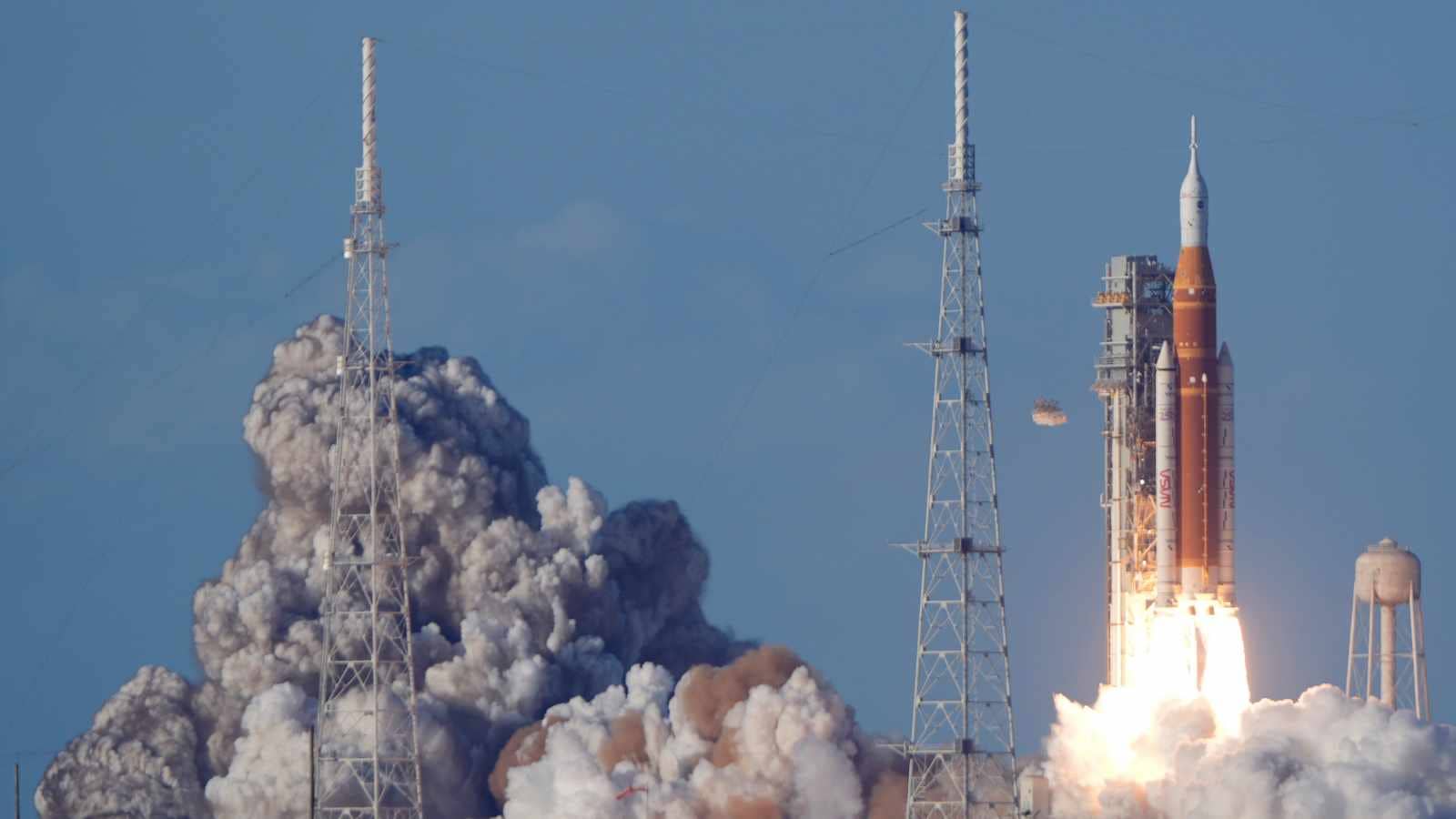
The Artemis II mission represents a transition from conceptual deep-space exploration to the operational validation of the Orion Multi-Purpose Crew Vehicle (MPCV) and the Space Launch System (SLS). While public discourse focuses on the demographic composition of the crew, a technical analysis reveals that this mission is a high-stakes stress test of the Life Support Systems (LSS) and manual proximity operations necessary for the eventual establishment of a permanent lunar presence. Artemis II is not a landing; it is a critical path maneuver designed to verify that humans can survive and operate in a high-radiation, deep-space environment for a duration of approximately ten days without the safety net of immediate Earth return.
The Triad of Operational Objectives
The mission architecture for Artemis II is built upon three non-negotiable technical pillars. Failure to achieve any of these metrics would necessitate a significant delay in the Artemis III landing schedule.
- Life Support System Validation: Unlike Artemis I, which carried sensors, Artemis II requires the Orion capsule to maintain a pressurized, breathable atmosphere for four humans. This involves the complex scrubbing of CO2 and the management of metabolic heat loads in a fluctuating thermal environment.
- Manual Proximity Operations: A primary task for the crew involves the Proximity Operations Demonstration. After the SLS Upper Stage (the Interim Cryogenic Propulsion Stage, or ICPS) places Orion into a high Earth orbit, the crew will manually pilot the craft to approach and retreat from the stage. This validates the handling qualities of the MPCV before it is required to dock with the Lunar Gateway or a Human Landing System (HLS) in future missions.
- Radiation Exposure Mapping: Crossing the Van Allen belts and entering deep space subjects the crew to solar energetic particles (SEP) and galactic cosmic rays (GCR). Artemis II serves as a live data-gathering exercise for shielding efficacy and real-time dosimetry.
Crew Composition as a Strategic Asset
The selection of Reid Wiseman, Victor Glover, Christina Koch, and Jeremy Hansen serves a function beyond symbolic representation. It addresses the Human Capital Diversification Requirement for long-duration spaceflight. NASA’s shift toward a diverse crew is a hedge against "groupthink" and a method to gather physiological data across different biological baselines.
The Physiology of the First Deep-Space Female
Christina Koch’s inclusion provides essential data on female physiology during lunar transit. Historically, space medicine has been biased toward male data. However, research indicates that female bodies may exhibit different responses to orthostatic intolerance and radiation-induced DNA damage. By sending the first woman to the moon's vicinity, NASA is pressure-testing the Orion’s environmental control systems against a broader range of metabolic and biological variables.
The Integration of International Partners
Jeremy Hansen’s presence marks the first time a non-American will leave Low Earth Orbit (LEO). This is a geopolitical calculation. By including the Canadian Space Agency (CSA), NASA secures the long-term technical contributions of the Canadarm3, which is vital for the Lunar Gateway. The mission logic dictates that international interdependence reduces the "single point of failure" risk associated with domestic budget fluctuations.
Tactical Leadership and Pilotage
The roles of Reid Wiseman (Commander) and Victor Glover (Pilot) focus on the manual override capabilities of the Orion. Glover, notably the first Black astronaut on a lunar mission, brings recent experience from the SpaceX Crew-1 mission. His role is to bridge the gap between commercial off-the-shelf (COTS) software interfaces and the bespoke, hardened systems of the Orion.
The Trajectory Logic: High Earth Orbit to TLI
The flight path of Artemis II is a "hybrid" profile designed to maximize safety while testing hardware limits.
The High Earth Orbit (HEO) Phase
Initially, Orion will enter a highly elliptical Earth orbit with a period of roughly 24 hours. This phase is the mission’s "Check-Out" period. If the LSS or communication arrays show any deviation from nominal performance, the crew can abort and return to Earth within hours. The spacecraft will remain in this orbit for 42 hours. This is the first time a crewed vehicle will utilize the ICPS for such an extended period, testing the boil-off rates of the cryogenic fuel.
Trans-Lunar Injection (TLI) and Free Return
Once the systems are cleared, the Orion will perform the TLI burn. The mission utilizes a Free-Return Trajectory. This is a specific orbital mechanic where the spacecraft’s path is shaped like a figure-eight; the Moon’s gravity will naturally "slingshot" the vehicle back toward Earth without requiring a massive engine burn to exit lunar orbit.
- The Safety Margin: Should the primary propulsion system fail while behind the Moon, the physics of the trajectory ensure the crew returns to Earth’s atmosphere.
- The Technical Trade-off: Because it is a free-return path, the crew will not enter a low lunar orbit. They will remain approximately 10,300 kilometers above the lunar surface at their closest approach (perilune).
Quantifying the Risks of Deep-Space Transit
Artemis II faces three primary environmental stressors that differ significantly from operations on the International Space Station (ISS).
1. Thermal Gradient Management
In LEO, the Earth provides a significant thermal buffer. In deep space, Orion is exposed to direct solar radiation on one side and the absolute zero of deep space on the other. The crew must manage "Passive Thermal Control," colloquially known as the "barbecue roll," where the spacecraft rotates slowly to distribute heat. Any failure in the rotation mechanism could lead to localized structural fatigue or LSS overload.
2. Communication Latency and Blackouts
Unlike the ISS, which has near-instantaneous communication via the TDRS satellite constellation, Artemis II will experience signal degradation and "Loss of Signal" (LOS) when passing behind the lunar far side. This requires the crew to possess high levels of autonomous decision-making capability. The selection of four experienced astronauts is a direct response to this need for on-board cognitive redundancy.
3. The Deep-Space Radiation Environment
The ISS is still shielded by the Earth’s magnetosphere. Artemis II crew members will be exposed to a radiation environment approximately 2.5 to 3 times higher than that of the ISS. The mission will test the "Storm Shelter" concept within Orion, where the crew uses onboard mass (water bags, equipment) to create a shielded area during potential solar flare events.
The Infrastructure Chain: SLS and Orion Interdependency
The success of Artemis II relies on the performance of the SLS Block 1 configuration. This vehicle generates $8.8$ million pounds of thrust, 15% more than the Saturn V. However, the SLS is a "low-cadence" vehicle, meaning that a failure on Artemis II doesn't just end the mission; it potentially collapses the entire lunar program for a decade.
The relationship between the SLS and Orion is a tightly coupled system. Any vibration (pogo oscillation) during the ascent phase could damage the sensitive avionics of the Orion. Artemis I proved the structural integrity of the heat shield, but it did not prove the human-centric vibration tolerances. Artemis II will define the "Human-Rating" envelope for the most powerful rocket currently in operation.
Strategic Pivot: From Flags to Foundations
The inclusion of a woman, a person of color, and an international partner is often framed as a social milestone, but from a strategic consultancy perspective, it is a Risk Mitigation and Market Expansion move.
- Political Durability: A mission that represents the entire population—and includes international stakeholders—is harder to defund than a mono-national, narrow-demographic endeavor.
- Operational Resilience: Diverse teams have been shown in high-stakes environments (military, surgical, aviation) to perform better in "novel problem solving." The lunar environment is the definition of a novel problem.
The true test of Artemis II is not whether the crew can reach the Moon, but whether the Orion can sustain them through the reentry phase. Upon return, the capsule will hit the atmosphere at 25,000 miles per hour, generating temperatures of 5,000 degrees Fahrenheit. The heat shield must protect the crew while the parachutes deploy in a precise sequence.
The final strategic move for NASA and its partners is to move immediately from the splashdown of Artemis II into the "Pre-Staging" of Artemis III. This involves the deployment of the HLS (Starship) and the first components of the Gateway. The Artemis II crew are effectively the "Flight Test Engineers" for a new era of multi-planetary logistics. Their mission is the final green light for the industrialization of the lunar south pole. Success here transitions the Moon from a destination to a workplace.