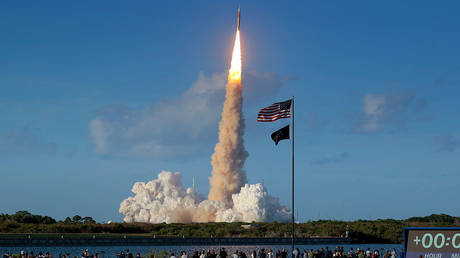
The departure of Artemis II from Earth’s orbit signifies a transition from theoretical deep space capability to the mechanical reality of human-rated lunar transit. While public discourse focuses on the historical narrative of the mission, the technical significance lies in the High Earth Orbit (HEO) and Trans-Lunar Injection (TLI) phases, which serve as the stress tests for the Space Launch System (SLS) and the Orion spacecraft’s life support systems. The success of this mission is not measured by the proximity to the lunar surface, but by the integrity of the Integrated Mission Profile, specifically how the crew manages the transition from the protective magnetosphere of Earth into the high-radiation environment of the cislunar void.
The Dual-Stage Ascent Logic
The flight path of Artemis II is dictated by a conservative energy management strategy designed to minimize risk while maximizing the opportunity to test systems in a controlled environment. Unlike the Apollo missions, which prioritized speed and a direct path to the moon, Artemis II utilizes a Hybrid Trajectory Model.
- Low Earth Orbit (LEO) Check-Out: Upon reaching orbit, the Interim Cryogenic Propulsion Stage (ICPS) remains attached. This period is not a holding pattern; it is a critical system diagnostic phase. The crew validates the life support and communication arrays while still within reach of a rapid abort-to-Earth sequence.
- High Earth Orbit (HEO) Ellipse: Instead of an immediate burn for the moon, the ICPS executes a maneuver to place Orion into a highly elliptical orbit. This orbit serves as the primary testing ground for the Proximity Operations Demonstration. The crew manually maneuvers the spacecraft relative to the spent ICPS stage, a prerequisite skill for future dockings with the Lunar Gateway and the Human Landing System (HLS).
- Trans-Lunar Injection (TLI): Only after these milestones are cleared does the spacecraft commit to the lunar trajectory. The TLI burn provides the necessary delta-v (change in velocity) to escape Earth's gravity well, setting the craft on a free-return trajectory.
The Three Pillars of Deep Space Survival
Artemis II represents the first time the Orion Environmental Control and Life Support System (ECLSS) will be taxed by a four-person crew for a multi-day duration in deep space. The engineering challenges are segmented into three distinct operational pressures.
Atmospheric and Pressure Maintenance
The Orion cabin must maintain a nitrogen/oxygen mix at sea-level pressure. The complexity arises in the Gas Constituent Management. Scrubbing carbon dioxide ($CO_2$) is achieved through the Amine Swingbed system. Unlike the International Space Station (ISS), which utilizes large, power-intensive systems for $CO_2$ removal, Orion’s hardware must be compact and resilient to the vibrations of launch and the thermal extremes of space. Failure in the swingbed cycling would lead to hypercapnia, a condition that degrades astronaut cognitive function long before it becomes fatal.
Thermal Loading and Heat Rejection
Thermal management is a physics-driven bottleneck. In the vacuum of space, the only way to shed heat is through radiation. Orion utilizes Radiator Panels mounted on the European Service Module (ESM). These panels circulate a coolant fluid to dump the heat generated by the avionics and the metabolic heat of the crew. During the transit to the moon, the spacecraft enters "barbecue roll" mode—a slow rotation along its longitudinal axis—to prevent one side from overheating under constant solar flux while the other freezes in the shade.
Radiation Mitigation and Shielding
Once the spacecraft clears the Van Allen belts, the crew is exposed to Galactic Cosmic Rays (GCRs) and potential Solar Particle Events (SPEs). Artemis II lacks a dedicated lead-shielded room due to mass constraints. Instead, the strategy involves "Mass-Distribution Shielding." In the event of a solar flare, the crew is instructed to move to the center of the craft and surround themselves with storage lockers and water supplies, using the density of their cargo as a makeshift barrier against high-energy protons.
The Physics of the Free-Return Trajectory
The mission utilizes a Lunar Free-Return Trajectory, a masterpiece of orbital mechanics that serves as an inherent safety mechanism. This path uses the Moon's gravity to "whip" the spacecraft around and send it back toward Earth without requiring a large engine burn for the return trip.
- Gravitational Influence: As Orion approaches the Moon, it enters the Lunar Sphere of Influence. The Moon's gravity pulls the craft, bending its path.
- Pericynthion Pass: This is the point of closest approach to the lunar surface. For Artemis II, this occurs at approximately 7,400 kilometers.
- Automatic Re-entry: If the Service Module’s engine were to fail entirely after the TLI burn, the laws of gravity ensure the crew returns to Earth’s atmosphere within a predictable window. This "fail-safe" design is the primary reason Artemis II does not enter a closed lunar orbit.
The trade-off for this safety is limited time near the Moon and a fixed re-entry profile. The crew cannot choose their landing site with the same flexibility as a mission with high fuel margins; they are bound by the geometry of the initial burn.
Communication Latency and Autonomy
A significant shift in mission architecture is the reliance on the Deep Space Network (DSN). Near Earth, communications are nearly instantaneous. As Artemis II moves toward the moon, a light-speed delay—approximately 1.3 seconds each way—becomes a factor. While this delay is manageable, it necessitates a higher degree of Onboard Autonomy.
The Orion flight software is designed to handle "Time-Critical Maneuvers" without ground intervention. This reduces the Decision-Loop Latency. The crew must be trained to diagnose faults in the Guidance, Navigation, and Control (GNC) systems because, in a high-velocity phase of the mission, waiting for a ground-based solution could result in an unrecoverable trajectory error.
The Re-entry Thermal Barrier
The mission concludes with the most violent phase of the flight: atmospheric re-entry. Artemis II will hit the Earth's atmosphere at roughly 11 kilometers per second (approximately 25,000 mph).
This velocity creates a "Skip Re-entry" requirement. To shed energy without burning up or subjecting the crew to lethal G-forces, Orion will enter the upper atmosphere, "skip" back out into space briefly to lose speed, and then enter a second time for the final descent. The Avcoat Ablative Heat Shield is the single point of failure here. As it chars and erodes, it carries away the 2,760°C heat of the plasma field.
The structural integrity of the heat shield is arguably the most scrutinized component of the Artemis II mission. Post-flight analysis of the Artemis I (uncrewed) shield showed unexpected "char liberation"—small pieces of the shield breaking off rather than wearing down smoothly. Artemis II serves as the definitive test of whether those modifications were sufficient to protect a human crew.
Strategic Operational Forecast
The completion of the Artemis II transit establishes a baseline for the Lunar Economy. By validating the Orion/SLS stack, the mission converts speculative deep-space exploration into a repeatable logistics chain.
The immediate next step is not simply "landing" on Artemis III, but the deployment of the Starship HLS (Human Landing System). Artemis II proves the transport of the crew to the lunar vicinity, but the bottleneck remains the Cryogenic Fluid Transfer required to fuel the landing craft in LEO.
Observers should monitor the precision of the Artemis II splashdown. A high-precision landing indicates superior GNC calibration, which will be necessary for the complex docking maneuvers required in the Artemis III mission profile. If the splashdown variance is high, expect a significant delay in the Artemis III timeline as engineers recalibrate the inertial measurement units and optical navigation sensors for the far more demanding task of lunar orbit insertion and docking.