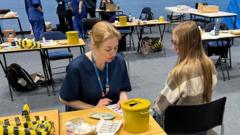
The institutional management of neurodivergent behavior often collapses into a performative crisis when regulatory compliance is prioritized over clinical efficacy. When a professional caregiver is instructed to physically "demonstrate" a child’s aggressive behavior—such as biting—to an assessment panel, the system has transitioned from evidence-based observation to a reenactment of trauma. This procedural absurdity highlights a fundamental misalignment between the administrative need for "proof" and the psychological reality of behavioral triggers.
The Cognitive Gap in Regulatory Observation
Standardized assessments in social care rely on a flawed assumption: that complex behaviors can be decoupled from their environmental context and reproduced on demand. This represents a catastrophic failure of functional behavioral assessment (FBA) principles. A behavior like biting is rarely a random act; it is a communicative response to specific sensory overloads or unmet needs. In other updates, we also covered: The Unlikely Truce Inside the Halls of Public Health.
When a system demands a physical demonstration of this behavior, it ignores the Antecedent-Behavior-Consequence (ABC) model.
- The Antecedent: The specific internal or external trigger (e.g., high-frequency noise, transition anxiety).
- The Behavior: The physical act (biting).
- The Consequence: The sensory or social feedback the child receives.
By asking a carer to mimic the behavior, the assessor removes the antecedent and the internal state of the child, rendering the "data" gathered during the demonstration scientifically void. The demonstration becomes a caricature of the disability rather than a diagnostic tool. WebMD has provided coverage on this important topic in great detail.
The Liability Paradox in Caregiving
Institutional requests for behavioral reenactments often stem from a defensive legal posture. Bureaucracies require "irrefutable evidence" to justify funding for high-needs support or to satisfy insurance mandates. This creates a Liability Paradox: to secure the resources necessary to protect a child, the system forces the carer to perform an act that violates the dignity of that child and the professional boundaries of the carer.
The psychological cost of this paradox is distributed across three vectors:
- The Carer's Professional Integrity: Forcing a professional to act out a child’s lowest moments creates a demeaning work environment and erodes the trust required for a therapeutic relationship.
- The Child's Privacy and Dignity: Treating a child’s struggle as a "spectacle" for an administrative audience violates basic ethical standards of care.
- Systemic Inaccuracy: Decisions made based on performative demonstrations rather than longitudinal data logs result in misallocated resources.
Quantifying the Information Decay
The move from Direct Observation to Physical Simulation results in significant information decay. In a clinical setting, data quality is measured by its "fidelity to the environment." A simulation has zero fidelity.
| Metric | Direct Observation (Gold Standard) | Physical Simulation (Systemic Failure) |
|---|---|---|
| Contextual Accuracy | High: Captures triggers and environment. | Zero: Isolated from reality. |
| Ethical Compliance | High: Respects the subject's agency. | Low: Dehumanizes the subject. |
| Predictive Power | Reliable: Helps prevent future incidents. | None: Provides no insight into "why." |
| Legal Robustness | Strong: Based on documented occurrences. | Weak: Subject to the carer’s interpretation. |
The transition from data-driven reporting to theatrical demonstration suggests that the governing body no longer trusts its own reporting mechanisms. This distrust creates a bottleneck where the only "currency" accepted for support is shock value.
The Sensory Integration Bottleneck
Many aggressive behaviors in non-verbal or neurodivergent children are the result of a Sensory Processing Disorder (SPD). Biting, specifically, can be a form of "proprioceptive seeking"—a desperate attempt to ground the body through intense jaw pressure.
When an official asks for a demonstration, they reveal a total lack of understanding of this neurological mechanism. You cannot "demonstrate" a neurological need for pressure. You can only describe the frequency, duration, and intensity of the physical response. The failure to distinguish between malicious intent and neurological necessity is the primary driver of poor policy in special education.
Structural Incentives for Dehumanization
The current architecture of social care funding often rewards "severity of display" rather than "efficiency of intervention." This creates a perverse incentive structure:
- Funding is tied to the "extremeness" of the behavior.
- Assessors demand visual proof of that extremeness.
- The more a child improves, the more likely they are to lose vital support.
This "Funding Cliff" forces parents and carers into a position where they must constantly emphasize the child’s most difficult traits to maintain basic safety levels. Demanding a demonstration of biting is the logical, albeit cruel, conclusion of a system that only listens when the evidence is visceral.
Redesigning the Observational Framework
To move beyond the theater of demonstration, the assessment process must be rebuilt around Asynchronous Data Verification. Instead of live performances, systems should utilize:
- Structured Incident Logs: Precise documentation of the ABC sequence over a 30-day period.
- Biometric Data: Where applicable, tracking heart rate or skin conductance to identify "pre-meltdown" states.
- Third-Party Video Analysis: Reviewing actual incidents (with strict privacy controls) rather than simulated ones.
The reliance on a "demonstration" is a shortcut used by under-trained or over-burdened staff to bypass the hard work of data analysis. It is an administrative convenience that carries a high moral and clinical price.
The Professional Boundary Breach
A carer’s role is to act as a buffer between the child’s challenges and the world. By turning the carer into a performer of the child’s trauma, the institution effectively "breaks" the carer’s protective function. This leads to high turnover and "compassion fatigue," which further destabilizes the child’s environment.
The second-order effect is the erosion of the Therapeutic Alliance. If a child perceives—even vaguely—that their carer is mocking or mimicking their struggles for the benefit of strangers, the foundation of safety is destroyed.
Strategic Pivot for Advocacy
Families and care organizations must reject the premise of behavioral demonstration as a valid assessment tool. The strategy should shift toward Evidence-Based Resistance.
- Invoke Professional Codes of Conduct: Point to the ethical guidelines that prohibit the dehumanization of clients.
- Demand Standardized Assessment Protocols: Refuse "demonstrations" in favor of the Vineland Adaptive Behavior Scales or the Functional Assessment Observation Form (FAOF).
- Pivot to Impact, Not Act: Shift the conversation from "what the bite looks like" to "the operational impact of the biting on the child’s ability to access education."
The goal is to force the bureaucracy to return to the realm of clinical data, where the dignity of the child is preserved through the rigor of the analysis. Any system that requires a human being to be mimicked like a zoo animal has failed its primary mission of care. The focus must return to the neurological "why" rather than the theatrical "how."