The decoupling of Chinese Government Bonds (CGBs) from the global fixed-income sell-off is not an anomaly; it is a manifestation of distinct monetary cycles and a closed-loop capital account. While Western sovereign yields surged in response to persistent inflationary pressures and aggressive central bank tightening, CGBs maintained a stable, downward trajectory. This performance disparity reveals a fundamental shift in how global investors must categorize Chinese sovereign risk—less as an emerging market beta play and more as a low-correlation defensive asset within a diversified portfolio.
Understanding this resilience requires a deconstruction of three specific structural pillars: the divergence in output gaps, the mechanics of onshore liquidity, and the shifting profile of the debt holder base.
The Divergence of Output Gaps and Inflationary Impulse
The primary driver of the global debt sell-off was the synchronized effort by the Federal Reserve and the European Central Bank to compress positive output gaps—where demand exceeds the economy's productive capacity. China, by contrast, operates with a persistent negative output gap.
- Disinflationary Domestic Environment: While the West struggled with wage-price spirals, China’s post-pandemic recovery was characterized by sluggish domestic consumption and a property sector deleveraging cycle. This suppressed the Consumer Price Index (CPI), allowing the People’s Bank of China (PBoC) to maintain a neutral-to-dovish stance.
- Real Yield Parity: Nominal yields in China are lower than US Treasuries, but the real yield—adjusted for local inflation—remains competitive. This creates a floor for bond prices that is absent in markets where inflation volatility remains a tail risk.
- Monetary Autonomy: The PBoC’s refusal to follow the Fed’s hiking cycle demonstrates a prioritization of domestic credit stability over currency defense. While this pressured the Yuan, it insulated the domestic bond market from the valuation shocks felt by G7 debt.
The Mechanics of Onshore Liquidity and Capital Controls
The Chinese bond market is governed by a domestic liquidity trap that forces capital into sovereign debt. In a standard open economy, capital would flee a low-yield environment for higher yields elsewhere. China’s regulatory framework and economic conditions prevent this exit, creating a "captive" demand.
The Property Sector Capital Pivot
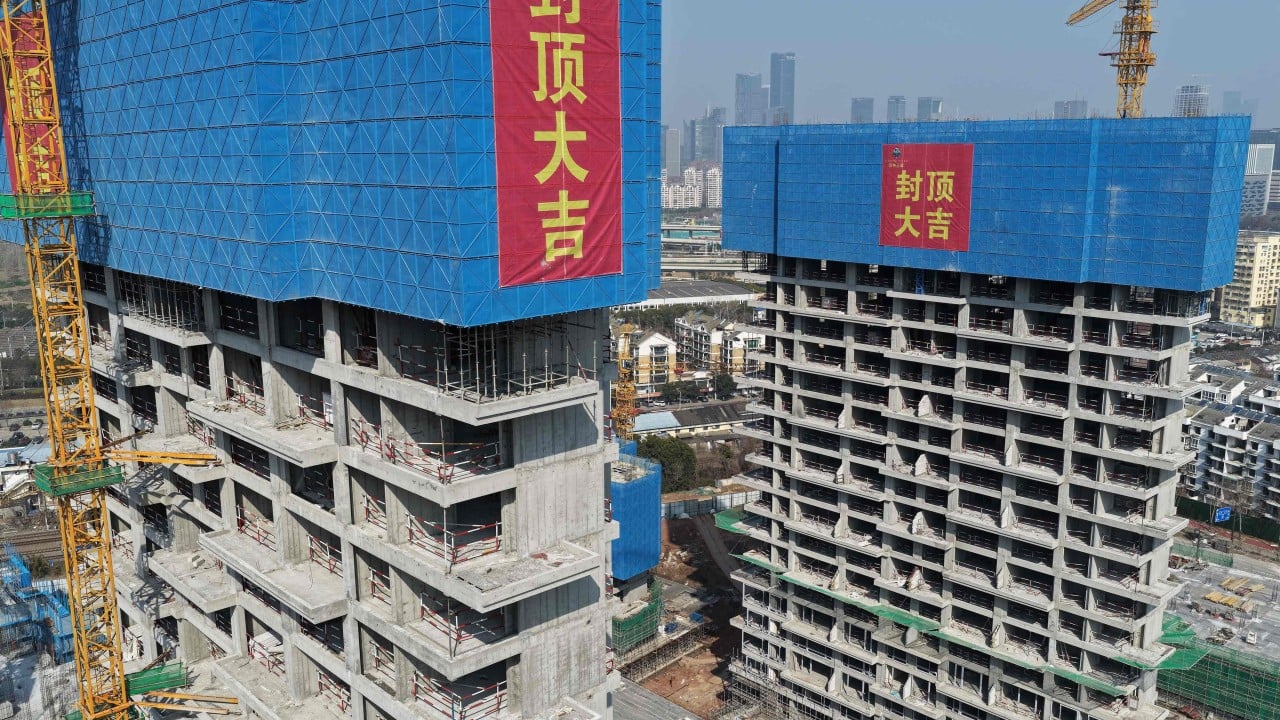
Historically, Chinese household and institutional wealth were concentrated in real estate. The structural decline of the property sector has triggered a massive reallocation of capital. With equity markets experiencing high volatility and the "wealth management product" (WMP) sector undergoing a shadow-banking crackdown, government bonds have become the only viable "safe haven" for domestic institutional capital.
The Sterilization of Capital Flight
Strict capital account management limits the ability of domestic banks and insurance companies to chase higher yields in US Treasuries. This creates a closed-loop system where internal liquidity remains trapped within the onshore interbank market. When the PBoC injects liquidity to support the economy, that liquidity flows directly into CGBs and policy bank bonds, driving yields down even as global yields rise.
Counter-Cyclical Institutional Demand
The ownership structure of CGBs provides a buffer against the "hot money" outflows that typically plague emerging markets.
- Domestic Commercial Banks: These entities hold the vast majority of CGBs. Their mandate is driven by regulatory liquidity ratios rather than pure profit-seeking. They act as the "buyer of last resort," ensuring that auctions remain well-bid even during periods of global volatility.
- Foreign Participation Shifts: While foreign investors did reduce holdings during the 2023-2024 period, the selling was orderly and largely offset by domestic insurance funds. The investors remaining in the market are primarily central banks and sovereign wealth funds seeking long-term reserve diversification, rather than tactical hedge funds.
The Cost Function of Sovereign Stability
Resilience is not a free lunch. The stability of the CGB market comes at the expense of currency pressure and a narrowing interest rate differential.
The Negative Carry Constraint occurs when the cost of hedging the Yuan exceeds the yield pick-up for foreign investors. This has effectively turned CGBs into a purely "unhedged" play for international participants. If the Yuan depreciates faster than the bond yield earns interest, the total return in USD terms turns negative. This creates a barrier to entry for Western pension funds, despite the underlying price stability of the bonds themselves.
Furthermore, the concentration of domestic capital in government debt creates a "Crowding Out" effect. As banks prefer the safety of sovereign paper, credit transmission to the private sector—specifically Small and Medium Enterprises (SMEs)—remains inefficient. The bond market’s strength is, in many ways, a reflection of the underlying economy’s weakness in generating productive private-sector investment opportunities.
Strategic Allocation Logic
For the institutional treasurer or global macro strategist, CGBs currently serve as a "Volatility Hedge" rather than a "Yield Play."
In a scenario where global markets face a recessionary shock, US Treasuries and CGBs would likely trade in tandem as "flight to quality" assets. However, in a "higher for longer" inflation scenario, CGBs offer a unique diversification benefit because their primary price driver is Chinese domestic credit demand, which is currently uncorrelated with Western consumer demand.
The optimal entry strategy for a global portfolio involves monitoring the PBoC’s 10-year yield target. The central bank has shown an inclination to prevent yields from falling too low (below 2.0%) to protect bank margins, while simultaneously preventing spikes to support fiscal stimulus. This creates a "bounded volatility" environment.
Strategic participants should focus on the 3-year to 5-year segment of the curve. This duration offers the best balance of liquidity and protection against a potential "yield curve control" intervention by the PBoC. The play is not to bet on a massive rally, but to utilize the asset’s low-beta characteristics to lower the overall Value at Risk (VaR) of a fixed-income sleeve. The resilience of Chinese bonds is a structural byproduct of an economy in transition, and as long as the property sector remains in a managed decline, the floor for CGB prices will remain firm.