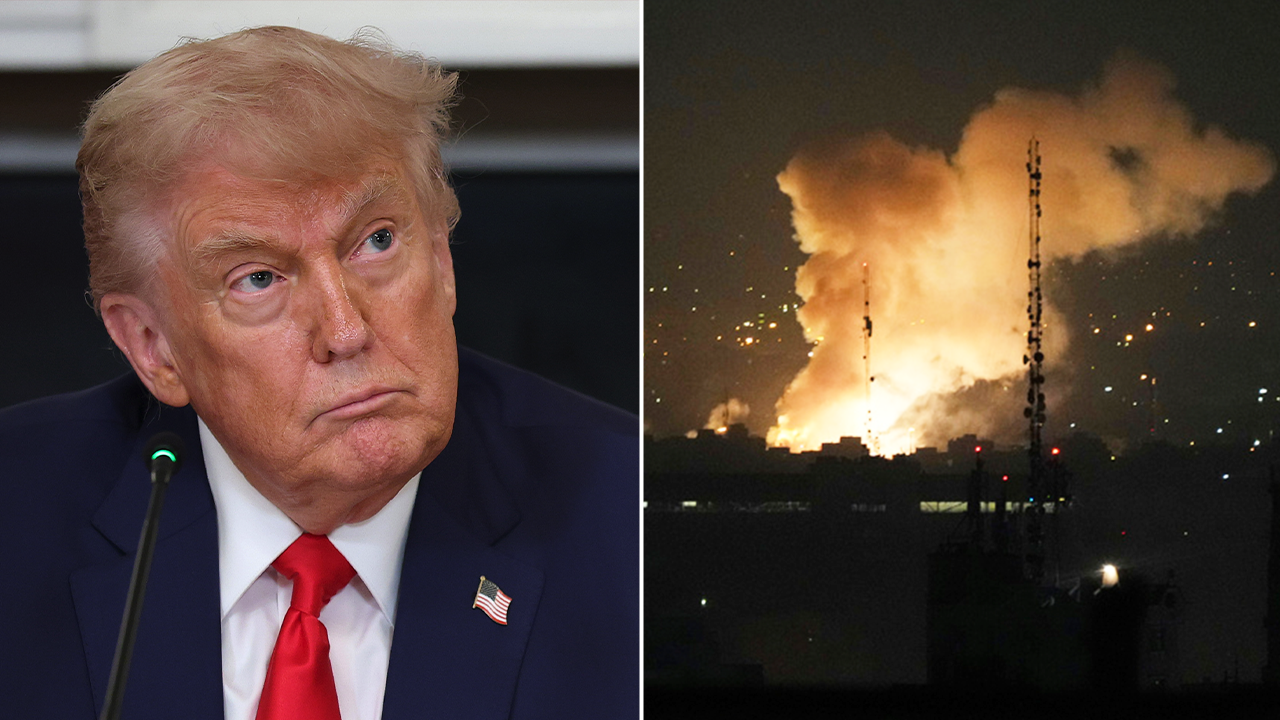
The proposed expansion of the death penalty for terror-related offenses in Israel creates a fundamental collision between domestic security imperatives and the normative constraints of the European-led international legal order. This friction is not merely a diplomatic disagreement; it is a measurable conflict between two distinct legal philosophies: retributive deterrence and abolitionist human rights frameworks. For European nations, the opposition is rooted in a non-negotiable legal standard that views capital punishment as a violation of the right to life. For the Israeli proponents, the move represents an attempt to alter the incentive structure of asymmetric warfare.
Evaluating this shift requires deconstructing the mechanism of the proposed law, the specific objections raised by European allies, and the resulting geopolitical externalities that threaten Israel’s diplomatic positioning. Learn more on a related topic: this related article.
The Triad of European Legal Objections
European opposition is driven by a commitment to the European Convention on Human Rights (ECHR), which prohibits the death penalty in all circumstances. This creates a hard ceiling for diplomatic cooperation. The European critique focuses on three structural risks:
- Irreversibility and Judicial Fallibility: The primary concern involves the "Error Margin Risk." In a legal system, no matter how rigorous, the possibility of wrongful conviction remains non-zero. The European position holds that state-sanctioned death removes the possibility of judicial correction, fundamentally undermining the integrity of the Rule of Law.
- The Martyrdom Incentive Loop: From a security strategy perspective, European analysts argue that the death penalty serves as a recruitment catalyst rather than a deterrent. In the context of ideologically motivated actors, execution often validates the actor’s narrative, potentially increasing the frequency and intensity of subsequent attacks. This creates a "feedback loop" where the punishment intended to reduce violence actually fuels the radicalization cycle.
- Universal Jurisdiction Risks: European nations often operate under the principle of universal jurisdiction for certain crimes. If Israel implements capital punishment, it complicates extradition treaties and intelligence sharing. European countries are legally barred from extraditing individuals to jurisdictions where they may face the death penalty. This creates a "safe haven" effect, where suspects might find relative legal protection within European borders because of the sentencing constraints in the requesting nation.
The Israeli Deterrence Model and Its Internal Logic
The legislative push in Israel is framed as a tool to restore "deterrent equilibrium." The logic operates on the assumption that the current carceral system—where high-profile prisoners are often traded in lopsided exchange deals—has failed to prevent further violence. Proponents argue that the "Total Loss" of life is the only consequence capable of altering the cost-benefit analysis of a potential attacker. More analysis by Reuters highlights related perspectives on this issue.
This model relies on the Theory of Rational Choice, assuming that attackers will prioritize their own survival over the mission’s objectives. However, this assumption is frequently challenged by the reality of suicide-based operations, where the actor has already discounted the value of their life to zero. In such cases, the death penalty does not add a new cost; it merely automates the outcome the attacker already anticipated.
Quantitative Externalities and the Diplomatic Cost Function
The implementation of capital punishment carries specific, quantifiable costs for Israel’s foreign policy. We can categorize these as "soft power erosion" and "institutional friction."
Soft Power Erosion
Israel relies heavily on its image as the "only democracy in the Middle East" to maintain support among Western populations. Aligning its penal code with states like Iran or China—which lead the world in executions—weakens this branding. European leaders have explicitly warned that this alignment makes it harder to defend Israeli security measures in international forums like the UN or the ICC.
Institutional Friction
The diplomatic cost is manifested in the following bottlenecks:
- Reduced Intelligence Interoperability: If European agencies fear their data will lead to an execution, they may withhold critical signals intelligence to avoid legal liability under their own domestic laws.
- Trade and Association Agreements: The EU-Israel Association Agreement includes clauses regarding "human rights and democratic principles." While rarely invoked for total suspension, a move toward capital punishment provides legal ammunition for factions within the European Parliament seeking to downgrade trade preferences or scientific cooperation.
The Mechanism of Escalation
The friction between Israel and Europe is not a static state but a dynamic process. When European nations issue formal condemnations, it signals to the Israeli domestic audience a perceived infringement on national sovereignty. This often results in a "Sovereignty Rally," where the Israeli government doubles down on the legislation to demonstrate independence from foreign pressure.
This creates a Bilateral Deadlock:
- Israel views the law as a domestic security necessity and a sovereign right.
- Europe views the law as a breach of a universal moral standard that they are treaty-bound to oppose.
The lack of a middle ground means that any progress on the bill is met with a corresponding withdrawal of European diplomatic cover. This is particularly visible in the context of the "Abraham Accords" and broader regional integration. European support is often the bridge between Israel and international legitimacy; burning that bridge for a domestic penal shift has long-term strategic implications.
Logical Contradictions in Policy Execution
A critical flaw in the proposed legislation is the "Selective Application" problem. If the death penalty is applied only to certain types of terror, the state must define "terror" with surgical precision. If the definition is too broad, it invites international sanctions; if it is too narrow, it fails the test of equal application under the law.
Furthermore, the military court system in the West Bank, where many of these cases would be tried, operates under different evidentiary standards than civil courts. Executing individuals based on military court rulings would likely trigger immediate interventions from the International Criminal Court (ICC), as the "fair trial" threshold required for capital punishment is significantly higher than that for incarceration.
The Strategic Path Forward
To resolve this impasse, the Israeli security establishment must weigh the theoretical deterrence of the death penalty against the guaranteed loss of European strategic cooperation. The data suggests that the "Martyrdom Effect" often outweighs the "Deterrence Effect" in asymmetric conflicts involving religious or nationalist ideologies.
The strategic play is to pivot toward High-Security Isolation rather than capital punishment. By eliminating the possibility of prisoner exchanges through constitutional amendments or specific sentencing mandates, Israel could achieve the "permanent removal" goal without triggering the international legal triggers associated with the death penalty. This maintains the domestic security objective while preserving the necessary diplomatic channels with European allies. Failure to recognize this trade-off will result in a net-negative security outcome: a penal code that does not stop attacks but does leave the state isolated on the global stage.
Would you like me to analyze the specific economic impact of EU trade clause triggers in response to this legislation?