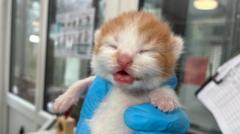
The surge in abandoned cat families at regional rescue centers is not a localized anomaly but a predictable outcome of three intersecting systemic pressures: the failure of the post-pandemic biological asset cycle, the erosion of discretionary household income, and the inelasticity of institutional rescue capacity. When a "family"—defined as a queen and her dependent litter—is abandoned, the operational load on a facility does not increase linearly; it compounds exponentially due to medical quarantine requirements and the specialized caloric and social needs of neonatal development.
The Macroeconomic Driver of Biological Unloading
The current influx of abandoned cats reflects a correction in the domestic animal market that began in 2020. During periods of low interest rates and social isolation, the demand for "companion assets" spiked. This created a supply-side response from unregulated breeders. As the cost of living index rose and discretionary spending contracted, the "maintenance cost" of these assets exceeded their perceived utility or the owner’s liquidity.
The cost function of feline ownership consists of:
- Fixed Costs: Initial vaccinations, microchipping, and neutering/spaying.
- Variable Costs: Quality protein-based nutrition and litter.
- Contingency Costs: Emergency veterinary interventions which have seen a 12-15% inflationary increase in pharmaceutical and labor overheads.
When a household reaches a debt-to-income ratio that triggers a reduction in non-essential expenditures, the animal often transitions from a companion to a liability. The abandonment of an entire family unit rather than a single adult indicates a failure to invest in the fixed cost of sterilization—a leading indicator of financial distress.
The Reproductive Multiplier and Capacity Constraints
Rescue centers operate on a fixed-resource model. Their capacity is dictated by physical square footage and the "volunteer-to-animal" labor ratio. A single adult cat requires roughly 15 minutes of direct maintenance per day. A litter of five kittens requires upwards of 120 minutes due to feeding schedules, socialization, and hygiene monitoring.
The reproductive biology of the feline species creates a vertical scaling problem for rescues.
- Gestation Period: 63–65 days.
- Litter Size: 4–6 kittens on average.
- Cycle Frequency: Polyestrous, meaning a single female can produce three litters annually if not intercepted.
The mathematical reality is that one unsterilized female can contribute to the birth of 12–18 new individuals within a single fiscal year. When these families are surrendered simultaneously, the rescue center faces a "thundering herd" problem. The intake of one family can consume the resources previously allocated to ten individual adult cats. This creates a bottleneck in the "Outflow" phase of the rescue lifecycle (adoption), as the market for kittens is seasonally volatile while the supply is increasingly constant.
The Breakdown of the Private Rehoming Market
Historically, the "Grey Market" of peer-to-peer rehoming (social media groups, local bulletins) acted as a buffer for formal rescue institutions. This buffer has disintegrated. High-density housing regulations and the rising prevalence of "no-pet" clauses in rental agreements have shrunk the total addressable market of potential adopters.
Furthermore, the "social contagion" of abandonment reduces the stigma previously associated with surrendering an animal. When digital platforms normalize the "rehoming" of pets due to minor life changes, the psychological barrier to abandonment lowers. This shifts the burden of responsibility from the individual to the institution, which is often a non-profit entity with no tax-based funding.
The Pathological Cost of Neonatal Care
Rescue centers reporting a rise in abandoned families are essentially reporting a rise in "High-Intensity Care" cases. Kittens under eight weeks old lack fully developed immune systems. Their presence in a shelter environment necessitates:
- Physical Isolation: To prevent the spread of Feline Panleukopenia and Upper Respiratory Infections (URI).
- Thermal Regulation: Energy costs for heating units to prevent hypothermia in neonates.
- Nutritional Density: Specialized formulas that are significantly more expensive than standard adult kibble.
The "rescue" is not merely a change of location; it is a clinical intervention. The failure of the original owner to provide these interventions early in the cat’s life results in a "deferred maintenance" debt that the rescue must pay. If a kitten is not socialized or medically stabilized by week 12, its "marketability" for adoption drops, leading to longer stays and higher cumulative costs.
Structural Solutions to the Shelter Bottleneck
To mitigate the systemic collapse of feline rescue networks, the strategy must shift from reactive "warehousing" to proactive "interventionism."
- Voucher-Based Sterilization at Scale: Municipalities must treat cat overpopulation as a public health utility issue. Providing subsidized or free spay/neuter services is a preventative measure that reduces the future "cost per stray" by orders of magnitude.
- The "Foster-First" Logistics Model: Physical shelters should function as transition hubs rather than long-term residences. By decentralized the care of families through a network of private homes, the institution reduces its overhead and minimizes the risk of infectious disease outbreaks.
- Tiered Adoption Fees: Implementing a premium on "purebred" or highly desirable kittens to subsidize the long-term care of "low-demand" senior cats or those with chronic health conditions.
The current trend of abandoning entire feline families is the "canary in the coal mine" for the broader pet-care economy. It signals a misalignment between the ease of animal acquisition and the sustainability of long-term maintenance. Until the cost of entry (sterilization and initial care) is structurally integrated into the acquisition process—either through regulation or mandatory insurance—rescue centers will continue to function as the overflow valves for a failing social contract.
The immediate tactical move for any rescue organization is the aggressive recruitment of "Neonatal Specialized Fosters" and the implementation of a "Waitlist Management System" for non-emergency surrenders to prevent total facility insolvency.