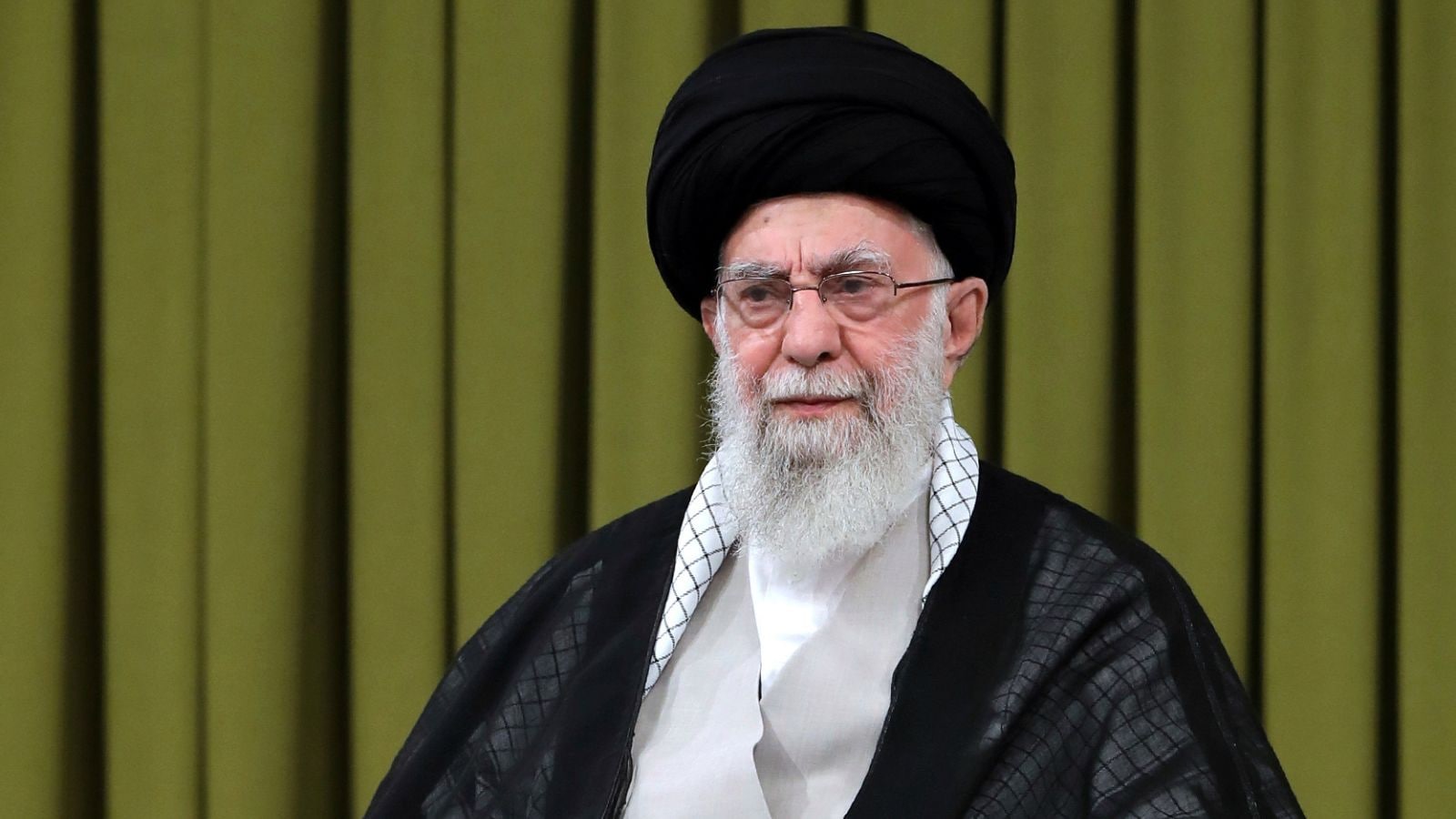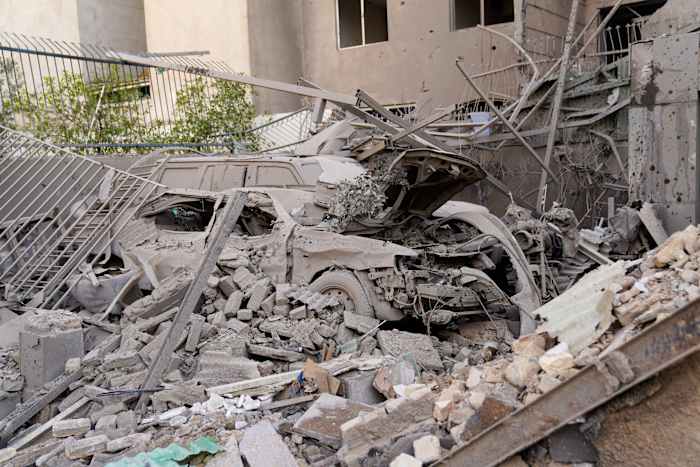
The removal of Ayatollah Ali Khamenei from the Iranian power structure via a joint U.S.-Israeli kinetic operation represents a terminal breakdown of the "gray zone" warfare model that has defined Middle Eastern security for four decades. This event does not merely change a regime; it dismantles the theological and bureaucratic glue holding the Axis of Resistance together. To understand the immediate fallout, one must look past the headlines and examine the specific structural points of failure within the Islamic Republic’s dual-power system and the technical realities of its retaliatory protocols.
The Structural Integrity of the Velayat-e Faqih
The Iranian state operates on the principle of Velayat-e Faqih (Guardianship of the Islamic Jurist), where the Supreme Leader sits at the apex of both spiritual and temporal power. Unlike a standard dictatorship, this position functions as the final arbiter between the elected government and the unelected military-clerical complex.
The elimination of the incumbent creates an instantaneous "arbitration deficit." The Assembly of Experts is legally tasked with selecting a successor, but the internal friction between the Islamic Revolutionary Guard Corps (IRGC) and traditional clerical factions creates a high-probability scenario for a power struggle. The IRGC has spent two decades embedding itself into the Iranian economy, controlling between 20% and 40% of the GDP through various front companies and foundations (bonyads). Their primary objective in the first 72 hours post-strike is not theological purity but the protection of these capital flows.
The Triple-Tier Retaliation Model
Iran’s military doctrine is built on three specific pillars of deterrence. When the head of that doctrine is removed, the activation of these pillars shifts from a calculated diplomatic lever to an automated survival mechanism.
- Proximal Kinetic Saturation: This involves the immediate activation of Lebanese Hezbollah’s precision-guided missile (PGM) inventory. Hezbollah possesses an estimated 150,000 rockets, but the critical variable is the Fateh-110 and its derivatives. These missiles use GPS/GLONASS guidance to achieve a Circular Error Probable (CEP) of less than 10 meters. A mass launch is designed to oversaturate the Iron Dome and David’s Sling interceptor envelopes through sheer volume.
- Asymmetric Maritime Chokepoints: The Strait of Hormuz handles roughly 20% of the world’s daily oil consumption. The IRGC Navy (IRGCN) utilizes a "swarm and mine" tactic. They do not need to defeat a U.S. carrier strike group; they only need to raise insurance premiums to a level that effectively halts commercial transit. The deployment of the EM-52 rising mine—a smart mine that sits on the seabed and fires a rocket-propelled warhead at a passing hull—remains the primary technical threat to global energy stability.
- Cyber-Kinetic Spillover: Iranian APTs (Advanced Persistent Threats) like MuddyWater and Charming Kitten have demonstrated a pivot from espionage to disruptive operations. In a decapitation scenario, the target set shifts to Industrial Control Systems (ICS) and SCADA networks within Western energy and water infrastructure.
Technical Limitations of the Iranian Command Chain
A common misconception is that the IRGC acts as a monolith. In reality, the IRGC-Quds Force (QF) operates with significant autonomy in foreign theaters. Without Khamenei’s direct oversight, the decentralized command structure of the QF creates a "rogue element" risk. Local commanders in Iraq, Syria, and Yemen may initiate escalatory strikes without coordination with Tehran, leading to a feedback loop of escalation that the central government cannot dampen even if it wished to.
The internal security apparatus, the Basij, faces a different challenge. Their effectiveness relies on a clear ideological mandate from the Supreme Leader. In the absence of that mandate, the friction between the security forces and a domestic population suffering from 40%+ inflation rates creates a high-risk environment for internal collapse.
The Nuclear Breakout Calculus
The most significant technical shift occurs in the nuclear program. Under Khamenei, Iran maintained a "latent" capability—holding uranium enriched to 60% U-235, which is a short technical step from the 90% required for weapons-grade material. The logic was to use the program as a bargaining chip.
With the leadership decapitated, the incentive structure flips. The surviving military leadership may perceive a "nuclear breakout" as the only way to prevent a total ground invasion or further decapitation strikes. The technical bottleneck is no longer enrichment, but weaponization—the process of miniaturizing a warhead to fit on a Shabab-3 or Khorramshahr missile. Intelligence suggests this "cold testing" phase could be compressed into a six-month window if all diplomatic constraints are abandoned.
Economic Contagion and Resource Realignment
Global markets react not to the death of a leader, but to the uncertainty of supply chains. A kinetic strike of this magnitude triggers an immediate flight to "hard" assets and a spike in Brent Crude futures. However, the secondary effect is the reconfiguration of the "Shadow Fleet." Iran utilizes a network of aging tankers to bypass sanctions, primarily selling to independent refineries in China. A direct conflict disrupts this black-market liquidity, forcing China to accelerate its pivot toward Russian or Gulf-state energy, further isolating the Iranian economy at its moment of maximum volatility.
The Regional Power Re-Balancing
The Abraham Accords changed the geometry of Middle Eastern defense. Security cooperation between Israel and several Arab states creates an integrated early warning system. The "Middle East Air Defense" (MEAD) alliance allows for the tracking of Iranian drone swarms across multiple borders. This technological integration means that an Iranian retaliatory strike is likely to face a tiered defense long before reaching Israeli airspace.
However, the fragility of this alliance depends on the scale of the civilian fallout. If the conflict expands into a regional conflux, the political pressure on Arab capitals to distance themselves from U.S. kinetic actions increases. The strategic bottleneck for the U.S. is the continued use of regional airbases (such as Al-Udeid or Incirlik) for offensive sorties.
The Strategic Directive
The immediate tactical priority for Western and allied forces is the suppression of IRGCN mine-laying capabilities and the neutralization of PGM launch sites in southern Lebanon. Success is not measured by the destruction of the Iranian state, but by the containment of its asymmetric reach during the 14-day "interregnum" period while the Assembly of Experts deliberates.
The second phase involves the "de-coupling" of the proxy network. Without the centralized funding and ideological direction from the Office of the Supreme Leader, groups like the Houthis and Kata'ib Hezbollah become localized actors. The strategy must pivot from a "War on Terror" framework to a "Warlord Management" framework, treating each proxy as an independent entity with its own localized grievances and exit ramps.
The final play is the exploitation of the IRGC’s economic vulnerability. By freezing the international assets of the bonyads and providing a clear path for technocratic elements within the Iranian regular army (Artesh) to maintain order, a total vacuum can be avoided. The objective is a controlled transition to a military-technocratic council that prioritizes economic survival over revolutionary expansionism.
Strategic actors must move to secure the "Nuclear Breakout" sites immediately via cyber and electronic warfare to ensure that the vacuum at the top does not lead to a desperate launch. The window for this stabilization is narrow; once the internal power struggle in Tehran concludes, the opportunity to re-shape the regional security architecture disappears.