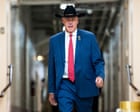
The announced resignation of Representative Ryan Zinke from Montana’s 1st Congressional District is not a singular personnel change but a systemic disruption in the Republican Party’s Western legislative architecture. Zinke’s departure creates an immediate vacuum in three distinct domains: federal land management advocacy, House Appropriations Committee seniority, and the internal power balance of the GOP’s "Western Caucus." Understanding the implications of this exit requires a deconstruction of the structural advantages Zinke held and the mechanical friction his successor will face in replicating them.
The Seniority Arbitrage Function
In the House of Representatives, political capital is a function of tenure and committee placement. Zinke’s position on the House Appropriations Committee—specifically the Subcommittee on Interior, Environment, and Related Agencies—served as a primary mechanism for directing federal resources to Montana’s infrastructure and land management projects.
The loss of this seat represents a "seniority reset" for the district. When a seasoned incumbent leaves, the following structural decays occur:
- Appropriations Efficacy Loss: A freshman successor begins at the bottom of the committee preference list. Even if they secure a seat on a relevant committee, they lack the "logrolling" history required to negotiate high-value earmarks or policy riders effectively.
- Institutional Memory Erasure: Zinke’s dual history as a Navy SEAL and former Secretary of the Interior provided him with a unique rhetorical leverage point in debates regarding the Department of the Interior (DOI) and the Bureau of Land Management (BLM).
- Legislative Velocity Reduction: New members typically experience a 12-to-18-month "onboarding" period where their legislative output is statistically lower and less likely to clear floor votes compared to established incumbents.
Geopolitical and Resource Management Friction
Montana’s 1st District is a theater for the conflict between federal oversight and state resource extraction. Zinke’s "Teddy Roosevelt Conservationist" branding allowed him to navigate the narrow corridor between hardline environmentalism and unrestricted industrial development. This specific political persona acted as a stabilizer for the local economy.
The transition introduces two primary variables of instability:
1. The Regulatory Permitting Bottleneck
Zinke often acted as a direct liaison between Montana’s extractive industries and federal regulators. Without a representative who understands the granular mechanics of the National Environmental Policy Act (NEPA) or the Endangered Species Act (ESA) from an executive branch perspective, local projects—ranging from mining to timber—face increased risk of "litigation paralysis."
2. The Federal Land Access Equilibrium
Roughly 29% of Montana’s land is federally owned. The management of this land is the single most important economic variable for the western half of the state. Zinke’s departure removes a firewall against federal "land grabs" or restrictive reclassifications (such as new Wilderness Area designations) that can stifle local economic activity.
The Special Election Mechanics and Voter Volatility
The process for replacing a sitting Congressman is governed by state-specific legal frameworks that introduce significant tactical uncertainty. In Montana, the governor must call for a special election within a specific window, forcing a compressed campaign cycle that favors candidates with high name recognition and immediate access to capital.
This compressed timeline creates a "Candidate Quality Stress Test." In a standard election cycle, candidates have 18 months to build a platform and vet their vulnerabilities. In a 90-to-120-day special election sprint, the following risks are amplified:
- Financial Inefficiency: The cost-per-vote in a special election is historically higher due to the need for rapid-fire media saturation and the lack of a traditional primary to consolidate the base.
- The Turnout Paradox: Special elections often see lower overall turnout, which increases the mathematical weight of motivated fringe segments within both parties. This can result in a nominee who is ideologically "pure" but lacks the broader appeal necessary for a general election in a purple-leaning western district.
- Nationalization of Local Issues: Because special elections are often the only game in town, they attract massive amounts of "Out-of-State" (OOS) money and national media scrutiny. This frequently shifts the focus from local water rights or forest management to national cultural flashpoints, alienating moderate swing voters.
The Western Caucus Power Shift
Within the Republican conference, the "Western Caucus" serves as a defensive bloc for rural interests. Zinke was a high-profile member of this group. His resignation triggers a recalibration of influence within the caucus.
We can quantify this shift through the lens of "Policy Domain Ownership." Zinke effectively "owned" the intersection of veteran affairs and interior policy. His absence forces a redistribution of these responsibilities among other Western representatives from Idaho, Wyoming, and Utah. This dilution of Montana-specific focus means that the state's unique priorities—such as the management of the Columbia River Treaty or specific grizzly bear delisting efforts—may lose their spot on the priority queue.
Capital Flight and Lobbying Realignment
K Street and corporate stakeholders operate on the principle of "Access ROI." A donor’s investment in a representative is predicated on that representative's ability to influence specific legislative outcomes.
When a member like Zinke steps down, there is an immediate "Capital Flight" as PACs and industry lobbyists reassess their portfolios.
- Short-term Freeze: Contributions to Montana’s 1st District campaigns will likely stall as donors wait to see which candidates emerge as viable.
- Relationship Hedging: Large stakeholders will diversify their lobbying efforts, moving away from a Montana-centric strategy toward more stable incumbents in neighboring states to protect their regional interests.
- Information Asymmetry: Prospective candidates will struggle to match Zinke's deep-seated understanding of the federal budget's "dark corners," where small line items can have massive local impacts.
Strategic Forecast: The Vulnerability of the 1st District
The 1st District is not a guaranteed Republican stronghold. While it leans R, the presence of growing urban centers like Missoula and Bozeman creates a demographic trend toward competitiveness. Zinke’s incumbency acted as a "Demographic Buffer," where his personal brand outperformed the baseline Republican party brand.
The removal of the "incumbency advantage" (estimated by political scientists to be worth between 3% to 7% of the vote share) puts this seat in play for a well-funded Democratic challenger. If the GOP fails to nominate a candidate who can speak the language of "Western Pragmatism"—balancing conservation with development—they risk a structural loss that would further narrow the already slim Republican majority in the House.
The immediate strategic requirement for the Republican National Committee (RNC) is the identification of a candidate who possesses "Functional Equivalency" to Zinke. This candidate must demonstrate:
- Technical Literacy: Deep knowledge of the DOI/USDA interface.
- Veteran Status: A prerequisite for the district's high-density military and veteran population.
- Fundraising Velocity: The ability to activate national donor networks within a 72-hour window.
Failure to secure a candidate with these attributes will result in a "Legislative Deficit" for Montana that will take at least three terms to correct. The transition is not merely about a seat in Congress; it is about the maintenance of a specific power dynamic that has favored the intermountain West for the last decade.
Would you like me to analyze the specific demographic shifts in Missoula and Bozeman to project the likely vote-share margin for the upcoming special election?



