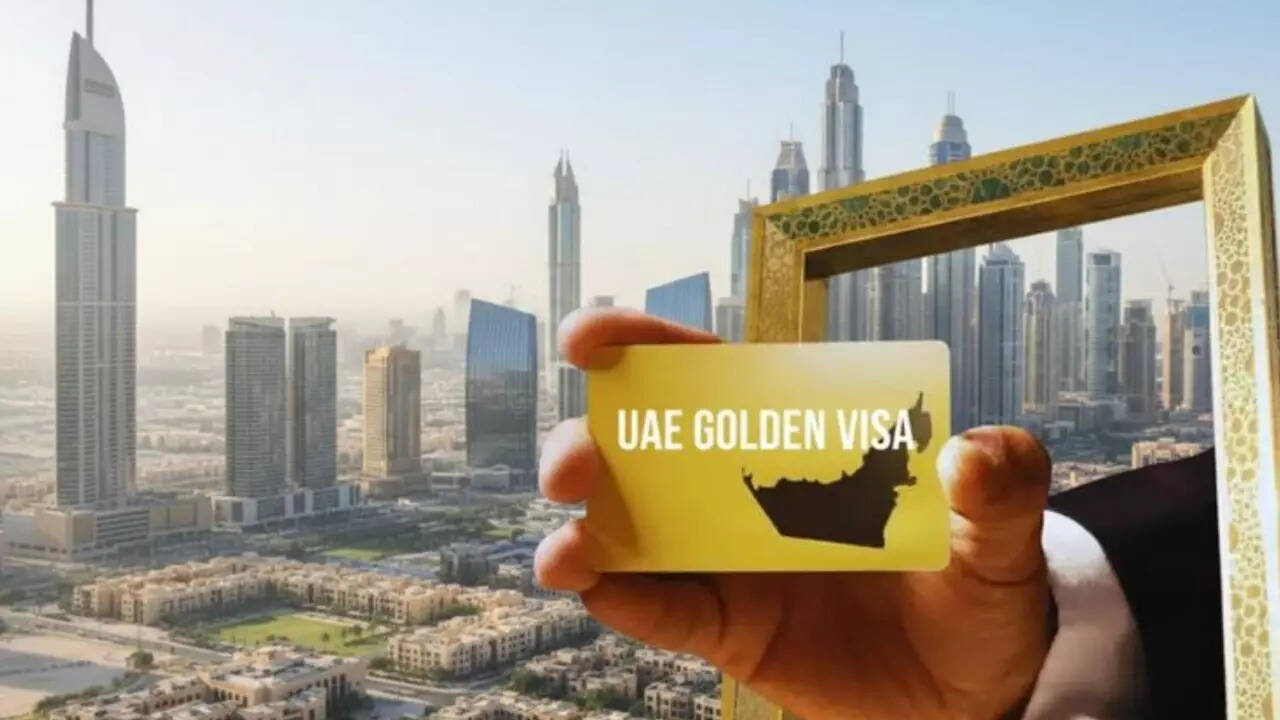
The return of 500 Golden Visa holders to the United Arab Emirates during a period of heightened kinetic conflict in the Middle East serves as a critical stress test for the country’s long-term residency value proposition. While traditional expatriate flows often invert during regional volatility, the re-entry of these high-net-worth individuals and specialized talents suggests that the Golden Visa has transitioned from a mere travel document to a foundational element of personal and capital security. The mechanism of this return is not accidental; it is the result of a coordinated synchronization between federal immigration authorities and diplomatic channels designed to bypass the friction of standard border closures and airspace restrictions.
The Architecture of Residency Continuity
The recent stranded-to-repatriated pipeline operates on three distinct structural pillars. These pillars define how the UAE maintains its "safe haven" status even when geographical proximity to conflict suggests otherwise.
- Administrative Extraterritoriality: Typically, long-term residency is contingent upon physical presence. The UAE’s willingness to waive or expedite re-entry permits for those outside the country beyond standard limits acknowledges that the "value" of a Golden Visa holder (capital investment or intellectual property) does not diminish simply because of a temporary inability to transit.
- Logistical Corridor Management: In the context of the Iran-US-Israel tensions, commercial flight paths become unreliable. The UAE authorities’ role in "stepping up" response involves creating bespoke travel authorizations that allow holders to utilize secondary transit hubs or specialized charters, effectively de-risking the journey for the individual.
- Sovereign Guarantee of Entry: For a residency program to be successful, the holder must believe that the "gate" will always open for them. By prioritizing the return of these 500 individuals, the state signals that the Golden Visa is a Tier-1 priority, insulating the holder from the bureaucratic paralysis that often hits standard visa categories during a crisis.
The Cost Function of Stranded Capital
When a Golden Visa holder is unable to return to their primary base of operations, the economic impact is not localized to the individual; it radiates through the UAE's private sector. This can be quantified through a simple cost function where the total loss ($L$) is a product of dormant investment ($I$), stalled operational leadership ($O$), and the erosion of consumer confidence ($C$).
$$L = f(I, O, C)$$
The 500 individuals in question represent a concentrated pool of liquid assets and managerial expertise. If these individuals remain stranded, the capital they oversee remains static. Real estate transactions stall, local business dividends are not reinvested, and the "velocity of wealth" slows. By facilitating their return, the UAE is effectively performing a "capital rescue" operation. The goal is to minimize the duration of $L$ to prevent a permanent shift in investment toward more stable, albeit lower-yield, jurisdictions like Singapore or Switzerland.
Geopolitical Friction vs. Institutional Stability
The escalation of tensions involving Iran, the United States, and Israel creates a paradox for the UAE. Geographically, the Emirates sit within the potential "splash zone" of regional kinetic events. However, the institutional response to the 500 stranded residents highlights a deliberate decoupling of regional risk from internal stability.
The UAE has spent a decade building a "fortress economy" characterized by:
- Diverse Airspace Redundancy: The ability to reroute through different flight FIRs (Flight Information Regions) ensures that even if one corridor is closed due to missile activity, others remain viable.
- Digital Governance (Smart Gates): The automation of the re-entry process means that once an individual reaches the border, the human element—which is prone to error and panic during a crisis—is minimized.
The crisis response noted by authorities is a manifestation of "antifragility." Rather than merely resisting the shock of the regional conflict, the UAE's immigration system is evolving to become more efficient as a result of it. The "step up" in response included the deployment of dedicated task forces within the Federal Authority for Identity, Citizenship, Customs and Port Security (ICP) to handle Golden Visa cases with a 24-hour turnaround.
The Shift from Transactional to Relational Residency
Historically, residency in the GCC was transactional—tied strictly to an employer (Kafala system). The Golden Visa broke this mold, but the current crisis is refining it into a relational model. When the state intervenes to bring a resident home during a war, it transitions from a "service provider" to a "protector."
This creates a high switching cost for the resident. Once an individual has been "saved" by a state’s diplomatic and logistical machinery, the likelihood of them liquidating their local assets to move elsewhere decreases significantly. This psychological and operational anchor is the true objective of the UAE’s crisis response.
The logistical challenge of the 500 returnees specifically addressed the bottleneck of "expired out-of-country" status. Under normal regulations, staying outside the UAE for more than six months can jeopardize residency status. The strategic decision to override this for Golden Visa holders recognizes that in a globalized, high-conflict world, the 180-day rule is an obsolete metric of loyalty or economic contribution.
Operational Limitations and Risk Factors
Despite the success of this repatriation, several bottlenecks remain that could impede future scalability:
- Dependency on Hub Connectivity: If Dubai International (DXB) or Zayed International (AUH) experience direct operational pauses, the Golden Visa status becomes irrelevant. The system requires a "Plan B" involving land or sea-based re-entry points which are currently less optimized for high-volume VIP transit.
- Data Silos: Information sharing between foreign airlines and UAE immigration can sometimes lag, leading to cases where a Golden Visa holder is denied boarding at a foreign outstation because the airline’s system does not reflect the latest federal exemptions.
- The "Premium Tier" Resentment: Prioritizing 500 Golden Visa holders over tens of thousands of standard labor or silver-tier residents creates a perceived hierarchy of safety. While economically logical, it carries a social risk that must be managed through broader, more inclusive repatriation messaging.
Analysis of the Repatriation Mechanism
The specific "step up" in response can be deconstructed into a three-stage tactical workflow used by the authorities.
Stage 1: Identification and Categorization
The ICP utilized its database to flag all Golden Visa holders whose last recorded exit was prior to the escalation of the current conflict. This proactive identification allowed the government to reach out to individuals rather than waiting for a backlog of help-desk tickets.
Stage 2: Diplomatic Air-Bridging
In regions where direct flights were canceled, the UAE utilized its diplomatic weight to secure "safe passage" for its residents through neutral third-party hubs. This often involved pre-clearing individuals with transit authorities in countries like Turkey or Qatar, ensuring that the resident’s Golden Visa was recognized as a valid re-entry document despite the chaotic status of their point of origin.
Stage 3: Instantaneous Re-validation
Upon arrival, any technical lapses in the visa (such as expiration during the stranded period) were corrected at the point of entry. This removed the "fear of deportation" or "fines" that usually act as a deterrent for residents returning from crisis zones.
Future-Proofing the Golden Visa Asset Class
As regional tensions persist, the UAE must move beyond ad-hoc crisis response toward a permanent "Emergency Resident Protocol." This would involve:
- Digital Sovereign Identity: Giving Golden Visa holders a blockchain-verified digital identity that is recognizable by IATA and global airlines, independent of the central UAE servers being online.
- Global "Safe Zone" Partnerships: Formal agreements with other global hubs to provide reciprocal support for long-term residents stranded during kinetic conflicts.
- Liquidity Assurance: A mechanism where the assets of a stranded Golden Visa holder are protected from "dormancy" penalties or legal challenges during their forced absence.
The return of these 500 individuals is a leading indicator of the UAE’s success in building an "urban citadel." It proves that the Golden Visa is not just a luxury product, but a functional tool for risk management. For the global investor, the takeaway is clear: the UAE has decoupled its internal operational efficiency from its external geopolitical environment.
To maintain this momentum, the strategic priority must now shift toward codifying these emergency exemptions into the permanent legal framework of the Golden Visa. By removing the "discretionary" nature of these rescues and making them a statutory right of the visa holder, the UAE will solidify its position as the world’s most resilient jurisdiction for mobile capital and talent. Establish a dedicated "Resident Crisis Portal" within the ICP app to provide real-time transit intelligence and automated re-entry waivers for any holder currently in a high-risk zone.