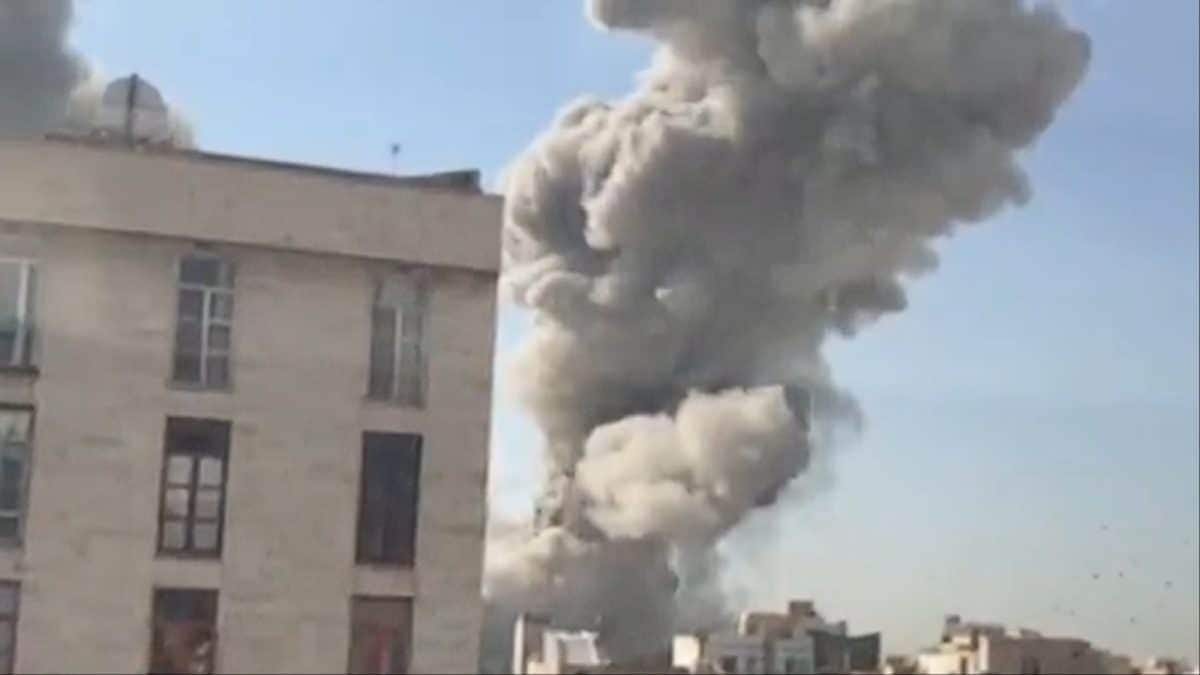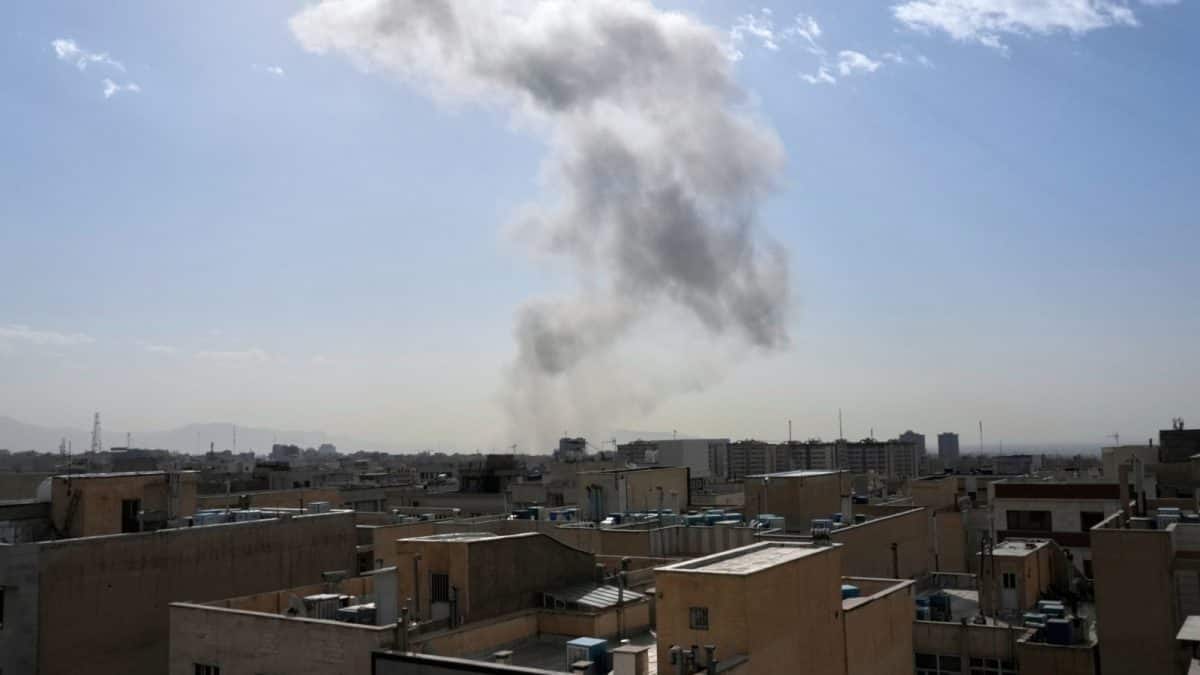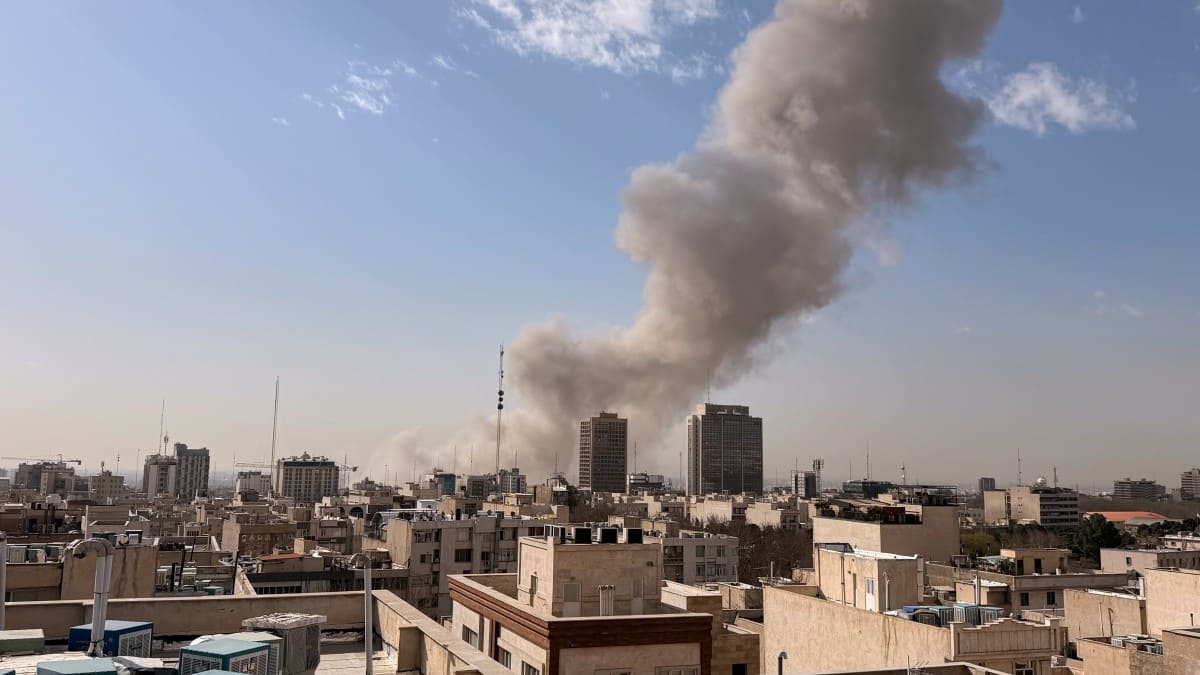
The issuance of a formal travel advisory by the Ministry of External Affairs (MEA) regarding Israel, following Iranian retaliatory strikes, is not merely a bureaucratic safety warning; it is a calculated signal of shifting regional stability thresholds. For the approximately 18,000 to 20,000 Indian nationals currently residing in Israel—primarily caregivers, IT professionals, and students—this advisory functions as the primary mechanism for state-led risk mitigation. It operates by creating a structured framework for non-essential personnel to self-identify and minimize their physical footprint in a zone characterized by high kinetic volatility and potential for asymmetric escalation.
The Mechanics of the Advisory: A Three-Tiered Response Strategy
The MEA’s issuance follows a specific escalation protocol that distinguishes between "cautionary monitoring" and "active evacuation." The current directive, which advises against travel to Israel and urges residents to exercise extreme caution, falls into the "Pre-Evacuation Mitigation" phase. This phase is characterized by three distinct functional objectives:
- Footprint Reduction: By advising against new travel, the state prevents the expansion of its vulnerable population base. This reduces the logistical complexity of any future "Operation Ajay" style evacuation.
- Registration Synchronization: The advisory triggers a surge in voluntary registration with the Indian Embassy in Tel Aviv. This creates a real-time database of the diaspora’s geographic distribution, allowing the government to map concentrations of citizens against potential missile flight paths or IDF military zones.
- Behavioral Standardization: In a high-stress environment, information asymmetry leads to panic. The advisory provides a singular, authoritative source of instruction, neutralizing the impact of disinformation and unverified reports circulating on social media regarding border closures or flight cancellations.
Geopolitical Friction Points and the Iran-Israel Feedback Loop
The advisory must be interpreted through the lens of the direct confrontation between Tehran and Jerusalem. The transition from proxy-led skirmishes to direct state-to-state missile and drone exchanges has fundamentally altered the risk profile for Indian nationals. The primary danger is no longer just localized terror attacks or border incursions; it is the systemic collapse of civil aviation infrastructure and the saturation of missile defense systems.
The logic of the current escalation follows a predictable, albeit dangerous, feedback loop:
- The Provocation Variable: Targeted strikes on diplomatic or military assets (e.g., the Damascus consulate strike) serve as the catalyst.
- The Response Variable: Retaliatory barrages (e.g., Iran's multi-layered drone and missile launches) test the density of the "Iron Dome" and "Arrow" systems.
- The Collateral Variable: For Indian nationals, the risk is a byproduct of high-altitude interceptions and falling debris, coupled with the potential for targeted strikes on critical infrastructure where Indian IT or port workers are located.
The Adani Group’s ownership of the Haifa Port adds a layer of economic strategic interest to this advisory. The protection of Indian labor at this facility is not just a humanitarian concern but a preservation of a critical maritime node in the IMEC (India-Middle East-Europe Economic Corridor) project.
Structural Risks to the Indian Diaspora in Israel
To understand the necessity of the MEA’s stance, one must categorize the specific risks faced by the diverse segments of the Indian population in Israel.
Caregivers and the Urban Risk Factor
The majority of Indian nationals in Israel are caregivers residing in major urban centers like Tel Aviv and Jerusalem. These areas are primary targets for psychological and retaliatory strikes. While the density of bomb shelters (mamads) in Israeli residential buildings is high, the "wait-and-see" approach inherent in caregiving—where individuals are often responsible for the elderly or infirm—creates a mobility bottleneck. The advisory serves as a prompt for these individuals to establish clear emergency protocols with their employers.
The G2G Labor Migration Paradox
A significant development in 2024 has been the Government-to-Government (G2G) agreement to send Indian construction workers to Israel to replace Palestinian labor. The timing of the advisory creates a direct friction point with this policy. While the Indian government has facilitated these labor flows to address domestic employment needs and Israeli labor shortages, the current security environment introduces a "Duty of Care" liability. The advisory effectively pauses or decelerates this pipeline, acknowledging that the economic benefit to the worker no longer outweighs the sovereign risk of their injury or death in a combat zone.
Academic and Research Continuity
Indian students and researchers are often located in specialized institutions such as the Technion in Haifa or Ben-Gurion University in the Negev. These areas, while less frequently targeted than Tel Aviv, are situated near sensitive military installations. The advisory necessitates a pivot toward remote learning or temporary relocation to safer zones within the country, such as the southern regions which, while still under threat, may be outside the primary focus of certain ballistic trajectories.
The Logistics of Sovereign Extraction: Why the Advisory Precedes Action
The decision to move from an advisory to an active evacuation (non-combatant evacuation operation, or NEO) is governed by the "Threshold of Functional Governance." As long as Ben Gurion International Airport remains operational and commercial flights—even at reduced capacity—are available, the state prefers "assisted commercial departure" over a full-scale military evacuation.
The current advisory acts as a pressure valve. By encouraging those who can leave to do so now via commercial means, the government prevents a surge of thousands of people descending on the airport simultaneously if the conflict intensifies. This is a lesson learned from the 2022 evacuation from Ukraine, where the closing of the airspace necessitated a much more dangerous overland extraction via neighboring countries.
Economic and Diplomatic Signaling
Beyond the immediate safety of citizens, the advisory serves as a diplomatic signal to both Tehran and Jerusalem.
- To Jerusalem: It communicates that while India remains a strategic partner, it will not ignore the physical safety of its citizens in the pursuit of bilateral labor or economic goals. It exerts a subtle pressure on the Israeli government to ensure that the security of foreign nationals is integrated into their defense and civil home-front planning.
- To Tehran: It acknowledges the reality of the Iranian threat without taking a side in the ideological conflict. By characterizing the situation as "prevailing," India maintains its "strategic autonomy," treating the conflict as a matter of regional security rather than a moral binary.
Tactical Constraints of the Indian Embassy
The embassy in Tel Aviv operates under a high-intensity workload during these periods. Their primary constraint is not lack of will, but the sheer dispersion of the diaspora. Unlike a military unit, a civilian population cannot be commanded to move; they must be persuaded. The advisory is the tool of persuasion. It provides the legal and administrative basis for the embassy to:
- Activate 24-hour helplines.
- Request emergency funding from the Indian Community Welfare Fund (ICWF).
- Coordinate with Israeli Home Front Command to translate emergency instructions into Hindi and other Indian languages.
Probabilistic Outcomes and Individual Risk Management
The trajectory of this crisis suggests three primary scenarios, each requiring a different response from Indian nationals on the ground.
Scenario A: Managed Reciprocity (Low-Medium Probability)
In this case, strikes remain targeted and symbolic. The MEA will likely maintain the current advisory but allow the G2G labor flow to continue with enhanced briefings. Citizens should remain in place but maintain a "72-hour bag" with documents and essentials.
Scenario B: Infrastructure Attrition (Medium Probability)
If strikes target power grids, water desalination plants, or communication hubs, the quality of life for the diaspora will degrade rapidly. In this scenario, the advisory will shift to an "Immediate Departure" warning, and the Indian government will likely charter special flights (Air India or IAF C-17s) to facilitate a mass exit.
Scenario C: Regional Conflagration (Low Probability)
A full-scale war involving Hezbollah in the north and direct Iranian involvement would likely close Israeli airspace. This would necessitate a "Ground-to-Sea" extraction strategy, possibly using the Haifa Port—managed by Adani—as an assembly point for naval evacuation toward Cyprus or direct return to India via the Red Sea, though the latter is complicated by Houthi activity.
Strategic Recommendations for Stakeholders
Given the current data, Indian nationals and associated business entities should adopt a policy of "Proactive De-risking." This involves the following steps:
- Audit of Documents: Immediate verification of passport validity (minimum 6 months) and ensuring that OCI cards or visas are readily accessible.
- Financial Liquidity: Maintaining access to liquid funds in both Shekels (ILS) and USD, as digital payment systems can be disrupted during cyber-attacks or prolonged power outages.
- Communication Redundancy: Relying on the Embassy’s official "X" (formerly Twitter) account and registered WhatsApp groups rather than local news outlets which may be subject to military censorship.
The most critical action for any Indian national currently in Israel is to complete the online registration form provided by the Embassy immediately. This is the single point of failure in any extraction operation; the state cannot protect what it cannot locate. Those considering travel to Israel for construction or caregiving roles must defer their departures until the MEA explicitly downgrades the threat level. The current volatility indicates that the risk to life now exceeds the potential for economic gain, a calculation the Indian government has signaled through its latest directive.