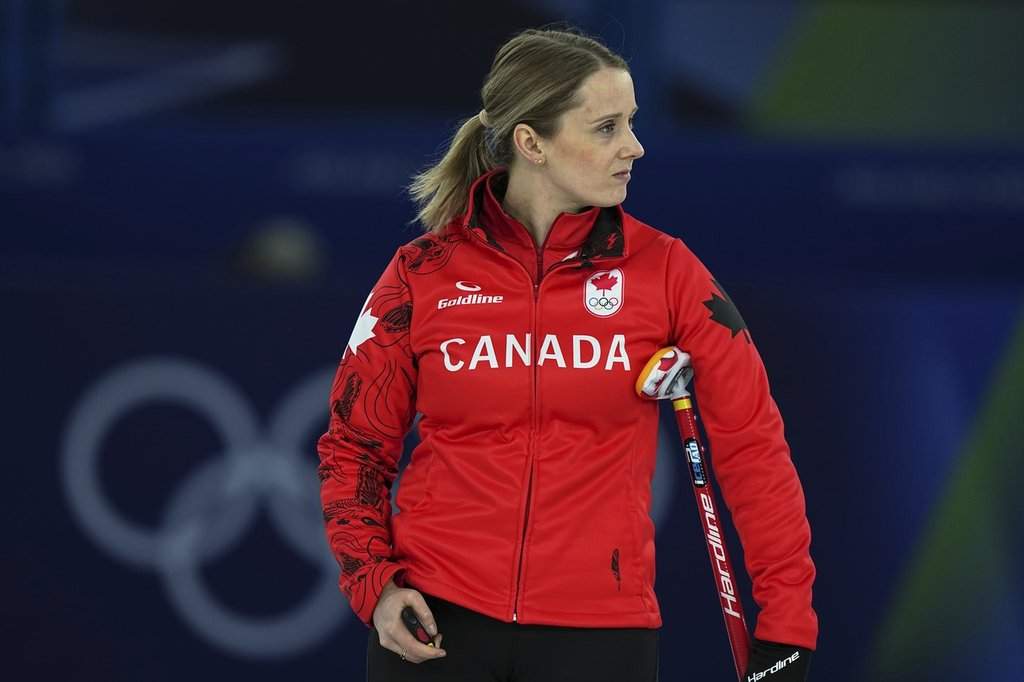
The mid-quadrennial roster shift executed by Kerri Einarson—replacing longtime lead Briane Harris with two-time Olympian Jocelyn Peterman—represents a calculated attempt to solve a specific technical and psychological bottleneck in elite curling. While surface-level analysis focuses on the change in personnel, the move actually addresses the Mechanical Consistency Quotient and the High-Pressure Shot Allocation required to maintain dominance in a sport currently experiencing rapid tactical evolution. Team Einarson, having secured four consecutive Scotties Tournament of Hearts titles before their recent bronze-medal finish, reached a performance plateau where the existing configuration could no longer guarantee international podium results.
The Triple Pivot Framework of Elite Roster Construction
In elite curling, a roster change is not merely a replacement of one player with another of similar skill; it is a recalibration of the team’s total system. This transition can be analyzed through three primary pillars:
1. Front-End Technical Symmetry
The lead position is the foundation of the team’s "stone book." The lead’s primary function is to establish the corner guards or hit-and-rolls that define the geometry of the end. Jocelyn Peterman brings a specific technical profile characterized by a lower-variance release and higher sweeping efficiency metrics compared to the league average. By integrating a player with Olympic experience at the lead and second positions (Peterman and Shannon Birchard), Einarson creates a front-end "iron wall" that minimizes the margin of error for the back-end shooters.
2. The Experience-Stress Buffer
Team Einarson faced significant external pressures during the 2024 season, specifically the late-season suspension of Briane Harris for a positive drug test. This created a vacuum of stability. Bringing in Peterman—who has navigated the unique stressors of the Winter Olympics and the high-stakes environment of Team Jennifer Jones—introduces an immediate "Experience-Stress Buffer." This prevents the "new player lag" often seen in teams that recruit younger, less-tested talent. Peterman is a known quantity who requires zero psychological onboarding.
3. Shot-Making Versatility and Line Calling
Peterman’s background as a former skip and third provides Einarson with an extra set of tactical eyes on the ice. While she will play lead, her ability to read ice paths and assist in line calling during crucial skips' stones offers a redundant layer of decision-making. This reduces the cognitive load on Einarson and Val Sweeting, allowing them to focus exclusively on execution rather than path-finding.
Quantifying the Harris-Peterman Transition
To understand why this move was necessary, one must look at the Succession Risk Profile. Remaining stagnant with a fill-in player (as seen with Krysten Karwacki during the Scotties) provides short-term relief but long-term instability.
- Shot Percentage Variance: At the 2024 Scotties, the lead position for Team Einarson saw a fluctuation in shot percentages that often left the house unprotected. Peterman’s career average at the lead position suggests a tighter distribution of outcomes, particularly on high-difficulty "soft weight" draws.
- The Sweeping Force Vector: Elite curling has shifted toward a "power-front" model. Peterman’s physical conditioning and experience with directional sweeping technology provide an incremental gain in stone-carving ability. Even a 2% increase in the ability to hold a line can be the difference between a stolen end and a forced single.
The Operational Cost of Roster Volatility
While the acquisition of Peterman is a net positive in terms of talent, it introduces a period of Communication Entropy. Every curling team develops a non-verbal shorthand over years of competition.
The Onboarding Bottleneck
The first six months of the Einarson-Peterman era will likely show a dip in "sweep-call latency." This is the time delay between the skip’s command and the sweepers’ reaction. Because Peterman is transitioning from a different system, her internal timing must be synchronized with Shannon Birchard. If this synchronization fails, the team will struggle with distance control on the "draw to the button" (LSD), which determines the hammer in the first end.
Strategic Redundancy
Team Einarson is effectively doubling down on the "Veteran Acquisition Strategy." By prioritizing a two-time Olympian over a younger developmental player, they are signaling a short-term window for gold. This creates a "Win-Now" pressure cooker. The risk is that the team becomes "top-heavy" with established stars who have their own entrenched ways of reading ice, potentially leading to friction during the critical minute of a tactical time-out.
Structural Challenges in the Canadian Ranking System
The timing of this roster move is dictated by the Points-Chase Mechanics of the World Curling Tour. To qualify for the Olympic Trials, Team Einarson must maintain a high standing in the CTRS (Canadian Team Ranking System).
- Point Retention: Because Peterman comes from a high-ranking team (Team Lawes), the transition does not result in a significant points penalty. This is a critical move to ensure they remain in the "Slam" tier of events.
- Scheduling Optimization: The new lineup allows for a more aggressive international schedule. Peterman’s experience with travel logistics and high-volume play means the team can participate in more European events without the risk of physical burnout that affects less experienced rosters.
The Mechanism of the "Fifth" Stone
In modern curling, the lead's stones are often referred to as the "setup stones." However, the true value of a player like Peterman is the "Fifth Stone"—the psychological impact on the opponent. When an opposing skip looks at the Einarson roster and sees four players with multiple national titles and Olympic rings, the "Intimidation Delta" increases. This often forces opponents into high-risk, low-reward shots early in the end, as they feel the need to out-perform a statistically superior front end.
The Technical Execution Path
For Team Einarson to translate this roster change into a fifth Scotties title and a World Championship, they must adhere to a strict tactical roadmap:
- Establishment of New "Slide Baseline": Peterman must calibrate her slide to the specific release speed of Birchard and Sweeting to ensure the skip has a uniform visual of stone velocity.
- Ice Mapping Integration: The team must conduct intensive practice sessions on various ice types (arena ice vs. club ice) to merge Peterman’s ice-reading notes with the existing Einarson database.
- Role Definition in the House: Einarson must clearly define Peterman’s role during the skip’s stones. Will she be a primary consultant or a silent executor? Ambiguity in this area leads to missed lines during high-pressure tenth ends.
The removal of Briane Harris was a forced move due to external regulatory factors, but the selection of Jocelyn Peterman is an offensive maneuver. It replaces a specialized role with a versatile asset, shifting the team from a defensive posture (trying to maintain a title with a sub) to an aggressive rebuild aimed squarely at the 2026 Winter Olympics. The success of this strategy hinges not on Peterman’s ability to throw a stone—which is elite—but on the team’s ability to compress three years of chemistry-building into a single season.
The immediate tactical play is for Einarson to utilize Peterman’s high-weight hit accuracy to transition the team toward a more aggressive, high-count strategy in the early ends, leveraging their front-end strength to force opponents into mistakes before the mid-game break.