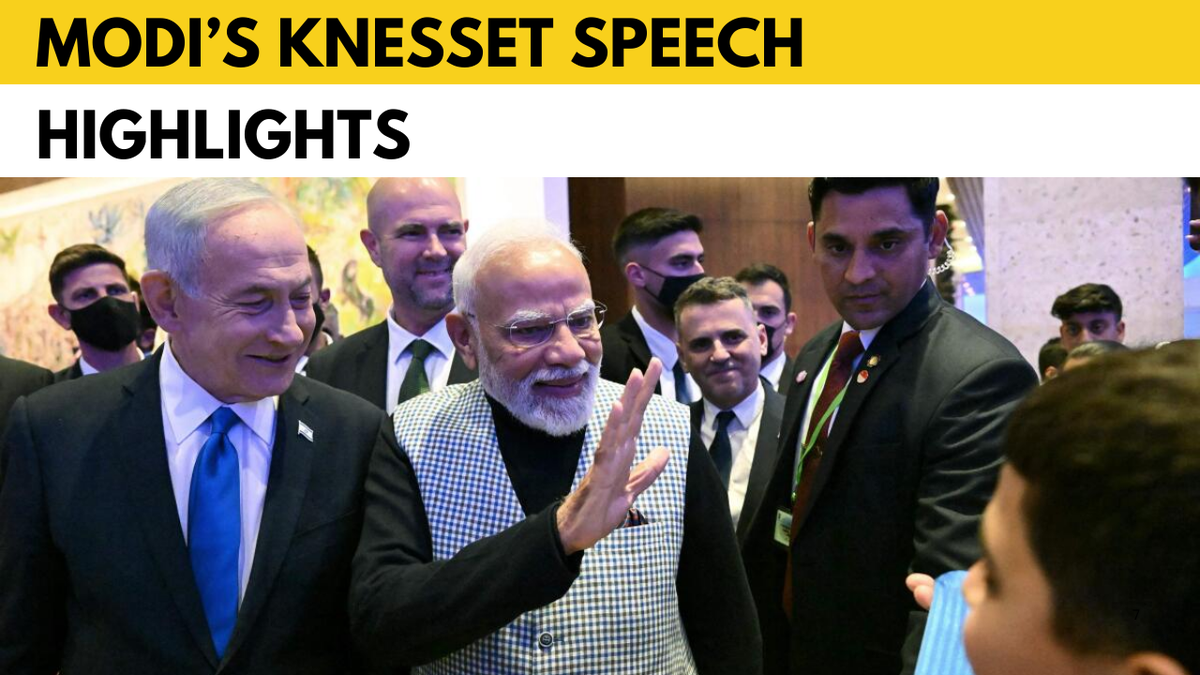
The public condemnation of the October 7 attacks by the Indian Prime Minister at the Knesset serves as a foundational pivot point for a broader, structural realignment of South Asian and Middle Eastern security architectures. While media narratives focus on the rhetoric of "barbaric" acts, the underlying reality is a calculated transition from a traditional buyer-seller defense relationship to a co-development ecosystem built on shared threat perceptions and high-technology interdependence. This shift is not merely diplomatic; it is a response to the changing cost functions of asymmetric warfare and the necessity of securing the India-Middle East-Europe Economic Corridor (IMEC) against non-state disruption.
The Triad of Strategic Convergence
The deepening ties between New Delhi and Jerusalem are governed by three distinct operational pillars that dictate the trajectory of the bilateral relationship.
1. Intelligence Interoperability and Counter-Asymmetric Warfare
The October 7 attacks redefined the "security-at-scale" problem for both nations. India, which manages one of the world's most complex physical borders, views the breach of the Gaza fence as a technical failure with direct implications for its own LoC (Line of Control) management. The integration of Israeli signal intelligence (SIGINT) and image intelligence (IMINT) into Indian border management creates a feedback loop where tactical failures in one theater inform the procurement and deployment strategies in the other.
The mechanism here is the Intelligence Transfer Ratio. When India adopts Israeli AI-driven surveillance platforms, it isn't just buying hardware; it is importing the algorithmic logic derived from years of active combat data. This reduces the "time-to-detection" for cross-border incursions. The commitment to "deeper ties" specifically targets the synchronization of these data streams.
2. The Localization of High-Technology Defense Production
India’s "Make in India" initiative has found its most significant partner in the Israeli defense industry. The shift is moving away from the "Off-the-Shelf" procurement model toward the Joint-Venture Manufacturing Model.
- UAV Ecosystems: The production of Hermes drones in Hyderabad represents the first time such sophisticated tech has been manufactured outside Israel. This creates a distributed supply chain that protects Israel’s manufacturing capacity during local conflicts while providing India with indigenous sovereign capabilities.
- Missile Defense Architecture: The development of the MR-SAM (Medium-Range Surface-to-Air Missile) is a case study in co-design. It merges Indian propulsion systems with Israeli seeker technology. This division of labor exploits the comparative advantages of both nations: India’s massive industrial base and Israel’s specialized R&D edge.
3. Maritime Security and the IMEC Corridor
The stability of the Mediterranean-Red Sea-Arabian Sea transit route is a shared economic imperative. For India, Israel is the western terminus of the IMEC. Any disruption in the Levant—such as the October 7 attacks—increases the maritime insurance risk and operational costs for Indian exports. The "vow" of deeper ties is a signal to global markets that the eastern and western anchors of this trade corridor will provide a unified security umbrella.
Quantifying the Security Risk Multiplier
The "barbaric" designation used in the Knesset address carries specific legal and strategic weight. By categorizing the attack in these terms, India aligns its domestic anti-terror framework with Israel’s military objectives. This alignment facilitates the bypassing of traditional bureaucratic bottlenecks in technology transfer.
The Problem of Asymmetric Cost Ratios
A primary challenge both nations face is the declining cost of offensive asymmetric tools versus the rising cost of defensive systems.
- Offense: A $500 commercial drone modified for munitions delivery.
- Defense: A $50,000 interceptor missile (like those used in the Iron Dome or similar tactical systems).
The strategic cooperation now focuses on "Directed Energy Weapons" (DEWs) and laser-based interception. These systems aim to bring the "cost-per-kill" down to the price of electricity. The joint research into these technologies is the actual "deeper tie" that matters for the next decade of warfare.
Structural Limitations and Friction Points
Despite the high-level alignment, several structural bottlenecks limit the total integration of these two states.
- Energy Dependency: India remains a massive importer of crude oil from nations that may not share Israel’s regional outlook. This creates a "Strategic Balancing Constraint." India cannot fully pivot to a singular Middle Eastern ally without risking its energy security.
- Diversification of Suppliers: India’s defense policy is built on "Strategic Autonomy." It will never rely on a single source for more than 30% of its critical tech. This means Israel must constantly out-innovate competitors from France, the US, and Russia to maintain its market share.
- The Technology Transfer Gap: While joint ventures exist, the "Black Box" of core algorithms often remains proprietary. The next stage of the relationship requires a level of trust that allows for the sharing of source codes, a threshold that few nations have ever crossed.
The Shift from Tactical to Foundational Alliance
The rhetoric at the Knesset signals that India no longer views Israel through the lens of the Palestinian conflict alone, but as a critical component of its own national security. This is a transition from a Transaction-Based Relationship to a Systemic-Integration Relationship.
The second-order effect of this integration is the creation of a "Third Way" in global geopolitics. Neither fully Western-aligned nor part of the traditional Non-Aligned Movement, the India-Israel partnership creates a technocratic security bloc. This bloc prioritizes sovereign tech-stacks, secure supply chains, and aggressive counter-terrorism.
The immediate operational priority for this partnership is the hardening of the IMEC transit points. This involves the deployment of joint cybersecurity protocols for port management and the integration of satellite-based tracking systems. The "barbaric" threat is viewed not just as a human tragedy, but as a "Systemic Shock" to the global trade architecture that must be engineered out of existence.
Precision-Guided Diplomacy
The Knesset address was a demonstration of "High-Confidence Diplomacy." By taking a firm stance in the heart of the Israeli legislature, the Indian leadership signaled to domestic and international audiences that the defense partnership is now a non-negotiable asset.
The logical progression involves three specific moves:
- Standardization of Equipment: Moving toward a unified hardware standard for infantry and special forces to allow for seamless joint training.
- Cyber-Kinetic Fusion: Merging Israeli offensive cyber capabilities with Indian data processing scale to pre-emptively neutralize digital threats to physical infrastructure.
- Agriculture and Water as Security: Recognizing that regional instability is often driven by resource scarcity, the "deeper ties" include the export of Israeli desalination and precision-agriculture tech to India’s arid regions, addressing the root causes of radicalization through economic stabilization.
The strategic play here is the permanent embedding of Israeli technology into the Indian state’s foundational infrastructure. Once a nation’s border security, water management, and satellite communications are built on a specific partner’s technology stack, the alliance moves beyond the whims of changing political administrations. It becomes a permanent structural reality.
Assess the current rollout of the "iCET" (Initiative on Critical and Emerging Technology) frameworks to identify which specific Israeli startups are being integrated into Indian defense incubators. The most high-value opportunities reside in the "dual-use" sector—technologies like autonomous navigation and encrypted mesh networks that serve both the battlefield and the smart-city infrastructure of the next decade. Would you like me to map the specific joint-venture entities currently dominating the Indian aerospace sector to identify where the next round of capital expenditure is likely to occur?