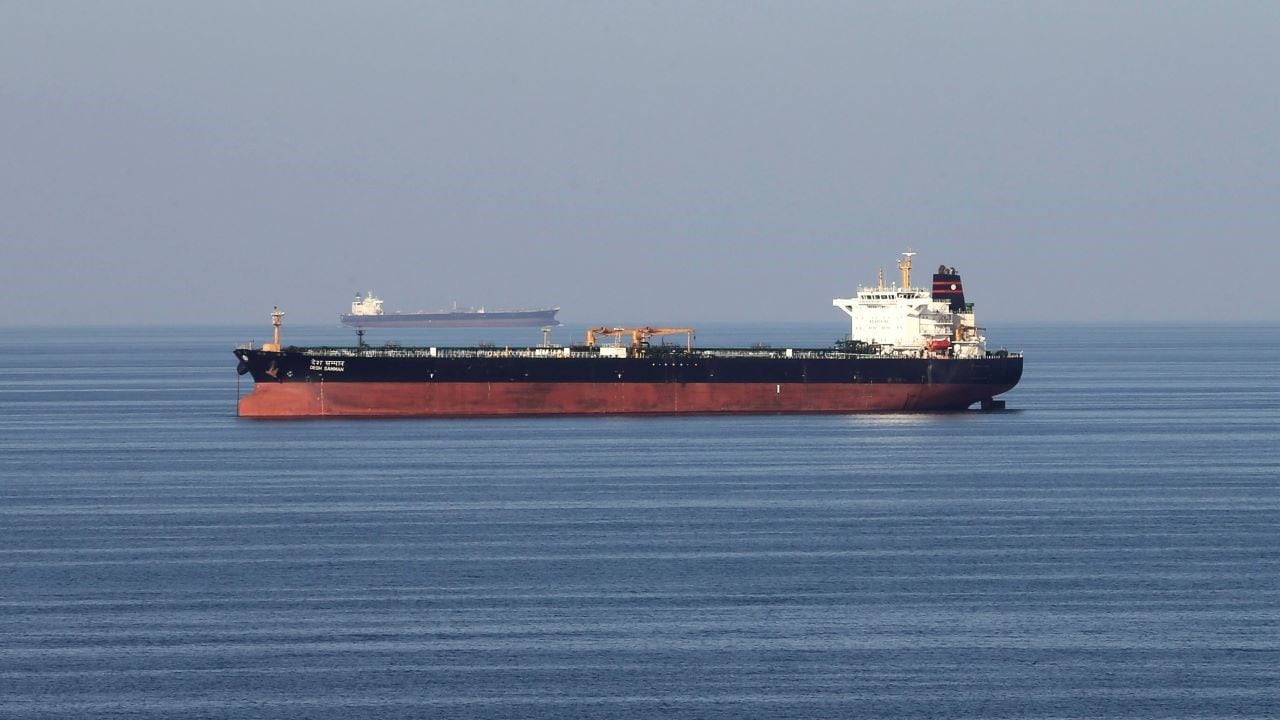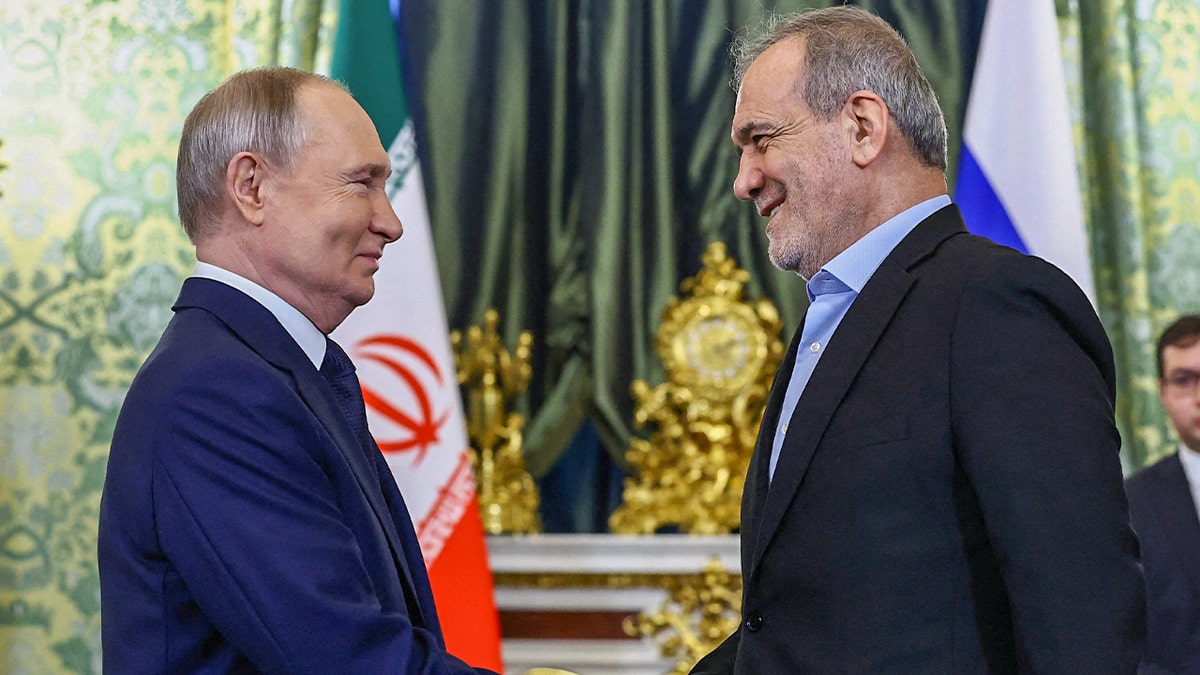
The recent diplomatic engagement between the Chinese Foreign Ministry and its Iranian counterpart represents more than a routine call for de-escalation; it is a calculated deployment of China’s "Global Security Initiative" (GSI) designed to stress-test its influence against Western-led security frameworks. When Wang Yi urges "early peace talks" and "restraint," the underlying objective is the preservation of the Regional Stability-Resource Flow Correlation. China’s primary vulnerability in the Middle East is not ideological but logistical. As the world’s largest crude oil importer, Beijing views regional volatility through the lens of maritime security and energy price elasticity. Any escalation that threatens the Strait of Hormuz directly impacts China’s domestic industrial output. Consequently, Chinese diplomacy functions as a risk-mitigation tool for its supply chains.
The Tri-Vector Framework of Chinese Mediation
To understand why China is positioning itself as the primary mediator, we must analyze its strategy through three distinct operational vectors: Economic Dependency, Multi-Polarity Signaling, and Non-Interference Arbitrage.
1. Economic Dependency as a Leverage Variable
China operates as Iran's largest trading partner and a critical lifeline under the weight of primary and secondary US sanctions. This creates an asymmetric power dynamic where Beijing's "requests" for restraint carry the implicit weight of future investment under the 25-year Comprehensive Cooperation Plan. If Iran ignores Chinese calls for moderation, it risks the deceleration of critical infrastructure projects. This is a cold, quantifiable transaction: Beijing provides a "Sanction Shield" in exchange for regional predictability.
2. Multi-Polarity Signaling
Every call for "peace talks" is a jab at the perceived failure of the U.S. "Hub and Spoke" alliance system. By facilitating dialogue between parties that the West has labeled "rogue" or "adversarial," China demonstrates a capacity to govern where others can only sanction. This serves to validate the "Beijing Model" of diplomacy, which prioritizes sovereignty and stability over human rights or democratic norms.
3. Non-Interference Arbitrage
China utilizes a unique form of diplomatic arbitrage. It maintains deep ties with Saudi Arabia (via the 2023 normalization deal it brokered), Israel (via technology and port investments), and Iran (via energy and security). By refusing to take a definitive side, China positions itself as the only "honest broker" with access to all internal phone lines. This neutrality is not a moral stance; it is a strategic maneuver to ensure that regardless of who wins a localized conflict, China remains the indispensable partner.
The Cost Function of Regional Conflict for Beijing
The logic of Chinese intervention is dictated by a specific cost function. We can model the necessity of Chinese diplomatic interference based on the following variables:
- E (Energy Security): The percentage of Chinese oil imports passing through the Persian Gulf.
- I (Investment Exposure): The total value of Belt and Road Initiative (BRI) assets currently under construction in the MENA region.
- P (Political Capital): The reputation of the GSI as a viable alternative to Western security umbrellas.
When the probability of conflict $(Pr)$ exceeds a certain threshold, the cost of silence becomes greater than the cost of diplomatic intervention. Currently, the $Pr$ is driven by the feedback loop between Iranian-backed proxies and Israeli kinetic responses. China’s "call for peace" is a manual override intended to break this feedback loop before it triggers a broader regional war that would disrupt the $E$ and $I$ variables.
Structural Limitations of the "Chinese Peace"
While the rhetoric is authoritative, the actual enforcement mechanism is fragile. Unlike the United States, China lacks a significant regional military footprint (outside of a single base in Djibouti). This creates a Power-Influence Gap.
The first limitation is the Lack of Security Guarantees. China offers "talks" and "consensus," but it does not offer the "Security Umbrella" that has defined the Middle East since the Carter Doctrine. If Iran faces a direct existential threat, a phone call from Beijing provides no kinetic defense. This makes China’s mediation effective for low-to-mid-level friction but largely irrelevant in total war scenarios.
The second limitation is the Divergent Incentive Structures. Iran’s primary goal is regional hegemony and the removal of U.S. influence; China’s primary goal is the maintenance of a stable global market. These goals often collide. If Iran perceives that regional chaos actually increases its leverage against the West, it will ignore China’s calls for "restraint," knowing that Beijing cannot easily pivot to another partner without compromising its anti-hegemonic branding.
The Strategic Pivot: From Passive Observer to Active Arbitrator
This call to Tehran signals an evolution in Chinese foreign policy from "Quiet Presence" to "Active Arbitration." Historically, China would wait for a UN mandate or follow the lead of other powers. Now, it is setting the agenda.
[Image showing the diplomatic structure of the China-Iran-Saudi Arabia triangle]
The mechanism at work here is Constraint-Based Diplomacy. By engaging the Iranian Foreign Minister, China is attempting to define the boundaries of "acceptable retaliation." Beijing is signaling that it will support Iran’s right to sovereignty, but only to the point where it does not trigger a global economic contraction. This is a delicate balancing act. If China leans too hard on Iran, it loses its "Anti-Imperialist" credibility. If it leans too light, its own economy suffers from rising Brent Crude prices.
Quantification of the Current Crisis
Estimates suggest that a full-scale disruption of the Persian Gulf could see oil prices spike by $30 to $50 per barrel. For China, which imports roughly 11 million barrels per day, a $40 spike represents an additional daily cost of $440 million. This is a direct tax on the Chinese manufacturing sector. Therefore, the diplomatic mission is not a humanitarian effort; it is a fiscal defense strategy.
Furthermore, the "early peace talks" mentioned in the call are a tactical delay mechanism. In diplomatic theory, "talking about talking" is a way to freeze the status quo. By pushing for a "peace process," China aims to tie the hands of all parties in a web of procedural delays, preventing sudden kinetic escalations that could spiral out of tactical control.
Strategic Recommendation for Global Analysts
Market participants and security analysts should monitor the "Tone Shift" in Chinese state-run media following these calls. If the language moves from "calling for restraint" to "expressing concern over unilateral actions," it indicates that Beijing is losing confidence in its ability to restrain Tehran through backchannels.
The primary signal to watch is the Energy-Security Displacement. If China begins shifting its energy procurement significantly toward Russian or Central Asian sources via overland pipelines, it indicates they are "pricing in" a Middle Eastern conflict and reducing their exposure. Until that shift happens, expect Beijing to continue its aggressive, high-frequency diplomatic interference. The objective is to keep the "status quo of managed tension"—enough friction to keep the West distracted, but not enough to burn down the global trade house that China helped build.
The immediate play is to track the movement of Chinese-flagged vessels in the region. Their continued presence suggests a high level of confidence in the "Diplomatic Shield" Beijing is currently weaving with Tehran. Should these vessels begin to bypass the region, the diplomatic efforts can be categorized as a failure, regardless of the official press releases.