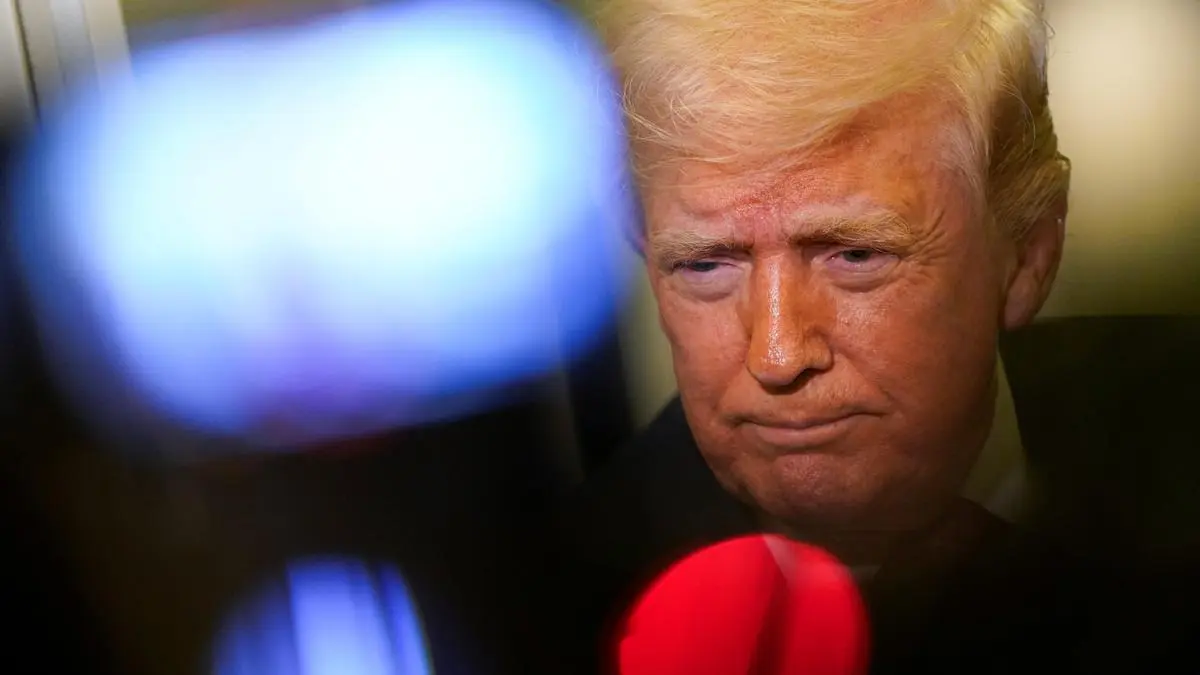
The re-emergence of Pakistan as a primary diplomatic conduit between Washington and Tehran represents a calculated shift from the multilateral failures of the JCPOA era toward a bilateral, transactional mediation model. President Trump’s recent acknowledgment of indirect progress through Islamabad indicates that the administration has prioritized high-leverage regional intermediaries over traditional European diplomatic tracks. This strategy relies on Pakistan’s unique dual-axis positioning: a long-standing military-intelligence relationship with the United States and a 900-kilometer shared border with Iran that necessitates a functional, albeit complex, security partnership.
Understanding the efficacy of this backchannel requires a deconstruction of the three structural pillars currently sustaining the dialogue:
- The Islamabad Buffer: Pakistan provides a "deniable" environment for the exchange of non-papers and technical requirements, insulating both domestic leaderships from the political fallout of direct engagement.
- The Sanction-Exemption Variable: Pakistan’s own economic fragility serves as the grease for these talks. Islamabad’s pursuit of the Iran-Pakistan (IP) gas pipeline—stalled by threats of U.S. sanctions—acts as a latent bargaining chip that Washington can modulate to incentivize or penalize Pakistani cooperation.
- Regional Security Parity: Both the U.S. and Iran share a tactical interest in preventing a total collapse of the Afghan security environment. This overlap provides a "low-stakes" entry point for broader nuclear and maritime security negotiations.
The Logistics of Indirect Signaling
Direct negotiation between the U.S. and Iran is currently obstructed by a "recognition deadlock." Tehran demands a return to the 2015 nuclear status quo as a prerequisite for meetings, while Washington demands a comprehensive expansion of the original deal to include ballistic missiles and regional proxies. Pakistan bypasses this by facilitating incremental reciprocity. Instead of a grand bargain, the talks likely focus on a series of discrete, verifiable actions.
The logic of these interactions follows a strict cost-function. For Iran, the cost of continued isolation must exceed the internal political cost of making concessions to a "Maximum Pressure" architect. For the U.S., the cost of a nuclear-armed Iran or a regional conflagration must be weighed against the domestic political risks of appearing "soft" before an election cycle. Pakistan’s role is to minimize the "transaction friction" between these two opposing cost-benefit analyses.
The mechanism of communication often involves "Track 1.5" or "Track 2" diplomacy—utilizing retired military officials or intelligence assets who possess the technical expertise to discuss uranium enrichment levels and centrifuge counts without the formal weight of a State Department communiqué. This creates a buffer where technical specifications can be hammered out before political leaders ever see a finalized draft.
Identifying the Bottlenecks in Pakistani Mediation
While the Pakistani channel offers a path forward, it is subject to three critical systemic vulnerabilities that the "progress" claims often omit.
The first limitation is the Principal-Agent Problem. Pakistan is not a neutral observer; it is an agent with its own regional agenda, specifically concerning its rivalry with India. Islamabad may attempt to tie its cooperation on the Iran file to U.S. concessions regarding Indian influence in Afghanistan or military aid packages. This introduces "noise" into the US-Iran signal, where messages might be subtly altered to suit Pakistani strategic depth.
The second bottleneck is The IRGC Internal Veto. Negotiations occurring via the Pakistani Foreign Office or intelligence services (ISI) may not have the full buy-in of the Islamic Revolutionary Guard Corps (IRGC). Historically, the IRGC has the capability to sabotage diplomatic progress through kinetic actions in the Persian Gulf or via its "Axis of Resistance" proxies in Lebanon, Iraq, and Yemen. If the Pakistani channel is perceived as excluding the IRGC's interests, the probability of a "spoiler event" increases exponentially.
The third constraint is The Verification Gap. Unlike the IAEA-led inspections under the JCPOA, an informal Pakistani-mediated agreement lacks a robust, international verification framework. Any "progress" mentioned by the administration likely refers to intent rather than implementation. Without a mechanism to verify that Iran has halted high-level enrichment or that the U.S. has actually facilitated the flow of humanitarian funds, the agreement remains a verbal commitment prone to rapid decay.
The Calculus of Secrecy and Information Control
The refusal to share specific details of the talks is a tactical necessity rather than a mere preference for opacity. In high-stakes international mediation, "leaks" are often used as weapons to kill a deal in its infancy. By maintaining a closed loop, the Trump administration prevents hardliners in both the U.S. Congress and the Iranian Majlis from mobilizing opposition.
However, this secrecy creates an information vacuum that markets and regional allies (specifically Israel and Saudi Arabia) fill with speculation. This speculation can lead to "pre-emptive escalation," where a regional actor takes military action to disrupt a perceived deal that they feel compromises their national security. The U.S. must therefore balance the need for backchannel secrecy with the need for "front-channel" reassurance of its primary regional partners.
The Strategic Recommendation for Sustained Progress
For the Pakistani channel to move from "claimed progress" to a "quantifiable breakthrough," the negotiation must shift from verbal signaling to a Phased Implementation Matrix.
The first move requires the establishment of a "Humanitarian Clearinghouse" in a third country (likely Qatar or Oman, coordinated with Pakistan) that allows for the purchase of food and medicine via sanctioned Iranian central bank assets. This serves as a "Proof of Concept" for U.S. sanctions relief without providing Tehran with liquid cash for military expenditures.
Simultaneously, Iran must provide a "Freeze-for-Freeze" commitment: halting the installation of advanced IR-6 centrifuges and capping enrichment at 20% in exchange for specific, time-bound waivers on oil exports to select Asian markets.
The terminal stage of this Pakistani-mediated effort must be the transition from a "courier" model to a "direct observation" model. Pakistan’s role is to bring the parties to the table, not to sit at it indefinitely. The strategic goal for Washington should be to use the Islamabad channel to secure a face-to-face summit where the final "Grand Bargain" or "Article of Understanding" can be signed.
Failure to move beyond the Pakistani backchannel within the next six to nine months will likely lead to "Diplomatic Fatigue." In this state, the parties become habituated to the status quo of talking without acting, while Iran’s breakout time continues to shrink. The administration must convert the current momentum into a formal framework before the internal political pressures in Tehran or Washington force a return to active escalation.