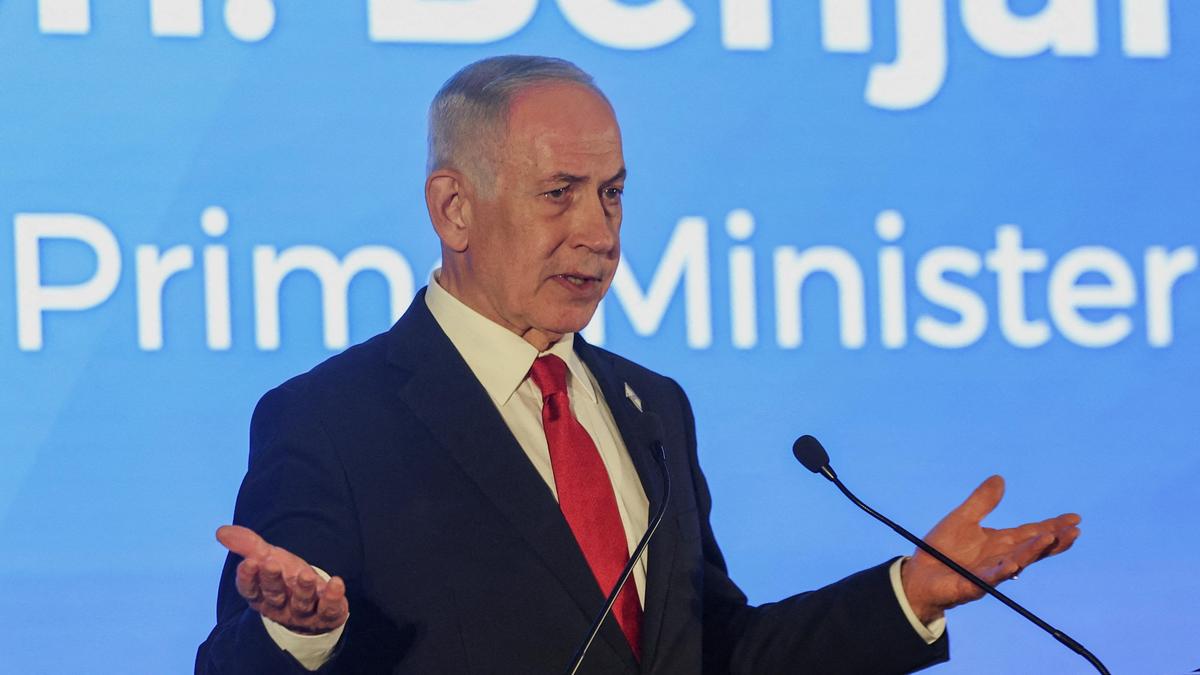
The concept of "endless war" in the Middle East has historically been a product of ill-defined political objectives coupled with asymmetrical insurgencies. Benjamin Netanyahu’s recent assertion that a conflict with Iran will be finite is not a rhetorical flourish; it is a signal of a shift toward a kinetic containment strategy designed to bypass the pitfalls of long-term occupation. This doctrine relies on the decoupling of regime change from capability destruction. By focusing strictly on the degradation of high-value infrastructure—specifically nuclear enrichment facilities and command-and-control nodes—Israel aims to achieve a definitive military outcome without the systemic burden of a multi-decade stabilization effort.
The Mechanics of Finite Engagement
For a war to be finite, the terminal state must be defined by physical destruction rather than political transformation. The Israeli strategic framework identifies three critical variables that dictate the duration of any engagement with the Islamic Republic:
- Target Hardening vs. Sortie Volume: The use of GBU-57 Massive Ordnance Penetrators (MOP) or indigenous variants determines the number of passes required to collapse fortified sites like Fordow. A finite timeline is achieved when the rate of destruction exceeds the Iranian capacity for subterranean repair.
- The Anti-Access/Area Denial (A2/AD) Neutralization: Before the primary mission can conclude, the "Outer Ring" (Hezbollah in Lebanon and Houthis in Yemen) must be suppressed to a level where their retaliatory fire does not force a secondary, protracted ground campaign.
- The Enrichment Reset Point: Success is quantified by the "Breakout Clock." If a strike pushes the Iranian enrichment timeline back by 5 to 10 years, the war is deemed "won" and terminated, regardless of the regime’s survival.
The Three Pillars of Kinetic Attrition
To avoid the "endless" trap, the Israeli Defense Forces (IDF) utilize a tri-pillared approach that prioritizes speed and technological overmatch over manpower-intensive ground maneuvers.
Pillar I: Surgical Decapitation of Logistics
The objective here is the systematic removal of the Iranian Revolutionary Guard Corps (IRGC) logistical backbone. This involves the destruction of the domestic missile production supply chain—specifically solid-fuel mixing facilities and carbon fiber manufacturing plants. By removing the ability to replenish the arsenal, the IDF forces a natural "culmination point" where the enemy can no longer sustain offensive operations.
Pillar II: Cyber-Kinetic Integration
The conflict is not restricted to physical munitions. The deployment of advanced malware targeting SCADA (Supervisory Control and Data Acquisition) systems within Iranian energy grids serves as a force multiplier. This creates a domestic "friction cost" for the Iranian leadership, forcing them to divert resources from the front lines to internal stability, thereby shortening the window of external combat.
Pillar III: Proportionality of Response via Proxy Suppression
The war remains finite only if it does not expand into a regional quagmire. This requires a "Calculated Escalation" where Israel applies enough pressure on proxy groups to ensure they remain defensive, without triggering a full-scale ground invasion of Southern Lebanon, which would inevitably lead to a years-long attrition cycle.
The Cost Function of Protracted Conflict
The economic and structural risks of failing to maintain a finite timeline are severe. A "Long War" scenario introduces variables that Israel’s economy, which is heavily reliant on the high-tech sector and reserve duty mobilization, cannot sustain indefinitely.
- Human Capital Depletion: Prolonged mobilization of the "Startup Nation’s" workforce leads to a direct contraction in GDP.
- Munition Depletion Rates: Modern precision-guided munitions (PGMs) are consumed at a rate that outstrips current production capacities. A finite war is a mathematical necessity based on inventory levels.
- Diplomatic Capital Erosion: International patience for kinetic operations has a predictable decay rate. Every week the conflict continues beyond the initial strike phase increases the likelihood of external sanctions or forced ceasefires that leave Iranian capabilities intact.
The Tactical Bottleneck: The Fordow Problem
The greatest threat to a finite war is the depth and fortification of the Fordow Fuel Enrichment Plant. Standard aerial bombardment may be insufficient to guarantee a "one-and-done" outcome. This creates a tactical bottleneck where a single strike is not a terminal event but the start of a multi-week siege.
To overcome this, the strategy shifts from total destruction to Functional Deniability. This involves sealing the entrances and destroying the ventilation and power shafts rather than attempting to collapse the entire mountain. By rendering the facility unusable from the outside, the mission objectives are met within the desired timeframe without requiring a ground-based demolition team.
Structural Logic vs. Political Reality
While the military framework for a finite war is robust, it faces the "Inertia of Conflict." Once a kinetic exchange begins, the adversary’s response—such as a mass ballistic missile barrage on Tel Aviv—can force a pivot from a surgical strike to a broad-spectrum war of survival. The Israeli strategy accounts for this through the Iron Dome and Arrow-3 Multi-Tiered Defense System, which serves as a buffer. By intercepting a high percentage of incoming threats, the system preserves the Israeli cabinet’s "Strategic Patience," allowing them to stick to the finite strike plan rather than being forced into an escalatory spiral.
The Strategic Forecast: The Shift to "Intermittent Kinetic Intervention"
The future of Israel’s engagement with Iran will likely mirror the "Mowing the Grass" strategy used in Gaza, but on a continental scale. We should expect a cycle of high-intensity, short-duration strikes every 4 to 8 years. This "Intermittent Kinetic Intervention" (IKI) accepts that the threat can never be permanently neutralized, only managed.
The immediate tactical play involves the synchronization of US-supplied intelligence with Israeli delivery platforms to execute a "Shock and Reset" operation. This operation will focus on the Parchin military complex and the Natanz enrichment halls. The goal is not a signed peace treaty or a new government in Tehran, but a physical reset of the nuclear clock. Investors and regional analysts should monitor the deployment of KC-46 Pegasus tankers to the region; their arrival signals the transition from the planning phase to the execution of the finite war doctrine. Success will be measured not by the absence of a future threat, but by the duration of the subsequent silence.