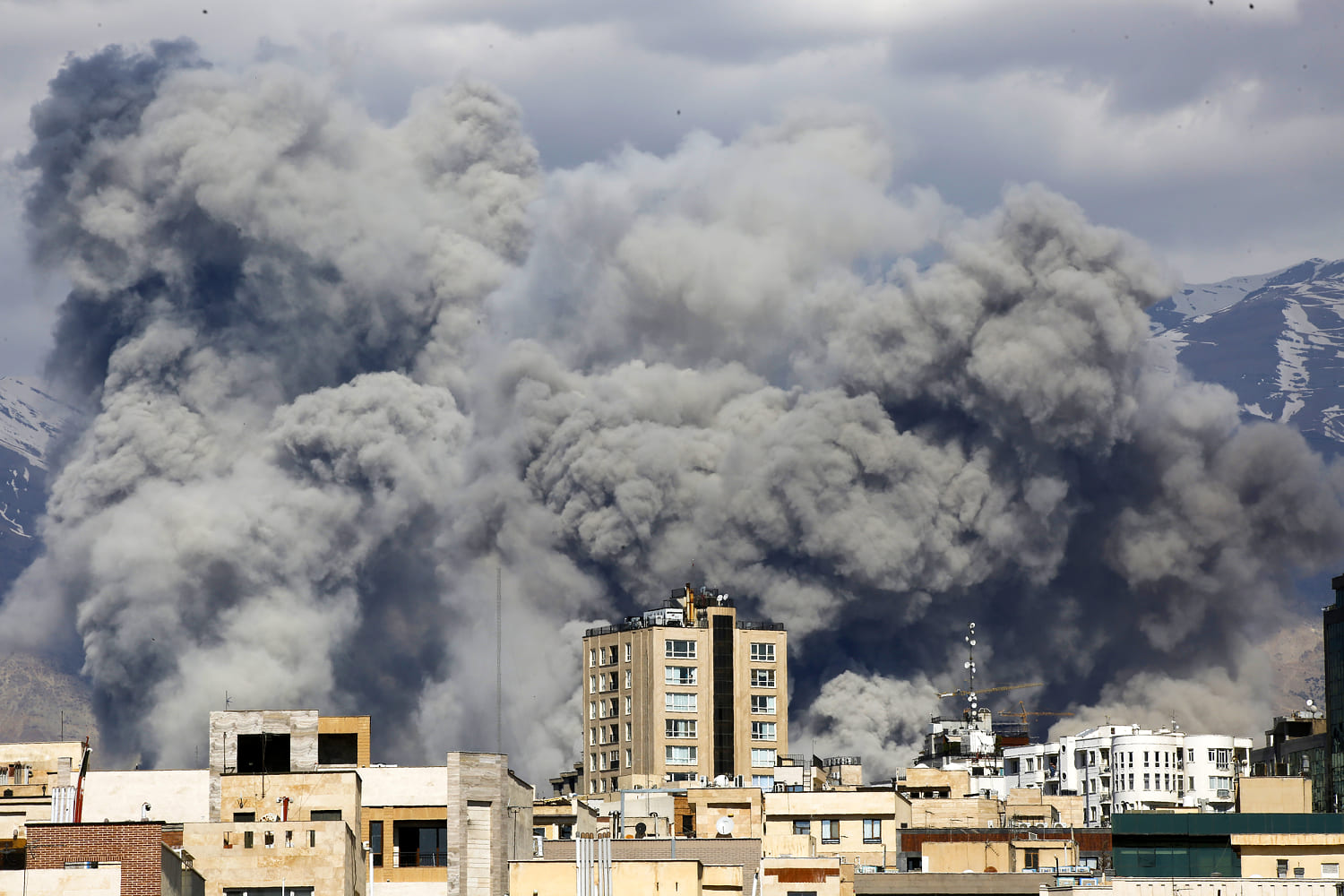
The directive for American citizens to evacuate the Middle East ahead of an Iranian kinetic action is not a simple safety warning; it is a critical signaling mechanism in the calculus of regional escalation. When the White House issues these alerts, it is executing a pre-combat sequence designed to clear the "operational field" of non-combatant friction. This maneuver serves two functions: it preserves domestic political capital by minimizing potential hostage or casualty scenarios, and it removes a primary constraint on Israeli and American counter-strike options. By thinning the civilian presence, the U.S. effectively widens its own tactical window for retaliation, communicating to Tehran that the threshold for high-intensity engagement has been lowered.
The Triad of Evacuation Logic
The decision to trigger a mass departure is governed by three distinct operational pillars. Each pillar represents a different layer of the geopolitical chess board, moving from immediate tactical safety to long-term strategic positioning.
1. The Kinetic Friction Reduction
In any high-intensity conflict involving ballistic missiles or unmanned aerial vehicles (UAVs), the presence of thousands of "blue passport" holders creates a massive logistical bottleneck.
- Search and Rescue (SAR) Constraints: Every civilian trapped in a strike zone represents a potential diversion of Special Operations Forces (SOF) who would otherwise be allocated to neutralizing launch sites.
- Airspace Deconfliction: Mass civilian evacuations require the preservation of commercial or "grey bottom" military transport corridors. Clearing these early allows the military to transition the entire regional Air Traffic Control (ATC) grid to a combat footing without the risk of mid-air tragedies involving non-combatants.
2. The Political Leverage Hedge
The Iranian "Axis of Resistance" utilizes asymmetric leverage, often viewing Western civilians as strategic assets for negotiation or human shielding.
- Hostage Mitigation: Rapid evacuation neutralizes the threat of rapid-response kidnappings or "street-level" retaliations by proxy groups like Hezbollah or Kata'ib Hezbollah.
- Domestic Resilience: A high casualty count of American citizens during an initial Iranian volley would force the U.S. administration into a reactive, high-magnitude response that might not align with broader long-term interests. By removing the targets, the administration retains the "luxury of timing."
3. The Signal of Intent
Diplomacy often operates through the language of logistics. Telling your citizens to leave is the final "non-kinetic" signal before the transition to active defense or offense. It tells the adversary that the U.S. is no longer prioritizing the status quo of regional stability, but is instead preparing for the "worst-case" exchange.
Quantifying the Escatallory Spiral
Analyzing the threat requires a breakdown of the specific delivery systems at Tehran's disposal and the corresponding defensive infrastructure. This is not a matter of "if" a strike occurs, but a matter of "saturation volume."
The Volume-to-Intercept Ratio
The primary threat to Americans in the region—whether in Tel Aviv, Erbil, or Al-Udeid—is the saturation of Integrated Air and Missile Defense (IAMD) systems. Iranian doctrine emphasizes the "swarm" approach.
- Phase I: UAV Probing: Sending low-cost Shahed-series drones to force the activation of radar arrays and deplete interceptor stocks (Iron Dome, David's Sling).
- Phase II: Cruise Missile Vectoring: Utilizing low-altitude, maneuverable missiles to bypass traditional radar horizons.
- Phase III: Ballistic Terminal Velocity: High-speed reentry vehicles aimed at hardened infrastructure.
The advisory to leave is a direct response to the statistical probability of "leakers"—missiles or drones that penetrate the defensive envelope. Even with a 90% interception rate, a salvo of 300 projectiles guarantees 30 impacts. In densely populated urban centers, the "Area of Probability" (AOP) for civilian casualties exceeds the acceptable risk parameters for U.S. State Department protocols.
Operational Constraints of Emergency Departure
Evacuating a region under the shadow of an imminent strike is a race against the "Hardening of the Border." As tensions rise, several systemic failures begin to cascade, making the White House advisory a time-sensitive mandate rather than a suggestion.
The Commercial Collapse
The moment a credible threat is publicized, the commercial aviation insurance market reacts. War-risk premiums spike instantly, leading most international carriers to suspend flights. This leaves only government-chartered flights or military "non-combatant evacuation operations" (NEO). The delta between the number of citizens and the available "lift" capacity creates a bottleneck that can trap thousands if they do not move within the first 48 hours of an advisory.
The Digital Fog
In the lead-up to an attack, electronic warfare (EW) activity increases. GPS jamming—used to confuse incoming Iranian missiles—simultaneously degrades the ability of civilians to navigate to rally points or receive real-time updates via satellite-linked devices. The infrastructure required for a safe exit is the first thing to be compromised in a pre-strike environment.
Structural Vulnerabilities in Regional Hubs
The threat is not uniform across the Middle East. Strategic analysis requires categorizing locations based on their proximity to Iranian launch sites and their density of U.S. interests.
- The Levant (Lebanon/Israel): Characterized by short flight times (minutes) and high density. The risk here is sudden-onset total war.
- The Persian Gulf (UAE/Qatar/Bahrain): These hubs host massive U.S. military footprints. The risk involves "collateral targeting" where Iranian missiles aimed at airbases strike nearby civilian infrastructure.
- The Northern Corridor (Iraq/Syria): High risk of proxy-led ground incursions and short-range rocket fire, which are harder to intercept than long-range ballistic missiles.
Strategic Pivot: From Protection to Posture
The evacuation of Americans signals a shift from "Assurance" to "Deterrence by Denial." When the civilian population is secured, the U.S. Central Command (CENTCOM) can pivot its assets—such as the repositioning of Carrier Strike Groups or the deployment of additional THAAD (Terminal High Altitude Area Defense) batteries—without the "political noise" of ongoing civilian casualties.
This creates a paradox: the act of leaving makes the region safer for those who remain (military personnel) by simplifying the defensive mission, but it simultaneously makes the environment more volatile because the "inhibitors" to a full-scale Israeli or American counter-attack have been removed.
The strategic play for any entity within the region—corporate, diplomatic, or individual—is to treat the White House advisory as the definitive closure of the diplomatic window. Once the "Non-Essential Personnel" threshold is crossed, the logic of the situation dictates that the kinetic phase is no longer a matter of policy debate, but of mathematical inevitability. Organizations must immediately transition to "Cold Site" operations outside the immediate ballistic radius of Western Iran, prioritizing data sovereignty and personnel extraction before the commercial flight corridors are converted into strictly military "kill boxes."
The final move in this sequence is the hardening of regional assets. If you are not out, you are "dug in." There is no middle ground in a saturation strike environment. The shift from mobile civilian life to stationary, hardened shelter is the final step in the transition to a theater of active war.