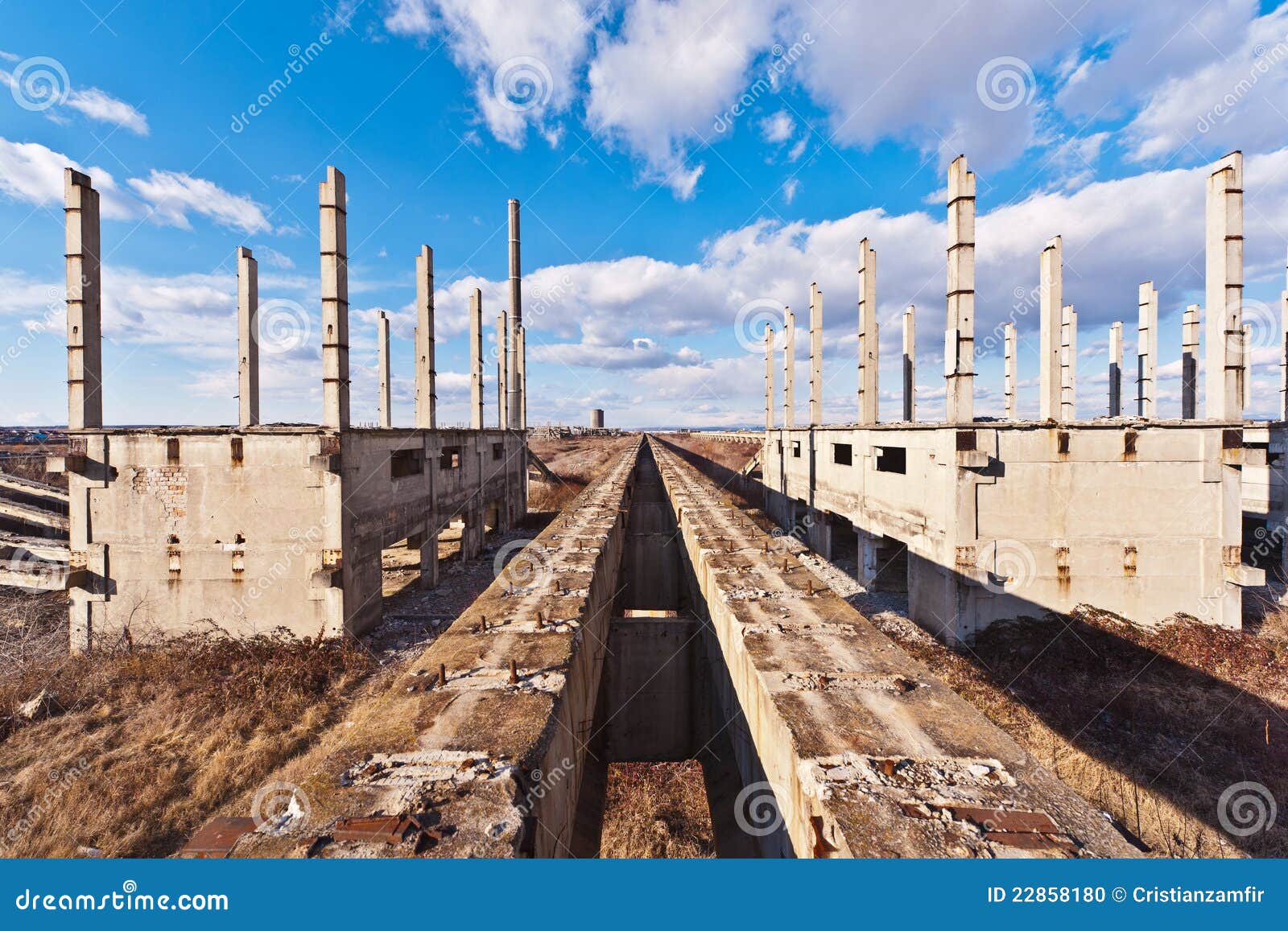
The recent kinetic engagement involving Iranian projectiles and an industrial zone in southern Israel represents more than a localized skirmish; it is a live-fire stress test of two competing military doctrines: Saturation-Based Attrition versus Active Multi-Layered Interception. When analyzing the impact of such strikes, the immediate physical damage to infrastructure is often a lagging indicator of strategic success. The primary metric is the disruption of the "Industrial-Defense Nexus," where specialized manufacturing capabilities provide the logistical backbone for prolonged regional operations.
To understand the mechanics of this escalation, one must dissect the operational objectives of the strike, the failure points of current defensive envelopes, and the economic ripple effects that follow the breach of a high-value security perimeter.
The Triad of Industrial Targeting
The selection of an industrial zone in southern Israel—home to aerospace, chemical, and heavy manufacturing sectors—is a deliberate choice designed to exploit three specific vulnerabilities:
- Supply Chain Latency: Modern military readiness depends on "Just-in-Time" delivery of specialized components. A strike on a factory producing micro-electronics or reinforced composites does not just destroy a building; it creates a six-to-twelve-month lag in hardware replacement for frontline assets.
- Psychological Capital Outflow: Industrial zones are the engines of foreign direct investment. By demonstrating that these zones are within the "Probable Strike Radius," an adversary aims to increase insurance premiums and risk-assessment scores, effectively taxing the Israeli economy through private sector hesitation.
- Resource Diversion: Forcing the deployment of Iron Dome or David’s Sling batteries to protect industrial sites creates a zero-sum game. Every interceptor fired to protect a warehouse is an interceptor unavailable to protect a population center or a military airbase.
Mechanics of the Breach: Saturation vs. Precision
The penetration of Israeli airspace by Iranian assets suggests a sophisticated understanding of Radar Horizon Constraints. While Israeli Integrated Air and Missile Defense (IAMD) systems are globally preeminent, they are subject to the laws of probability and physics.
The Cost-Exchange Ratio
A fundamental pillar of this conflict is the disparity in the cost of engagement. An Iranian-designed loitering munition or short-range ballistic missile may cost between $20,000 and $150,000. In contrast, a Tamir interceptor (Iron Dome) costs approximately $50,000, while a Stunner/SkyCeptor (David’s Sling) can exceed $1,000,000 per launch.
When an industrial zone is hit, it indicates one of three technical failures:
- Sensor Saturation: The incoming volume of decoys and active threats exceeded the tracking capacity of the Multi-Mission Radar (MMR).
- Leakage Probability: No defensive system maintains a $P_k$ (Probability of Kill) of 1.0. In a high-volume salvo, a $90%$ success rate still guarantees that $10%$ of threats reach their coordinates.
- Strategic De-prioritization: Fire control computers may de-prioritize an incoming threat if its projected impact point is calculated to be "non-critical," though "criticality" is a fluid definition in a psychological warfare context.
The Industrial-Defense Nexus: A Structural Analysis
The southern industrial clusters are not merely commercial hubs; they are secondary and tertiary nodes for the Israeli Defense Forces (IDF). By mapping the impact zones, a clear pattern emerges regarding the "Kinetic Tax" being levied on Israeli production.
Operational Downtime and the Labor Variable
Physical damage is easily repaired; labor disruption is not. A strike on an industrial zone triggers mandatory safety protocols, leading to a total cessation of labor hours across the entire district. If a zone employs 5,000 specialists, a four-hour alert window results in 20,000 lost man-hours. In high-precision manufacturing, restarting a clean-room environment or recalibrating heavy machinery after a power surge or structural vibration can take days. This "Hidden Attrition" is the true objective of low-yield, high-frequency strikes.
The Hardening Paradox
As Israel hardens these industrial zones with reinforced concrete and underground facilities, it creates a "Hardening Paradox." The more protected a site becomes, the more it signals its value to the adversary, thereby increasing the caliber and quantity of weapons used against it. This escalation cycle forces the defender to spend an increasing percentage of GDP on passive protection, diverting funds from offensive research and development.
Intelligence Asymmetry and Targeting Logic
The accuracy of the hit on an industrial target suggests a reliance on Open-Source Intelligence (OSINT) and commercial satellite imagery. The layout of Israeli industrial parks is often public record for the purpose of trade and logistics. An adversary can map the specific coordinates of a chemical storage tank or a power substation using high-resolution imagery available on the commercial market.
This creates a structural disadvantage for the defender. While the IDF must defend $360^{\circ}$ of territory, the attacker only needs to succeed at a single coordinate. The "Data-Driven Aggressor" uses previous intercept patterns to identify "Blind Spots" in the radar coverage, often created by local topography or the electromagnetic interference inherent in dense industrial environments.
Evaluating the Strategic Impact of Industrial Strikes
To quantify the success of the Iranian strike, we must move beyond the binary of "Hit" or "Miss." We must analyze the Operational Recovery Time (ORT).
- Zone Alpha (Direct Hit): Structural failure, loss of capital equipment, immediate cessation of production.
- Zone Beta (Fragment Damage): Superficial damage, but requires rigorous safety inspections and potential environmental cleanup if hazardous materials are involved.
- Zone Gamma (Psychological Proximity): No physical damage, but experiences a spike in employee absenteeism and a decrease in throughput due to "Alert Fatigue."
The "Industrial Zone" strike is a tool of Economic Kineticism. It is designed to prove that the "Iron Dome Umbrella" is porous. If the Israeli state cannot guarantee the safety of its economic engines, the social contract regarding security begins to fray, which is a far more potent outcome than the destruction of a few warehouses.
The Shift to Autonomous Defense and Decentralization
The vulnerability of centralized industrial zones necessitates a shift in Israeli defensive strategy. The current reliance on centralized kinetic interceptors is hitting a ceiling of economic sustainability.
The move toward Directed Energy Weapons (DEW), such as the Iron Beam laser system, is the logical counter-measure. By reducing the cost-per-intercept to nearly zero (the cost of electricity), Israel can negate the "Cost-Exchange Ratio" currently favoring Iran. Furthermore, industrial strategy will likely shift toward Geographic Redundancy. Instead of housing critical aerospace manufacturing in a single southern hub, the state must incentivize the distribution of "Micro-Factories" across the country, making the targeting logic for an adversary exponentially more complex and less rewarding.
The strike in southern Israel is a signal that the era of "Safe Rears" is over. Industrialists and military planners must now treat the factory floor as a front line. The strategic response requires not just more interceptors, but a fundamental redesign of industrial architecture to prioritize resilience and rapid reconstitution over centralized efficiency.
Total security is a mathematical impossibility in the age of precision loitering munitions. The objective for the Israeli defense establishment is now the management of "Acceptable Loss" and the acceleration of the Iron Beam deployment to restore the economic viability of its industrial heartlands. Failure to close the cost-gap will result in a gradual hollow-out of the southern industrial sector, achieving the adversary’s goals without a single soldier crossing the border.