Threatening to vaporize Iranian bridges and power grids is the geopolitical equivalent of bringing a sledgehammer to a surgery. It’s loud. It’s messy. It makes for a fantastic headline. But it completely ignores the structural reality of global energy markets and the cold, hard mechanics of naval warfare. The "lazy consensus" surrounding the current escalation is that a massive kinetic strike on Iran’s domestic infrastructure is the only lever left to pull. That is a fantasy born from 1990s-era air superiority logic that has no place in a world where the global supply chain is a fragile, interconnected web.
If the Strait of Hormuz stays shut, the problem isn’t a lack of American firepower; the problem is the immediate, cataclysmic feedback loop that follows a strike on Iranian soil. We are currently watching a script written by people who think "deterrence" is a linear equation. It isn't. It’s a chaotic system where the most obvious move—hitting the lights in Tehran—is exactly the move that guarantees a global depression. For another look, see: this related article.
The Myth of the "Surgical" Strike
Pundits love the word "surgical." It suggests precision and control. In reality, bombing power plants and bridges in a nation of 88 million people is an act of total economic warfare that spills across every border. Iran isn't a desert outpost; it is a sophisticated, decentralized state with a "distributed" defense strategy.
When you hit a power plant in central Iran, you don't just stop the centrifuges. You trigger a cascade of events that forces the IRGC (Islamic Revolutionary Guard Corps) to execute their only remaining play: total regional sabotage. Related coverage on this trend has been shared by The Washington Post.
The Strait of Hormuz is roughly 21 miles wide at its narrowest point. The shipping lanes are even narrower. You don't need a navy to close it. You need a few thousand "smart" sea mines, some shore-based anti-ship missiles (ASMs), and the willingness to turn the Persian Gulf into a graveyard of tankers. If the U.S. strikes Iranian bridges, Iran won't try to rebuild the bridges while the war is on. They will focus every remaining ounce of their asymmetrical capability on ensuring that not a single drop of crude leaves the Gulf.
Why the Market Ignores the Bluster
Wall Street traders aren't shaking in their boots because of the threat of strikes. They are shaking because they know that the moment a single U.S. missile hits an Iranian power station, the insurance premiums for every vessel in the region will go vertical.
The math of a $200 barrel of oil is simple:
- Supply Shock: 20% of the world’s petroleum passes through that 21-mile gap.
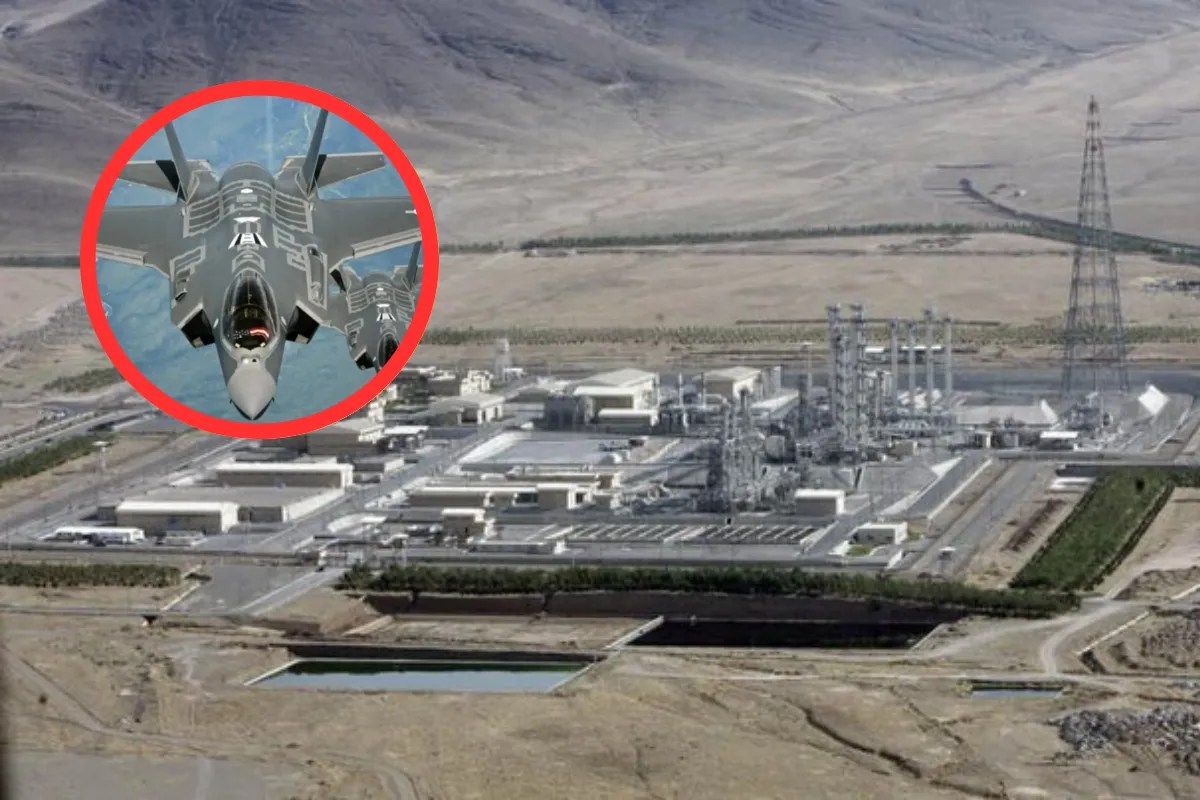
- Insurance Blackout: Lloyd’s of London doesn't care how many F-35s are in the air. If the risk of a missile hit is non-zero, they pull coverage. Ships stop moving.
- The Tanker War 2.0: Unlike the 1980s, modern tankers are massive, slow-moving targets for drone swarms and subsonic missiles.
By vowing to hit "infrastructure," the administration is telegraphing a strategy that treats Iran like a contained laboratory. It isn't. It’s the heart of a regional circulatory system. Cutting the arteries doesn't fix the patient; it kills the room.
The Asymmetry of Value
We are playing a game where the costs are wildly skewed. A Tomahawk cruise missile costs roughly $2 million. A bridge or a power substation is a fixed target that is easy to hit but expensive to replace. However, the Iranian response—using $20,000 Shahed-style drones or $50,000 naval mines—imposes a cost on the global economy that is measured in trillions, not millions.
This is the "Asymmetry of Value" trap. We spend millions to destroy thousands, while they spend thousands to destroy billions in trade value. I have seen policy desks in D.C. ignore this math for decades, operating under the delusion that "dominance" is simply about who has the bigger explosion. In the 21st century, dominance is about who can afford the most friction. The West, with its debt-heavy, just-in-time economies, cannot afford the friction of a closed Strait.
Dismantling the "Regime Collapse" Fantasy
The underlying assumption of hitting power plants is that the Iranian population will turn on the government once the air conditioning stops. This is a fundamental misunderstanding of nationalistic psychology. From the Blitz in London to the "Linebacker II" raids in Vietnam, history shows that heavy-handed strikes on civilian infrastructure almost always harden the resolve of the populace.
Instead of a popular uprising, you get a "rally 'round the flag" effect. You provide the hardliners with the ultimate propaganda victory: the "Great Satan" is freezing your grandmothers and starving your children by cutting the power to the hospitals. If the goal is regime change or even behavioral change, hitting the power grid is the least effective tool in the kit.
The Hidden Danger of the "Bridge" Strategy
Bridges are more than just transit points; they are the logistical backbone for domestic food and medical supplies. Destroying them creates a humanitarian crisis that the U.S. will then be expected to solve.
Imagine a scenario where the U.S. successfully disables 40% of Iran's internal transit. The result isn't a surrender. The result is a massive wave of refugees pushing toward Turkey and Europe, further destabilizing an already fractured NATO alliance. This isn't just a military strike; it’s a demographic bomb.
The Failure of "Tuesday" Deadlines
Setting a specific day—"Tuesday"—for strikes is a tactical nightmare. It removes the element of surprise and gives the adversary a window to disperse their high-value assets. It also traps the U.S. into an escalatory ladder. If Tuesday comes and the Strait is still "semi-closed" or contested, and the U.S. doesn't strike, the deterrence is dead. If they do strike, they’ve just started a war that no one has a plan to finish.
This is theater, not strategy. Real power doesn't announce its schedule on a calendar.
The Energy Transition Irony
There is a delicious, bitter irony in the fact that the very people pushing for these strikes are often the same ones claiming we need to move away from oil. If you want to accelerate the collapse of the Western industrial base, go ahead and trigger a conflict that takes 20 million barrels of oil off the market overnight.
While the U.S. might be "energy independent" on paper, oil is a global fungible commodity. If the price of Brent crude hits $180, it doesn't matter if the oil was pumped in Texas or Tehran; the price at the pump in Ohio is going to double. The political blowback from that alone would end any administration within six months.
Stop Asking "How Do We Hit Them?"
The wrong question is: "What targets in Iran will make them stop?"
The right question is: "How do we make the Strait of Hormuz irrelevant?"
The focus on kinetic strikes is a distraction from the decades of failure to build redundant energy infrastructure. We are held hostage by a 21-mile strip of water because we chose to ignore the strategic necessity of pipelines that bypass the Gulf. Every dollar spent on a Tomahawk to blow up an Iranian bridge would be better spent on hardening the East-West Pipeline in Saudi Arabia or the Habshan–Fujairah line in the UAE.
The Reality of Naval Escorts
The "Operation Earnest Will" nostalgia—where the U.S. Navy escorted tankers during the 1980s—is dangerous. In 1988, the threat was primitive mines and small speedboats. Today, it is hypersonic anti-ship missiles and AI-driven drone swarms. A modern destroyer can defend itself, but it cannot defend a 300-meter-long supertanker from every angle simultaneously. One lucky hit on a VLCC (Very Large Crude Carrier) creates an environmental disaster that makes the Exxon Valdez look like a spilled latte, effectively closing the Strait via ecological catastrophe.
The Economic Suicide Pact
The "insider" truth that no one wants to admit is that we are in an economic suicide pact with the Persian Gulf. We need their energy flow to maintain the dollar's status and our standard of living. They need our security umbrella to stay in power. By threatening to destroy Iran's domestic infrastructure, we are signaling that we are ready to tear up the pact.
But we aren't ready. Our supply chains are brittle. Our strategic petroleum reserve is at historic lows. Our domestic politics are a tinderbox.
Bombing a bridge in Iran doesn't show strength. It shows an utter lack of imagination and a desperate reliance on outdated 20th-century muscle memory. If the Strait stays shut on Tuesday, the answer isn't to start a fire that burns down the whole house. The answer is to admit that the era of "policing the waves" through sheer intimidation is over.
If you want to win this, you don't hit the power plants. You make the world's reliance on that specific patch of water a thing of the past. Anything else is just expensive fireworks on the way to a global recession.
The missiles might fly on Tuesday, but the bill will arrive on Wednesday. And nobody can afford to pay it.