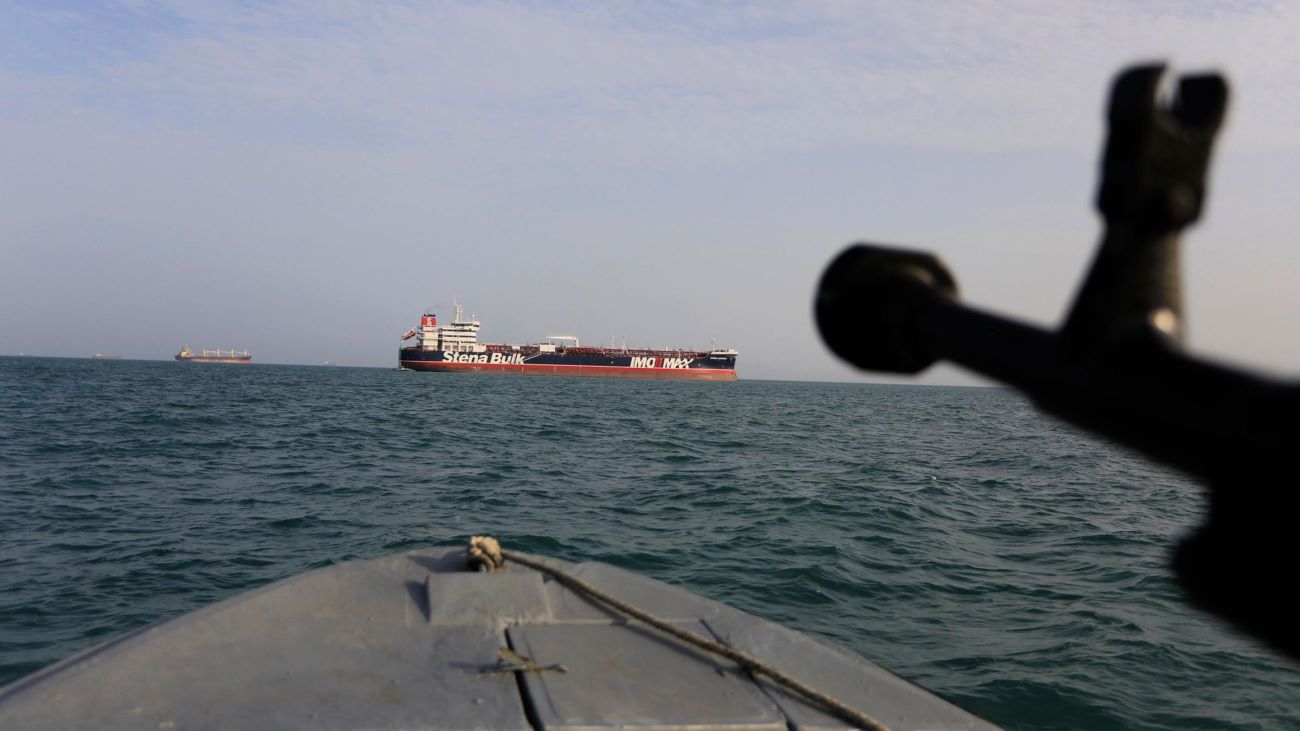
The $2 million "transit fee" being floated by Tehran isn’t a shakedown. It is a fundamental repricing of global risk that the West is too arrogant to understand. While the Hindustan Times and other legacy outlets scramble to debunk the "legality" of Iranian lawmaker Alaeddin Boroujerdi’s claims, they are missing the forest for the trees. Whether the fee is "official policy" today or a "legislative proposal" for tomorrow is irrelevant. The precedent has been set: the era of "free" transit through the world's most volatile chokepoint is dead.
For decades, the global economy has hallucinated that maritime security is a natural resource—like air—that exists without cost. We built "just-in-time" supply chains on the assumption that the U.S. Navy would subsidize the safety of every oil tanker and LNG carrier for eternity. That delusion just hit a $2 million-per-hull reality check.
The Myth of UNCLOS and the "Rule of Law"
Critics are quick to hide behind the United Nations Convention on the Law of the Sea (UNCLOS). They point to Article 38, which guarantees "transit passage" through international straits. Here is the uncomfortable truth they won't tell you: Iran never ratified UNCLOS. Neither did the United States.
We are watching two non-signatories argue over a rulebook neither of them fully accepted, while the rest of the world pretends the "rules-based order" still has teeth. From a cold, realist perspective, sovereignty isn't granted by a treaty signed in 1982; it is exercised by the actor who can actually stop a ship. If you have to pay $2 million to keep your $200 million cargo from being seized or struck by a drone, that $2 million isn't a "toll." It’s an insurance premium paid to the only entity capable of providing a "safe" corridor in a war zone.
Why $2 Million is Actually a Bargain
The "lazy consensus" screams that a $2 million fee is extortion. Let’s look at the math that the boardrooms in London and Singapore are actually doing behind closed doors.
Rerouting a VLCC (Very Large Crude Carrier) around the Cape of Good Hope adds roughly 10 to 15 days to a voyage. Between fuel costs, daily charter rates (which can exceed $100,000 in a spiked market), and the sheer opportunity cost of the vessel being out of rotation, the price tag for avoiding the Strait of Hormuz can easily top $3.5 million per trip.
Then there is the "War Risk" insurance. Premiums for entering the Persian Gulf have already surged severalfold since the February 28 strikes. For many operators, the cost of insurance alone is becoming a barrier to entry. If Tehran offers a "guaranteed" transit corridor for $2 million, they aren't just taxing the trade; they are competing with the insurance industry. They are offering a "sovereign clearance" that, ironically, might be more reliable than a U.S. carrier strike group's promise of protection.
The Death of the "Innocent Passage"
The industry is obsessed with whether this fee is "discriminatory." Of course it is. That is the point.
Tehran is effectively bifurcating the global shipping market. We are seeing a "Two-Tier Maritime Reality":
- The Green List: Vessels from "non-hostile" nations (India, China, Malaysia) that negotiate bilateral clearances.
- The Red List: Vessels linked to the U.S., Israel, or their core allies who face a "pay-to-play" model—or total exclusion.
This isn't just about money; it’s about data. By forcing ships into a controlled corridor near Larak Island for "visual inspection" and "registration," Iran is building the world's most comprehensive database of real-time cargo movement. They are turning a chokepoint into a filter. While the West worries about the $2 million, Iran is collecting the "metadata" of global energy security.
The Feedback Loop of Energy Inflation
The Hindustan Times treats this as a regional news blip. It’s actually a systemic shock to the "energy-food nexus."
The GCC countries—Saudi Arabia, UAE, Qatar—import up to 90% of their food through this waterway. When you tax the oil going out, you are simultaneously taxing the food coming in. This creates an inflationary feedback loop that no central bank can interest-rate-hike its way out of. If the price of a tanker's passage goes up by $2 million, that cost is distributed across every gallon of gas in Mumbai and every bushel of grain in Dubai.
The Actionable Reality for Shipowners
Stop waiting for a "return to normalcy." The "pre-war status" that Parliamentary Speaker Mohammad Bagher Qalibaf dismissed isn't coming back. If you are an operator, you have three choices, and none of them involve the UN:
- Bilateral Diplomacy: Align your vessel's flag and ownership with "neutral" powers. The "flag of convenience" model is shifting from tax avoidance to geopolitical survival.
- The Cape Reroute: Accept the 15-day delay as the new baseline for your supply chain.
- Pay the Fee: Budget the $2 million as a standard "Conflict Surcharge."
The real danger isn't the fee itself—it's the uncertainty. A $2 million fee you can plan for is a business expense. A "maybe-closed, maybe-open" strait is a bankruptcy trigger. Tehran knows this. By "floating" the $2 million figure through lawmakers before making it official, they are anchoring the market’s expectations. They are training us to accept that "free" is over.
The West keeps bringing a legal brief to a gunfight. Iran is just charging for the bullets.
Would you like me to analyze the specific impact of these transit fees on the "Flag of Convenience" registry shifts in Panama and Liberia?


