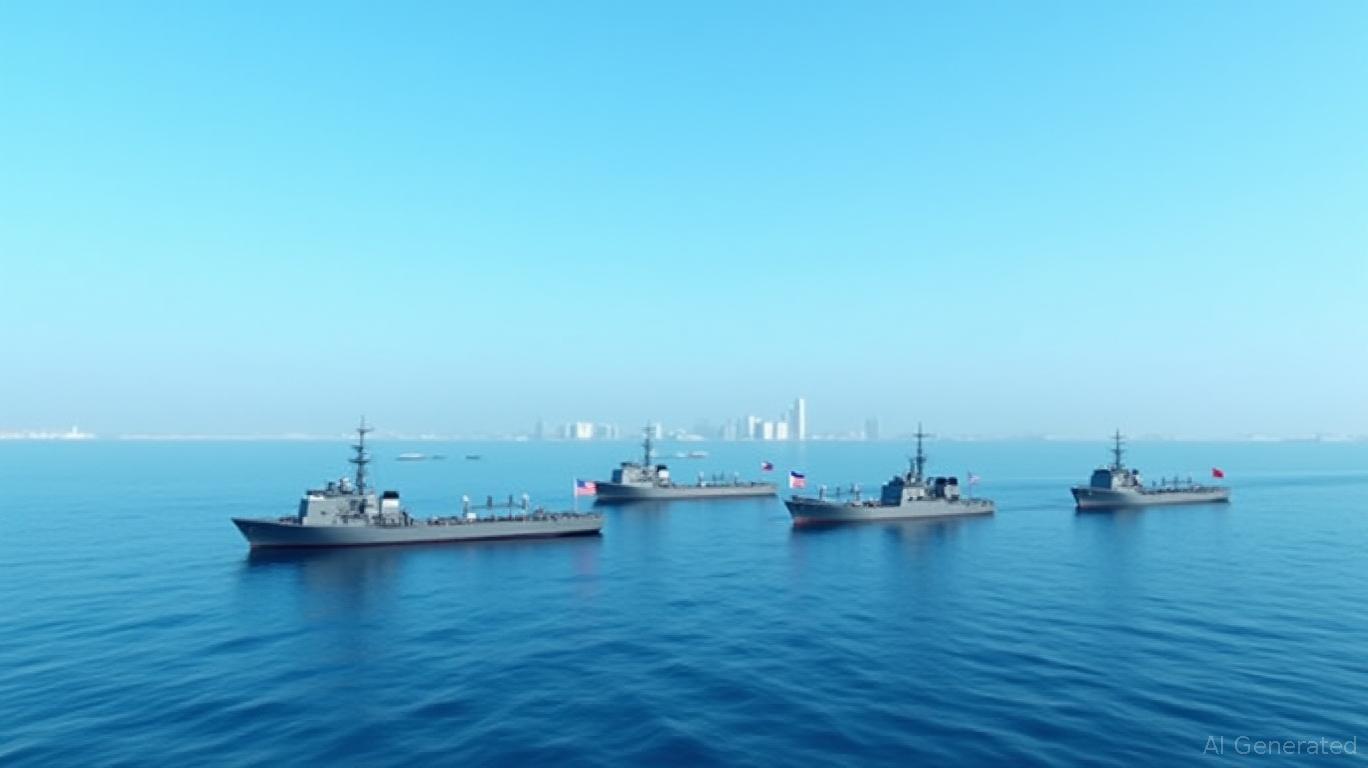
The United Nations Security Council is currently locked in a high-stakes confrontation over the legal status of the Strait of Hormuz. At the heart of the dispute is a draft resolution aimed at securing the world’s most critical oil chokepoint, but the diplomatic machinery has ground to a halt as China prepares to veto any language that authorizes the use of military force. This is not merely a debate over maritime law; it is a battle for control over twenty percent of the world’s petroleum liquids.
If the resolution fails, the consequences will manifest immediately in global energy markets and insurance premiums. Investors are already pricing in the risk of a prolonged disruption. While Western powers argue that a "policing" mandate is necessary to deter state-sponsored interference with tankers, Beijing views such a move as a thin veil for Western hegemony in a region where China is now the primary customer.
The Strategic Calculation of a Chinese Veto
China’s opposition to the "authorization of force" clause is rooted in a pragmatic, if cold, assessment of its own energy security. As the world’s largest importer of crude oil, Beijing cannot afford a hot war in the Persian Gulf. They recognize that any UN-sanctioned military action would likely be led by United States naval assets, effectively giving Washington the keys to China’s gas tank.
Beijing’s diplomats are pushing for a "neutrality" framework. They want the UN to provide observers rather than destroyers. By stripping the resolution of its teeth, China ensures that the US cannot legally justify a blockade or a preemptive strike under the UN flag. It is a defensive maneuver designed to maintain the status quo, even if that status quo is volatile.
The Insurance Trap and the Shadow Fleet
Behind the political grandstanding lies a more granular crisis involving maritime insurance. The moment the UN fails to reach a consensus, the "War Risk" premiums for tankers passing through the Strait will skyrocket. For many independent operators, the cost of transit will become prohibitive.
This creates a vacuum.
When legitimate shipping becomes too expensive, the "shadow fleet"—a network of aging, under-insured, and often untraceable tankers—steps in. These vessels operate outside the bounds of international regulation. They ignore sanctions. They bypass UN mandates. By blocking a forceful resolution, the Security Council inadvertently incentivizes a subterranean economy that is far more dangerous to environmental and regional stability than the military presence they are trying to avoid.
Why the 1982 Law of the Sea is Failing
The legal backbone of this entire dispute is the United Nations Convention on the Law of the Sea (UNCLOS). Under UNCLOS, the Strait of Hormuz is recognized as an international strait where the right of "transit passage" applies. This means ships have the right to pass through as long as they proceed without delay and refrain from threats against the coastal states.
The problem is that the definition of a "threat" is being stretched to its breaking point.
Iran, which sits on the northern shore of the Strait, has long argued that the presence of foreign warships is itself a violation of the peace. They view the Strait as their backyard. On the other hand, the US and its allies argue that "transit passage" is an absolute right that cannot be suspended even during times of heightened tension.
The Myth of Global Enforcement
The UN was never designed to be a global police force, yet that is exactly what the current resolution asks it to be. There is a fundamental disconnect between the rhetoric in New York and the reality on the water. Even if the resolution were to pass with the "force" clause intact, the UN has no standing navy. It relies on member states to volunteer their hardware.
This leads to a "coalition of the willing" scenario. If the UN authorizes force, it essentially hands a blank check to whichever nation has the biggest fleet in the area. China knows this. Russia knows this. Their resistance is a calculated effort to prevent the UN from becoming a rubber stamp for Western naval doctrine.
The Economic Ripple Effect of Diplomatic Failure
For the average consumer, this diplomatic gridlock translates to the pump. Oil markets hate uncertainty. A deadlocked Security Council is the purest form of uncertainty imaginable.
- Spot Prices: Any sign of a failed vote leads to an immediate $5 to $10 "risk premium" per barrel.
- Supply Chain Delays: If tankers are forced to wait for naval escorts that never arrive, the entire global "just-in-time" delivery system begins to fracture.
- Alternative Routes: There is a common misconception that pipelines can replace the Strait. They cannot. While the East-West Pipeline in Saudi Arabia and the Habshan–Fujairah pipeline in the UAE exist, their combined capacity is a fraction of the 21 million barrels that move through Hormuz daily.
The Failure of Regional De-escalation
For years, there was hope that regional powers—specifically Saudi Arabia and Iran—could find a local solution to maritime security. Those hopes have largely evaporated. The distrust is too deep. The maritime domain has become a theater for "gray zone" warfare—actions that stay just below the threshold of open conflict but cause maximum economic pain.
Limpet mines, drone strikes, and the temporary seizure of tankers have become the new normal. By refusing to authorize force, the UN is essentially signaling that these gray zone tactics can continue without consequence. It is an admission of impotence.
The Role of Technological Surveillance
As the physical presence of navies is debated, a new front has opened in the form of digital maritime surveillance. Both the West and China are deploying advanced satellite arrays and AI-driven tracking systems to monitor every movement in the Strait.
This data is the new gold.
If you can predict a seizure before it happens, you can move the markets. However, surveillance is not deterrence. You can watch a tanker being boarded in high-definition from a room in Virginia or Beijing, but without a legal mandate to intervene, you are just a spectator to a slow-motion car crash.
The Brinkmanship of the Coming Vote
The upcoming vote is a test of the UN’s relevance in the 21st century. If the resolution is vetoed or stripped of its enforcement mechanisms, it will be the clearest sign yet that the era of unified global governance is over. We are moving toward a fractured maritime order where different rules apply to different flags.
This fragmentation is a nightmare for global trade. It creates a tiered system where only the most powerful nations can guarantee the safety of their cargo. The "freedom of navigation" that has underpinned the global economy since 1945 is being traded for a "might makes right" policy.
The diplomats in the room are not just arguing over words. They are arguing over who gets to define the limits of sovereignty on the high seas. When China says no to force, they are not just protecting their oil; they are challenging the very idea that any international body has the right to dictate how a nation protects its interests in its own sphere of influence.
The tragedy of the Hormuz resolution is that both sides are right from their own perspective. The West is right that the Strait must remain open at all costs. China is right that a UN-sanctioned military buildup could ignite the very war it is supposed to prevent. In this deadlock, the only certainty is that the cost of shipping will continue to rise, and the risk of a miscalculation on the water will grow with every passing day that a clear legal framework is absent.
The ships will keep moving, but they will do so in a legal and security vacuum that benefits no one but the agitators. The world is watching the tally board in New York, but the real story is written in the wake of the tankers navigating the narrow, dangerous waters of the Gulf.