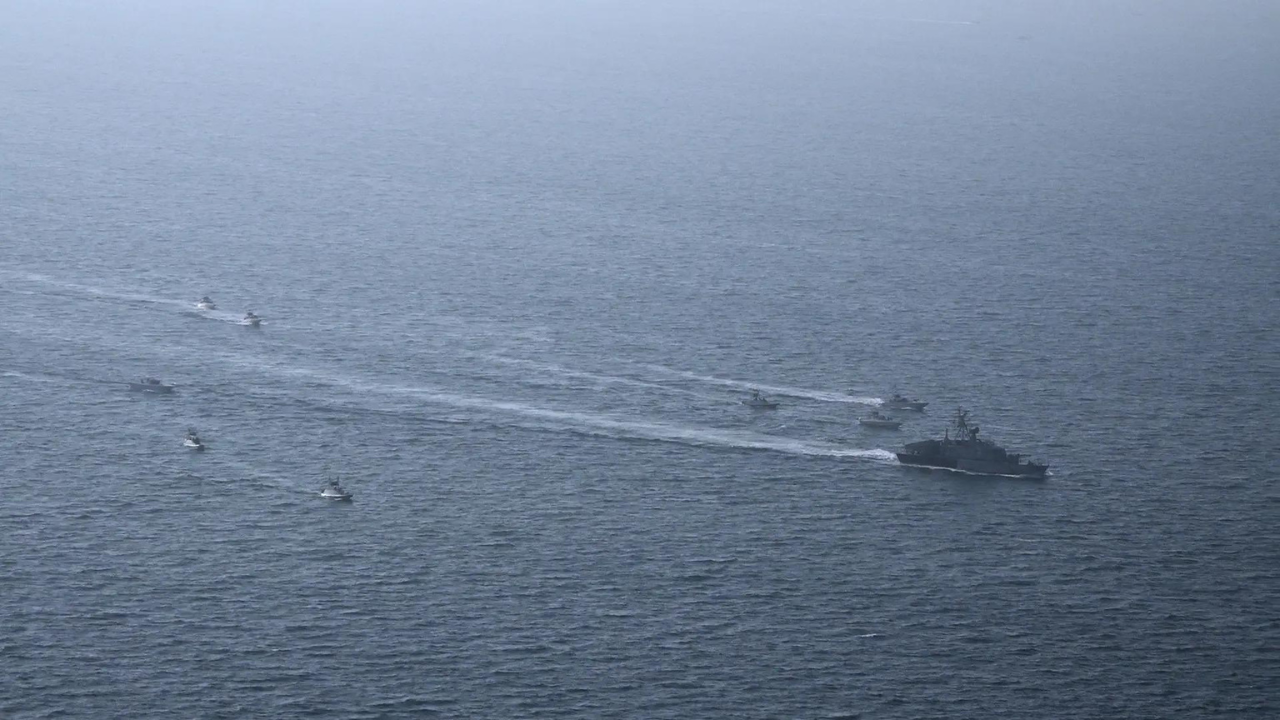
Iran just pulled the trigger on a move that everyone in global shipping feared. By effectively blocking the Strait of Hormuz, Tehran has turned a regional military skirmish into a global economic nightmare. If you're wondering why your gas prices might spike or why the US Navy is suddenly telling every commercial vessel to stay clear of the Persian Gulf, this is it. The situation isn't just about a localized conflict anymore. It’s about the jugular vein of the world's energy supply.
Following a series of intense US-Israel strikes on Iranian interests, the Iranian Revolutionary Guard Corps (IRGC) signaled that "no ship is allowed" through the narrow waterway. This isn't just tough talk. It’s a physical reality for the 21 miles of water that carry roughly 20% of the world’s petroleum. When Iran says the gate is closed, the world feels it instantly.
Why the Strait of Hormuz is the world's biggest headache
The geography here is a nightmare for security. At its narrowest point, the shipping lanes are only two miles wide in either direction. You can't just sail around it. If you want oil from Kuwait, Iraq, or Saudi Arabia’s biggest terminals, you go through Hormuz or you don't go at all.
Iran knows this. They’ve used the threat of a blockade as their primary "asymmetric" weapon for decades. But this time feels different because it follows direct kinetic action between Israel and Iranian forces. We aren't in the realm of "shadow wars" anymore. We're in the middle of a hot conflict where commercial shipping is the easiest target for retaliation.
The US warning to commercial vessels
The United States Maritime Administration (MARAD) didn't mince words. They issued a high-level alert urging all US-flagged commercial vessels to avoid the Persian Gulf and the Gulf of Oman. This isn't a suggestion. It’s a desperate attempt to prevent a hostage situation or a sunken tanker from escalating this into a full-scale naval war.
Shipping companies like Maersk and Hapag-Lloyd are now facing a brutal choice. They can wait it out at anchor, costing millions of dollars a day, or they can try to find alternative routes that simply don't exist for the volume of cargo coming out of the Gulf. You've got dozens of massive tankers sitting like ducks in the Arabian Sea right now. They're waiting for a green light that might not come for weeks.
The fallout of the US-Israel strike
The catalyst for this blockade was a coordinated strike by US and Israeli forces. While the military objectives might have been met, the economic blowback is just starting. Iran’s doctrine of "forward defense" means they don't have to win a sea battle against the US Fifth Fleet to cause chaos. They just have to make it too dangerous for insurance companies to cover the ships.
Maritime insurance rates for the region have already gone vertical. Honestly, some underwriters are refusing to quote prices at all for "war risk" zones in the Gulf. If a ship can't get insurance, it doesn't sail. Iran doesn't even need to sink a ship to stop the flow; they just need to make the risk-to-reward ratio impossible for the big shipping houses.
What this means for your wallet
Don't let the talking heads on TV fool you. This affects everything. It’s not just about the price at the pump, though that’s the most visible part. Crude oil prices jumped nearly 10% in the hours following the announcement. But it’s also about Liquefied Natural Gas (LNG). Qatar is one of the world’s top exporters of LNG, and every single one of its ships has to pass through that same 21-mile gap.
If the heat doesn't die down, energy costs in Europe and Asia will skyrocket. Manufacturing gets more expensive. Shipping containers filled with consumer goods get delayed. It's a domino effect that starts with a few Iranian fast boats and ends with you paying more for groceries.
Navigating the military reality on the water
The US Navy’s Fifth Fleet, based in Bahrain, is in an incredibly tight spot. They're tasked with "ensuring the free flow of commerce," which is a fancy way of saying they keep the lanes open. But clearing a blockade in the Strait of Hormuz isn't like clearing a road. Iran has lined the coast with anti-ship missiles and thousands of sea mines.
Mines are the real "silent killers" here. They're cheap, hard to find, and incredibly effective at stopping a trillion-dollar economy in its tracks. Even the rumor of mines is enough to keep commercial captains away. The US and its allies would need weeks, maybe months, of intensive minesweeping operations to truly declare the waters safe again. During that time, the global economy would be gasping for air.
The role of regional players
Saudi Arabia and the UAE have built pipelines to bypass the Strait, but they don't have nearly enough capacity to handle the full volume of Gulf exports. The East-West Pipeline in Saudi Arabia can move some oil to the Red Sea, but it’s a drop in the bucket compared to what usually goes through Hormuz.
Everyone is looking at China, too. China is the biggest buyer of Iranian oil and a huge customer for the rest of the Gulf. If Beijing gets fed up with their energy supply being choked off, they might put pressure on Tehran to back down. But right now, Iran seems more interested in showing teeth than keeping their biggest customer happy.
What happens next in the Gulf
You need to keep a close eye on the "Tanker War" 2.0. In the 1980s, Iran and Iraq spent years attacking each other's shipping. We’re seeing a modernized, much more lethal version of that play out. The US is likely to attempt "Operation Earnest Will" style escorts, where warships flank commercial tankers to get them through.
However, modern drones and precision missiles make those escorts a lot riskier than they used to be. A single successful hit on a supertanker would create an environmental and economic disaster that would take years to clean up.
If you're an investor or just someone worried about the cost of living, watch the Brent Crude index. If it stays above $100 for more than a week, we're looking at a prolonged period of inflation that central banks can't easily fix. This isn't a supply problem that can be solved by drilling more in Texas. It's a geopolitical chokehold.
Stop expecting a quick resolution. These types of maritime standoffs usually get worse before they get better. Watch for any news regarding "Freedom of Navigation" operations by the US Navy. Those are the moments when the risk of a direct shooting war is highest. For now, the best move is to prepare for higher energy costs and significant delays in global logistics. Check your supply chains if you run a business and expect the "No ship allowed" policy to remain the status quo until a major diplomatic or military breakthrough occurs.



