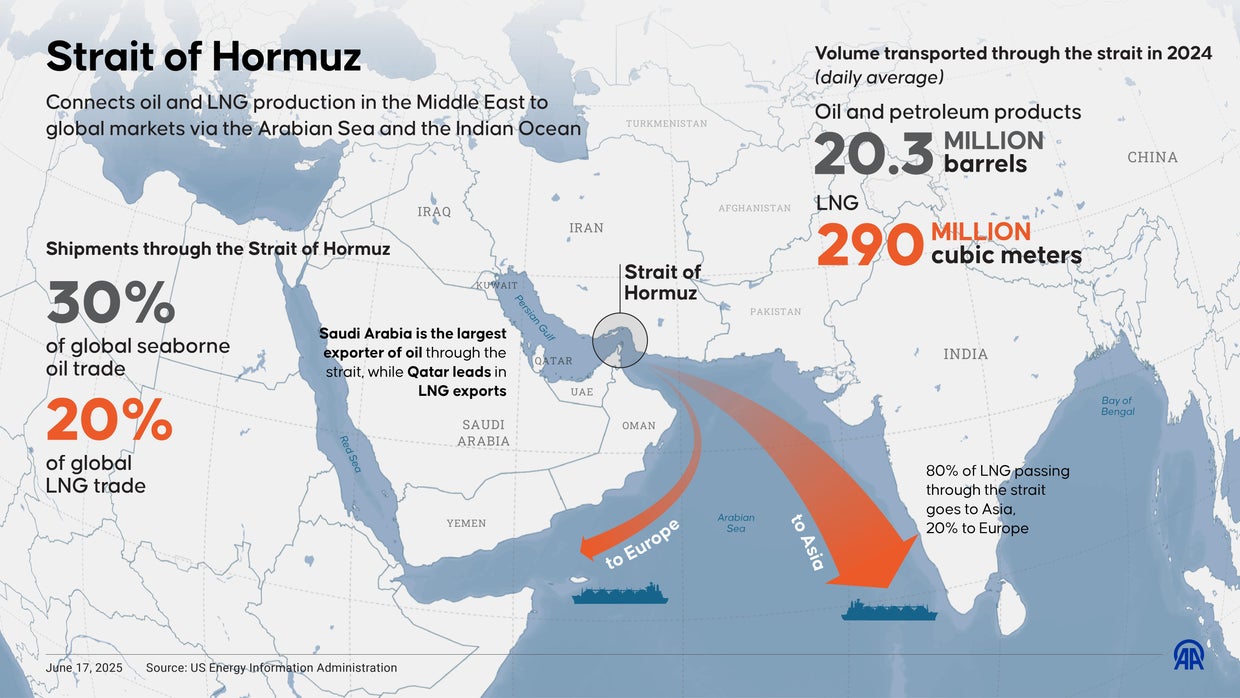
The media is addicted to the "tinderbox" narrative. Every time an IRGC speedboat pulls alongside a tanker in the Strait of Hormuz, the talking heads rush to their maps to circle the 21-mile-wide choke point in red ink. They scream about World War III and $200 oil. They focus on the flags, the missiles, and the "Israel-linked" labels.
They are missing the entire point.
This isn't about traditional warfare. It isn't even about regional hegemony in the way the State Department defines it. When Iran’s Revolutionary Guard seizes a vessel like the MSC Aries, they aren't just making a geopolitical statement; they are conducting a hostile audit of global supply chain vulnerabilities that the West is too lazy to patch.
The Myth of the Israeli Link
Let's stop pretending the "Israel-linked" tag is the primary driver. In the world of maritime law and shell-company shipping, everything is linked to everyone. The MSC Aries is owned by Gortal Shipping, which is leased to MSC, which has ties to Zodiac Maritime, which is chaired by Eyal Ofer.
If you dig deep enough into any vessel passing through that corridor, you can find a connection to a sanctioned entity, a billionaire in Tel Aviv, or a private equity firm in New York. The "Israeli link" is the convenient excuse, the legal fig leaf that allows Iran to exercise its real muscle: the ability to price risk into every gallon of fuel you buy.
The competitor articles love to frame this as a tit-for-tat response to embassy strikes. That is a surface-level take for people who think history started yesterday. This is about the weaponization of the bill of lading. By seizing a ship under the guise of "Zionist connections," Tehran is teaching a masterclass in maritime extortion that forces insurance premiums to do the work that kinetic missiles cannot.
Shipping Insurance is the Real Front Line
You want to understand the impact? Don't look at the size of the Iranian Navy. Look at the "War Risk" premiums at Lloyd’s of London.
When a ship is seized, the immediate physical loss is negligible to a nation's GDP. The real damage is the cumulative friction added to the global economy. Every time the IRGC reminds the world they can board a ship with a helicopter and a few masked men, the cost of moving goods through Hormuz spikes.
We are talking about $1 trillion worth of oil and liquefied natural gas passing through that gap annually. If insurance premiums rise by even 0.5%, you are looking at a multi-billion dollar tax on the global consumer. Iran knows they don't have to sink the fleet. They just have to make it too expensive to insure.
I’ve seen analysts suggest that the U.S. Navy’s presence is a failure because these seizures keep happening. That is a fundamental misunderstanding of naval power in the 21st century. A carrier strike group is designed to fight other carriers. It is remarkably poorly equipped to stop a dozen guys on a RIB (Rigid Inflatable Boat) from boarding a commercial tanker in territorial waters before anyone can respond.
The Sovereignty Trap
The "lazy consensus" says Iran is "violating international law."
Technically? Yes.
Effectively? It doesn't matter.
International maritime law is a polite suggestion backed by the threat of force. But when the force required to stop the violation costs 100x more than the violation itself, the law ceases to exist. Iran is exploiting the asymmetry of legality. They use their own interpretation of the United Nations Convention on the Law of the Sea (UNCLOS)—specifically regarding "innocent passage"—to claim they are policing their own backyard.
They argue that if a ship is "threatening the environment" or "violating maritime regulations," they have the right to inspect it. It’s a bad-faith argument, but it’s one that ties the hands of Western legalists who insist on playing by a rulebook that their opponent has already burned.
Stop Asking if War is Coming
The most common question in the "People Also Ask" section is: "Will the closure of the Strait of Hormuz lead to war?"
It’s the wrong question. It assumes war is a binary state—on or off.
We are already in a state of permanent low-intensity commercial conflict. Closing the Strait entirely would be a suicide move for Iran; they need the water open for their own shadow fleet of tankers to sell oil to China. They aren't going to shut the door. They are going to keep standing in the doorway, checking IDs and shaking down anyone they don't like.
If you are waiting for a formal declaration or a massive naval engagement, you’re looking at the wrong map. The war is happening in the spreadsheets of shipping conglomerates and the risk-assessment algorithms of energy traders.
The Hard Truth About Supply Chain Resilience
The West loves to talk about "resilience" while maintaining 100% dependency on a single geographical point for its energy stability. If you are a CEO or a policy maker crying about Hormuz, you have failed your "Experience" metric.
I’ve seen companies ignore the Horn of Africa risks until the Houthi rebels started hitting ships with drones. Now, they are shocked—shocked!—that the same thing is happening in the Gulf.
The unconventional advice? Diversification is a lie if the route remains the same. You can change your supplier from Saudi Arabia to Qatar, but if the boat still has to turn the corner at Ras al-Khaimah, your risk profile hasn't moved an inch.
The only way to win this game is to bypass the choke point. That means pipelines through Saudi Arabia to the Red Sea (which has its own problems) or a radical shift in energy sourcing that the current political climate isn't ready to stomach.
The MSC Aries Was a Warning, Not a Trophy
Seizing the MSC Aries wasn't about the cargo. It wasn't about the crew. It was a stress test.
Iran was checking:
- How long does it take for a Western response?
- What is the immediate volatility in the Brent Crude market?
- Which "allies" will actually step up to escort commercial vessels?
The answer to all three was "not enough." The response was a series of "strongly worded" statements and a few extra patrols. The market spiked then settled into a new, higher baseline of anxiety. And the "allies" stayed largely silent, terrified of escalating a conflict that would drive gas prices up during an election year.
This is the "nuance" the mainstream media ignores: Iran isn't acting out of desperation. They are acting out of a precise calculation of Western lethargy. They know that as long as they don't sink an American destroyer, the U.S. will grumble but ultimately accept the "new normal" of maritime insecurity.
The Failure of the Sanctions Regime
For decades, the "expert" consensus was that sanctions would cripple Iran's ability to project power. Instead, sanctions forced Iran to build a world-class clandestine logistics network.
They have become masters of the "ghost fleet" and ship-to-ship transfers in the middle of the night. While the U.S. Treasury Department was busy blacklisting specific hull numbers, Iran was busy learning how to manipulate the very maritime systems we rely on.
When they seize a vessel like the MSC Aries, they aren't just taking a ship; they are capturing data. They are seeing how our tracking systems work, how our communication protocols fail, and how our "security" measures are nothing more than a few unarmed guards and a high-pressure water hose.
Tactical Advice for the Real World
If you are operating in this space, stop relying on the "Global Order." It’s a nostalgic myth.
- Audit your "Links": If your cargo is on a vessel with even a third-degree connection to a geopolitical flashpoint, assume it will be seized. Do not wait for the news report.
- Price in the "Hormuz Tax": Stop treating these seizures as "black swan" events. They are "grey rhinos"—highly probable, high-impact events that you are choosing to ignore.
- Ignore the "Israeli" Rhetoric: This is a trap designed to make you think it’s someone else’s problem. It’s a global logistics problem.
The competitor articles will tell you this is a "tense standoff." I'm telling you it’s a successful hostile takeover of the world’s most important trade route. Iran doesn't need to win a war. They just need to own the toll booth.
And right now, they’re the only ones collecting the cash.