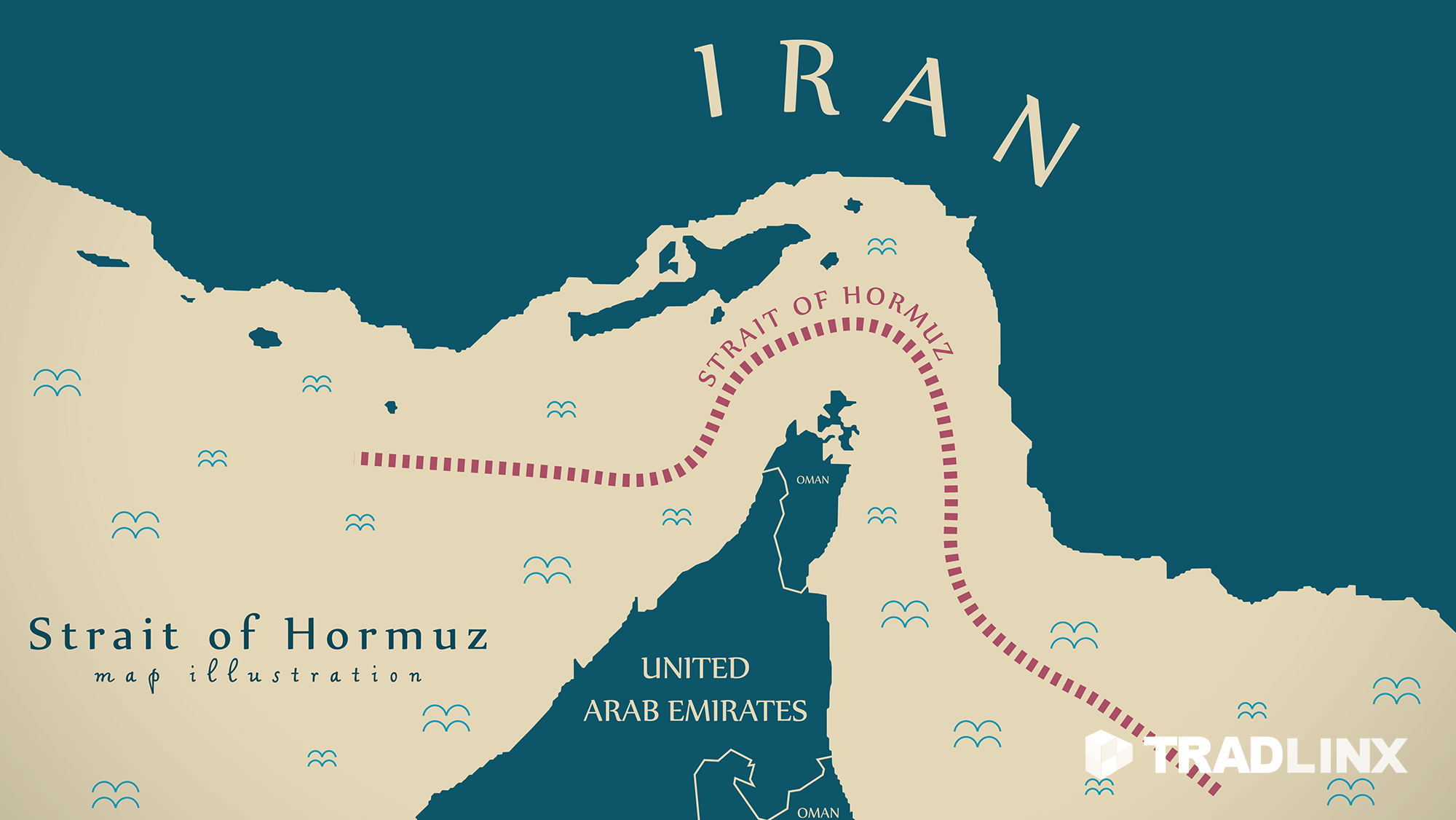
The diplomatic circles in Washington and Seoul are currently congratulating themselves for stating the obvious. Marco Rubio and South Korean Foreign Minister Cho Tae-yul just sat down to "agree" that the Strait of Hormuz is vital to the global economy. It is the kind of safe, consensus-driven statement that populates press releases but fails to account for the shifting tectonic plates of energy security.
Calling the Strait of Hormuz "key" isn't a strategy; it’s a cliché. If your entire economic outlook depends on the premise that a 21-mile-wide choke point remains undisturbed, you aren't an analyst—you’re a hostage.
The obsession with Hormuz is a relic of 1970s oil shocks that ignores the modern reality of diversified supply chains, the strategic emergence of the Arctic Northern Sea Route, and the hard fact that South Korea’s biggest vulnerability isn't a blockade in the Middle East. It’s their own inability to decouple from a maritime security model that is rapidly becoming obsolete.
The Myth of the Irreplaceable Choke Point
Diplomats love to cite the statistic that 20% of the world's liquid petroleum passes through the Strait. They use this number to justify massive naval expenditures and endless bilateral summits. But they rarely discuss the elasticity of the modern energy market.
I have watched desks at major trading firms pivot during actual regional escalations. The "Hormuz Premium" on oil prices is often more about speculative psychology than actual physical shortage. When the IRGC seizes a tanker, the market spikes for 72 hours and then corrects. Why? Because the world is no longer solely dependent on the Persian Gulf.
The U.S. is now a net exporter. The Permian Basin matters more to global price stability than the Musandam Peninsula. When Rubio and Cho fixate on Hormuz, they are fighting the last war. They are treating a 20th-century logistical problem as a 21st-century existential threat.
The real danger isn't a temporary closure of the Strait. It is the systemic fragility of "Just-in-Time" energy delivery for nations like South Korea that refuse to build sufficient strategic reserves or invest in overland pipelines that bypass the Persian Gulf entirely.
South Korea's False Sense of Security
Seoul’s reliance on the U.S. Navy to keep the sea lines of communication (SLOCs) open is a moral hazard. By outsourcing their primary security concern to Washington, South Korea has neglected the hard work of regional energy diplomacy.
Minister Cho’s agreement with Rubio is essentially a request for a status quo that the U.S. can no longer guarantee in a multi-polar world. The U.S. Navy is stretched thin. It is dealing with the Red Sea, the South China Sea, and the North Atlantic simultaneously.
If a real conflict erupts in the Strait, the U.S. will prioritize its own interests and those of its immediate neighbors before it moves to secure LNG shipments destined for Incheon.
What the "People Also Ask" Sections Get Wrong
You’ll often see questions like, "What happens to the stock market if the Strait of Hormuz closes?"
The standard answer is "global collapse." That is lazy thinking.
The brutal reality is that a closure would be a Darwinian event. Large, diversified economies would suffer a recession; fragile, energy-import-dependent nations would face total systemic failure. South Korea falls dangerously close to the latter because it treats maritime security as a diplomatic talking point rather than a logistical engineering problem.
Instead of asking if it will close, they should be asking why they haven't spent the last decade building a "Hormuz-bypass" infrastructure. Saudi Arabia and the UAE already have pipelines to the Red Sea and the Gulf of Oman. The capacity exists to move a significant portion of production without ever touching the Strait.
The "crisis" is partially a choice.
The Hidden Cost of the "Agreement"
When Rubio and Cho "agree" on the importance of this region, what they are actually doing is signaling to Tehran that they are susceptible to blackmail.
High-level diplomatic focus on a specific geographic vulnerability gives that vulnerability more leverage. If I am an operative in the IRGC, I see this joint statement and I see a target. I see that the American Secretary of State nominee and the South Korean Foreign Minister are publicly admitting they are terrified of what happens in my backyard.
True power is not needing the Strait.
I’ve seen energy giants blow billions on offshore infrastructure in high-risk zones while ignoring the boring, domestic upgrades that would reduce their exposure. It’s sexier to talk about aircraft carriers in the Middle East than it is to talk about grid modernization and nuclear base-load expansion in Seoul.
The Nuance of the Rubio Doctrine
Marco Rubio is not a status quo politician, which makes his alignment with the standard State Department line on Hormuz even more curious. Historically, Rubio has pushed for American energy dominance as a tool of statecraft.
If he were being true to a "Peace Through Strength" posture, he wouldn't be agreeing that Hormuz is key; he would be telling Cho that South Korea needs to start paying for its own maritime escorts or accelerating its shift away from Gulf-dependent fossil fuels.
The "agreement" is a polite fiction. It’s a way to maintain the alliance without addressing the elephant in the room: the U.S. is tired of being the world's gas station security guard.
Why You Should Ignore the Press Releases
If you want to know the real health of the global economy, don't look at diplomatic summaries. Look at the insurance premiums for Suezmax tankers. Look at the construction of strategic petroleum reserves (SPR) in non-OECD countries.
The "status quo" is a facade. While Rubio and Cho talk about the Strait of Hormuz, the actual movement of energy is shifting toward:
- The Arctic Silk Road: Russia and China are betting heavily on the Northern Sea Route, which bypasses every major Western-controlled choke point.
- Modular Nuclear Power: The only way to truly "secure" the Strait is to make it irrelevant to your power grid.
- Regional Grid Integration: The idea that an island-mentality nation like South Korea can survive on 90-day stockpiles is a fantasy.
The downside to my contrarian view is obvious: shifting away from the Hormuz-centric model is expensive. It requires massive capital expenditure and a total rethink of national security. It’s much easier to sign a piece of paper saying the Strait is "important."
But being "right" in a press release won't keep the lights on in Seoul if the tankers stop moving.
Stop looking at the Strait of Hormuz as a gate that needs a guard. Start looking at it as a legacy dependency that needs to be severed. The moment you admit a choke point is vital, you’ve already lost the war of attrition.
Invest in the bypass. Build the reserves. Forget the summits.