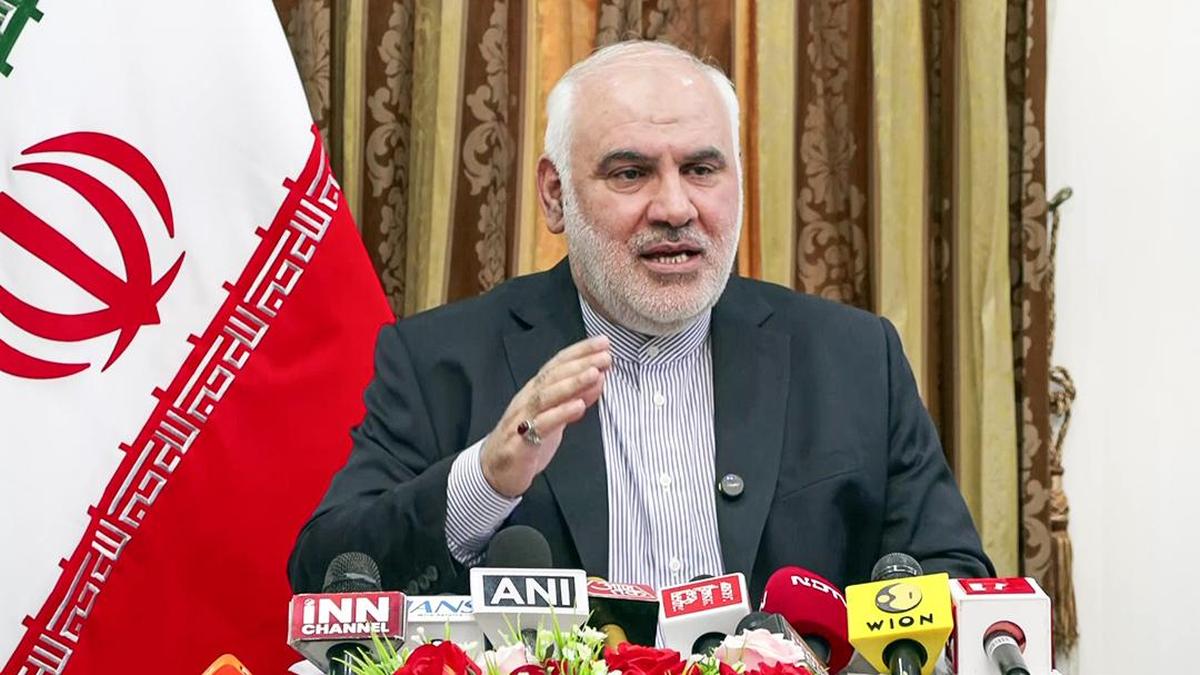
The world treats the Strait of Hormuz like a giant carotid artery that Iran can pinch at will to flatline the global economy. Diplomats tremble every time an Iranian official like Mohammad-Fathali suggests they are "allowing" passage to specific vessels. The media laps it up. They frame it as a precarious balance of power where one misstep leads to $200-a-barrel oil and a total systemic collapse.
They are wrong.
The narrative of "Iranian permission" is a carefully constructed piece of theater, performed by Tehran and facilitated by a Western media apparatus addicted to crisis. If you look at the cold, hard physics of maritime logistics and the brutal reality of Iranian internal economics, the idea of a sustainable blockade isn't just unlikely—it’s a logistical fantasy.
The Sovereignty Smokescreen
The "lazy consensus" argues that Iran holds the keys to the world’s most vital chokepoint. The logic follows that since the shipping lanes fall within Iranian and Omani territorial waters, Tehran can legally or militarily dictate who passes.
This ignores the Right of Transit Passage. Under the United Nations Convention on the Law of the Sea (UNCLOS), the Strait of Hormuz is an international strait. Ships aren't "allowed" through by Iranian benevolence; they pass through as a matter of codified international right. When an envoy claims they are "permitting" ships, they are gaslighting the global market.
Iran hasn't "allowed" some ships; they have failed to stop them because stopping them is a suicide pact. The moment the Strait actually closes, the Iranian economy—which still desperately relies on the illicit and semi-licit flow of its own petroleum products—suffocates faster than the West. A blockade is a two-way street. You cannot starve your neighbor if you have to share the same spoon.
The Myth of the Unstoppable Chokepoint
Geopolitical "experts" love to talk about the 21 miles of water at the Strait's narrowest point. They point to the vulnerability of the VLCCs (Very Large Crude Carriers).
The Mathematical Reality of a Blockade
To actually "close" the Strait, you don't just sink one ship. You have to maintain a kinetic environment that makes insurance premiums so high that no captain will enter.
Imagine a scenario where Iran attempts a total blockade.
- The Insurance Spike: Premiums for tankers would go from standard rates to "War Risk" levels instantly.
- The Escort Response: The U.S. Fifth Fleet and its allies initiate "Operation Earnest Will" 2.0.
- The Sunk Cost: Iran loses its entire navy (which is largely composed of fast-attack craft and aging frigates) in approximately 72 hours.
I have watched analysts ignore the sheer volume of traffic. We are talking about roughly 20 to 30 tankers a day. Sinking a tanker is remarkably difficult. These are double-hulled monsters designed to survive massive impacts. In the 1980s "Tanker War," over 450 vessels were attacked. Guess how many sank? Less than 10%. The global supply chain is far more resilient than the fear-mongers want you to believe.
Why High Oil Prices Kill Tehran
The counter-intuitive truth is that Iran needs stable, moderate oil prices more than the United States does.
When the Strait is "threatened," Brent crude spikes. On paper, this looks like leverage for Iran. In reality, it accelerates three things that destroy Iranian influence:
- The Permian Pivot: Every dollar oil rises makes US shale more profitable, driving more rigs into the ground in West Texas.
- Alternative Routing: It justifies the massive capital expenditure for pipelines like Saudi Arabia’s Petroline, which bypasses the Strait entirely.
- Energy Transition: High prices are the greatest catalyst for moving the global south away from internal combustion engines.
By threatening the Strait, Iran isn't exercising power; they are devaluing their only long-term asset. They are the landlord threatening to burn down the building while they are still locked in the basement.
The Shadow Fleet Factor
The competitor article misses the most vital piece of the puzzle: the Shadow Fleet.
Iran manages a massive, clandestine network of aging tankers that move oil under various flags of convenience. These ships rely on the very "passage" they claim to control. If Tehran creates a "no-go" zone in the Strait, they effectively embargo themselves.
I’ve seen how these operations work. They happen in the dead of night, involving transponder "spoofing" and ship-to-ship transfers. If the Strait becomes a kinetic war zone, the "dark" ships are the first ones to be seized or sunk because they lack the protection of major sovereign navies. Iran is effectively the world’s largest user of the Strait’s freedom of navigation. They are the last people who actually want it closed.
Dismantling the "People Also Ask" Delusions
Can Iran close the Strait of Hormuz?
Technically, for a few days. Sustainably? No. They can sow chaos with mines and drones, but they cannot hold the territory against a modern combined-arms navy.
Will gas prices double if the Strait is blocked?
Temporarily, the market will panic because traders are reactive and often mathematically illiterate. However, the global Strategic Petroleum Reserves (SPR) are designed specifically for this 90-day window. The supply glut outside the Persian Gulf is larger than the headlines suggest.
Does Iran have the legal right to stop ships?
No. Even if they claim ships are violating environmental laws (a favorite excuse), international law regarding transit passage is clear. These are "bad faith" legal arguments used to provide a veneer of legitimacy to piracy.
The Real Danger is Not a Blockade
The obsession with the "closure" of the Strait is a distraction from the real threat: incremental friction.
Tehran doesn't want to close the Strait; they want to tax it. They want to create enough "oversight" and "security checks" that they can extract concessions from the international community. Every time an envoy says they "allowed" passage, they are testing the world's willingness to accept Iranian "management" of the waterway.
If we accept the premise that their "permission" is required, we have already lost. We have ceded the sovereignty of international waters to a regional power without a single shot being fired.
Stop Buying the Fear
If you are a business leader or an investor hedging against a total Hormuz shutdown, you are wasting your capital. You are betting on a scenario that defies the rational self-interest of every player involved, including the "aggressor."
The Strait is a theater. The Iranian navy is a stage crew. The envoys are actors reading a script designed to maximize their perceived relevance while their actual power is stuck in a stagnant, petro-dependent reality.
Stop asking if the Strait will close. Start asking why you’re still listening to the people who say it will.
Identify the posturing for what it is. The Strait isn't a chokepoint; it’s a mirror reflecting our own geopolitical anxieties.
Smash the mirror.