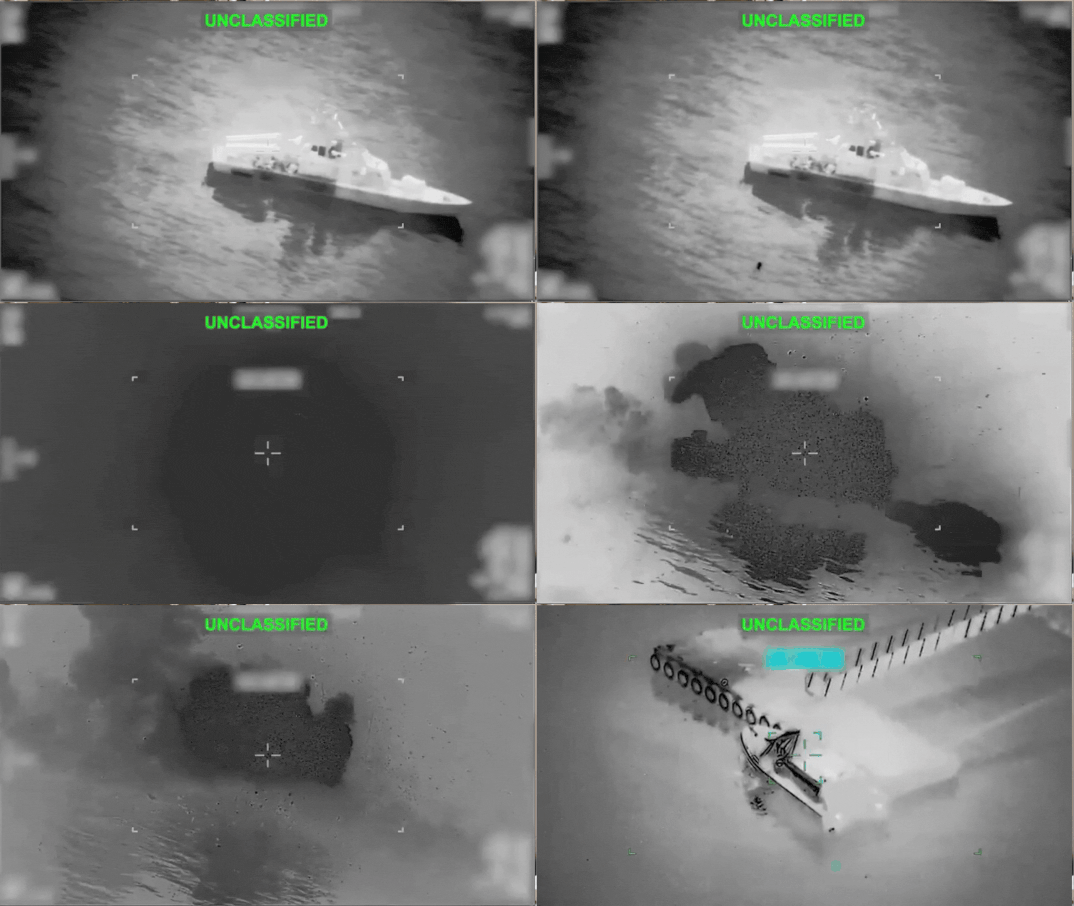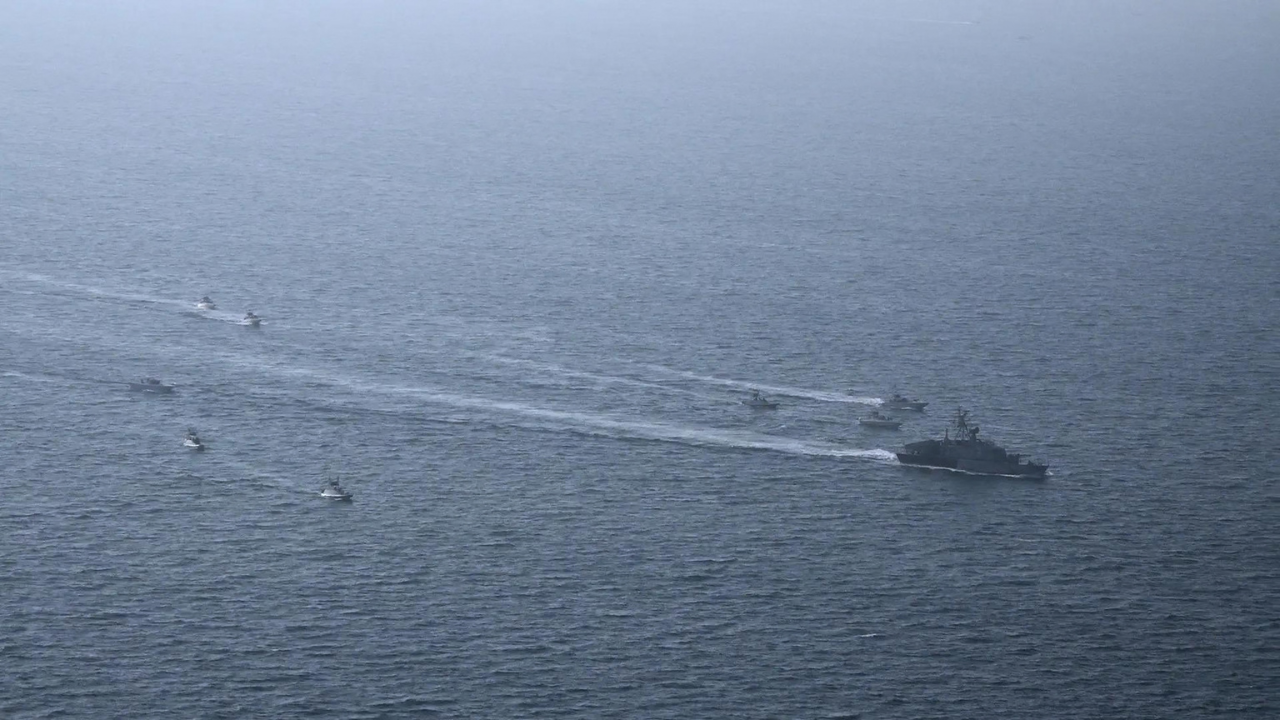
The Pentagon’s recent verbal gymnastics regarding "escorting" commercial tankers in the Strait of Hormuz isn't a communications breakdown. It is a symptoms-check on a dying strategy. While mainstream outlets obsess over whether a specific ship was shadowed or protected, they miss the tectonic shift: the United States Navy is currently engaged in a high-stakes LARP (Live Action Role Play) where the costume is global hegemony and the script is written in 1991.
Modern maritime security is not about the physical presence of a destroyer. It is about the math of deniability. When the U.S. "clarifies" its stance on escorting vessels, it isn't being indecisive. It is admitting that the traditional carrier strike group model is an analog solution to a digital, asymmetric nightmare.
The Escort Fallacy
The "lazy consensus" suggests that if a gray hull sits next to a black hull, the oil keeps flowing. This is a fairy tale for shareholders. In reality, the Strait of Hormuz is 21 miles wide at its narrowest point. You aren't "escorting" a ship through an open ocean; you are walking a giant through a hallway lined with snipers.
I’ve watched defense budgets balloon while our tactical flexibility shrinks. We are obsessed with "presence." But presence without the political will to engage is just a very expensive target. The competitor narrative frames the U.S. flip-flop as a PR blunder. It’s actually a realization that putting a $2 billion Arleigh Burke-class destroyer in a position where it must decide between starting World War III or letting a drone hit a tanker is a losing proposition.
The Math of Asymmetry
Let’s look at the actual physics. The cost-to-kill ratio in the Strait has flipped.
- The Drone: $20,000.
- The Interceptor: $2,000,000 per RIM-162 ESSM.
- The Logic: Even a 100% intercept rate is a financial defeat.
When the Navy backs away from the word "escort," they are acknowledging that they cannot sustain a war of attrition against cheap, shore-based assets. If you "escort" one ship, you are obligated to escort a thousand. The math doesn't work. The U.S. Navy has roughly 290 deployable ships. There are over 2,000 tanker transits through that Strait every year. Do the arithmetic. We are trying to use a finite resource to solve an infinite problem.
The Invisible Threat: Cyber and EW
Everyone looks for the missile. No one looks at the spoofing.
The real danger in the Strait isn't a direct kinetic strike; it’s the manipulation of Automatic Identification Systems (AIS) and GPS. I have seen instances where commercial vessels "drift" into territorial waters because their bridge displays were fed false coordinates. When the Navy "clarifies" its role, they are ducking the responsibility of protecting private entities from electronic warfare (EW) that our own fleet is barely equipped to handle in a civilian corridor.
By promising "protection," the U.S. government creates a moral hazard. Shipping companies under-invest in their own security because they expect Uncle Sam to provide a free bodyguard. This isn't just bad foreign policy; it’s a market distortion that keeps the maritime industry vulnerable.
Stop Asking if We Are Escorting
The question "Is the U.S. escorting tankers?" is the wrong question. It assumes that physical protection is still the primary deterrent. It isn't.
In a world of swarm boats and loitering munitions, a destroyer is a magnet for escalation, not a shield. The real question is: Why are we still pretending that a 20th-century naval doctrine can secure a 21st-century energy choke point?
We should be moving toward autonomous, decentralized defense—unmanned surface vessels (USVs) that can provide distributed sensor networks without risking 300 American lives on a single deck. Instead, we argue over semantics in a press briefing room while the actual tactical advantage evaporates.
The Cost of "Clarity"
The media wants a "clear stance." Clarity is the enemy of naval operations in a contested littoral zone. Strategic ambiguity is the only tool left when your physical assets are overstretched and technologically vulnerable.
If the U.S. says "We will escort every ship," and then fails once, the entire illusion of American hegemony shatters. If they say "We might escort some ships," they maintain the shadow of doubt. The flip-flop isn't a mistake; it’s a desperate attempt to keep the bluff alive.
The Unconventional Reality
If you want to secure the Strait, stop sending more ships. Start decentralizing the risk.
- Private Security Integration: Allow tankers to carry point-defense systems. The legal hurdles are immense, but the tactical necessity is undeniable.
- Electronic Hardening: Shift the focus from missiles to signal integrity. A tanker that can’t be spoofed is harder to capture.
- Accepting the Decline: Admit that the era of the U.S. Navy as the world's free 911 service is over.
The industry insiders won't tell you this because their "consulting" fees depend on the status quo. But the "clarification" from the Pentagon was the sound of a bubble popping. We are protecting an idea of global order that no longer exists on the water.
The next time you see a headline about "shifts in stance," don't look for the policy change. Look for the panic. We are running out of ships, we are running out of money, and most importantly, we are running out of time to admit that the escort model is dead.
Sell the tankers. Buy the pipelines. The age of the secure Strait is over.