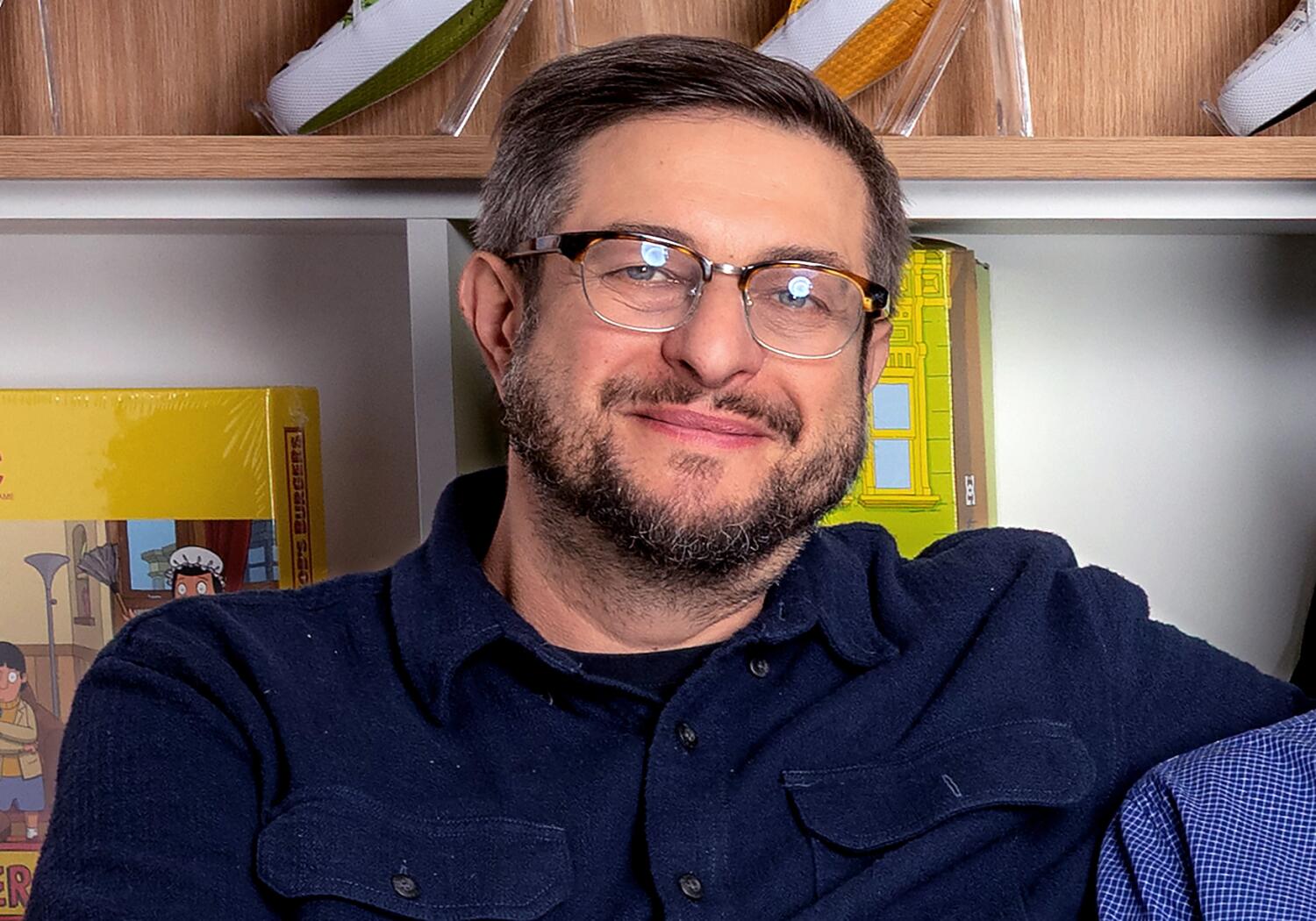
The headlines are currently screaming about Eugene Mirman. They want you to feel a specific, curated type of dread. They tell you the Bob’s Burgers actor was pulled from a "fiery crash" and hospitalized. They feed you the visceral imagery of smoke and twisted metal, then pivot immediately to a list of his voice-acting credits as if his IMDB page is a prayer bead for his recovery.
This is the standard celebrity trauma loop. It’s lazy. It’s predictable. And it misses the entire point of how we consume tragedy in the digital age.
When a public figure survives a near-death experience, the media treats it as a glitch in the simulation. They focus on the "miracle" of the extraction. They zoom in on the charred remains of the vehicle. What they don't tell you is that these events are the only time the public actually acknowledges the fragility of the creative class—and even then, they do it through the lens of brand preservation.
The Cult of the Voice
The industry is obsessed with the "voice" because it’s a decoupled asset. When news broke about Mirman’s accident, the immediate, unspoken panic in Hollywood offices wasn't about the man; it was about the pipeline.
If you think that’s cynical, you haven’t sat in a production meeting.
In the animation world, a lead actor’s voice is a multi-million dollar piece of intellectual property. The "fiery crash" narrative serves a dual purpose: it generates clicks through primal fear, and it tests the waters for audience loyalty. We are taught to consume these reports as fans, but we are actually being polled as stakeholders.
The "lazy consensus" here is that we are all unified in a moment of communal concern. We aren't. We are participating in a morbid feedback loop where the severity of the accident is measured against the "replaceability" of the talent.
Why the Fiery Narrative is a Distraction
News outlets love the word fiery. It’s high-octane. It suggests a narrow escape from the jaws of hell. But let's look at the mechanics of modern automotive safety versus the breathless reporting of these events.
Modern cars are designed to crumple. They are designed to sacrifice the engine block to save the cabin. Often, what looks like a "totaled, unidentifiable wreck" to a passerby with an iPhone is actually a vehicle performing exactly as engineered.
When the media leans into the "fiery" aspect, they are bypassing the reality of the situation to sell you a miracle. They want you to believe that Eugene Mirman cheated death through some cosmic intervention, rather than acknowledging the boring, grit-teeth reality of trauma surgery and structural engineering.
By framing it as a spectacle, they strip the victim of their humanity. Mirman becomes a character in a high-stakes episode of a show he never auditioned for.
The Myth of the "Clean" Recovery
The standard article ends with a "our thoughts are with his family" platitude. This is the ultimate industry cop-out. It ignores the brutal, unglamorous reality of what comes after the jaws of life are put back in the truck.
I have seen the fallout of these "celebrity miracles." The industry has no room for the long tail of recovery. If an actor isn't back in the booth within a specific window, the "support" begins to warp into "contingency planning."
- Insurance Liability: The moment the car caught fire, a dozen lawyers started calculating the cost of production delays.
- Physicality vs. Voice: There is a disgusting subtext in the reporting of voice actors' accidents—a sigh of relief that "at least his voice is okay." This assumes that a human being is merely a vessel for a specific frequency of sound.
- The Hero Arc: The media is already writing the "triumphant return" story. They need the crash to be as violent as possible so the comeback feels more cinematic.
We are forced to watch a man’s trauma be converted into a narrative arc before he’s even been discharged from the ICU.
Dismantling the "People Also Ask" Delusion
If you search for updates on this story, you’ll find a series of vapid questions: Is Eugene Mirman okay? What happened to Eugene Mirman?
The honest answer? You don't know, and the people writing the articles don't know either. They are recycling police blotters and PR statements.
The real question you should be asking is: Why do we require a near-tragedy to value the people who provide our culture's soundtrack?
We live in a "break-glass-in-case-of-emergency" culture. We ignore the artist until they are burning, and then we pretend our "thoughts and prayers" are a form of currency that can pay for skin grafts or physical therapy.
The Cost of the Click
Every time you click a headline that uses the word "horrific" or "fiery" to describe a person’s worst day, you are subsidizing the voyeurism. You are telling the algorithms that you want more wreckage.
The competitor’s article wants to give you a timeline. I am giving you the truth: the timeline is irrelevant compared to the dehumanization.
Eugene Mirman is a person, not a headline. He is a comedian who has spent decades dissecting the absurdities of life, only to be caught in the most absurd, low-brow narrative the media can produce: the Celebrity Car Crash.
Stop looking at the photos of the wreck. Stop waiting for the PR-cleansed update that tells you he’s "resting comfortably." No one who was pulled from a burning car is resting comfortably. They are fighting. And that fight doesn't belong to your newsfeed.
The industry doesn't want you to think about the pain; it wants you to think about the "Bob's Burgers" season 15 premiere date.
Don't give them the satisfaction. Recognize the spectacle for what it is: a distraction from the fact that we treat celebrities as disposable assets until they almost disappear, at which point they briefly become saints of the 24-hour news cycle.
The fire isn't the story. The way we salivate over the smoke is.
Go watch his stand-up. Buy his albums. Support the work because the work is what matters—not the wreckage.
Burn the script that says you have to care more because there were flames. Care because a human being is hurting, and then have the decency to look away while he heals.