The Seventh Day Myth
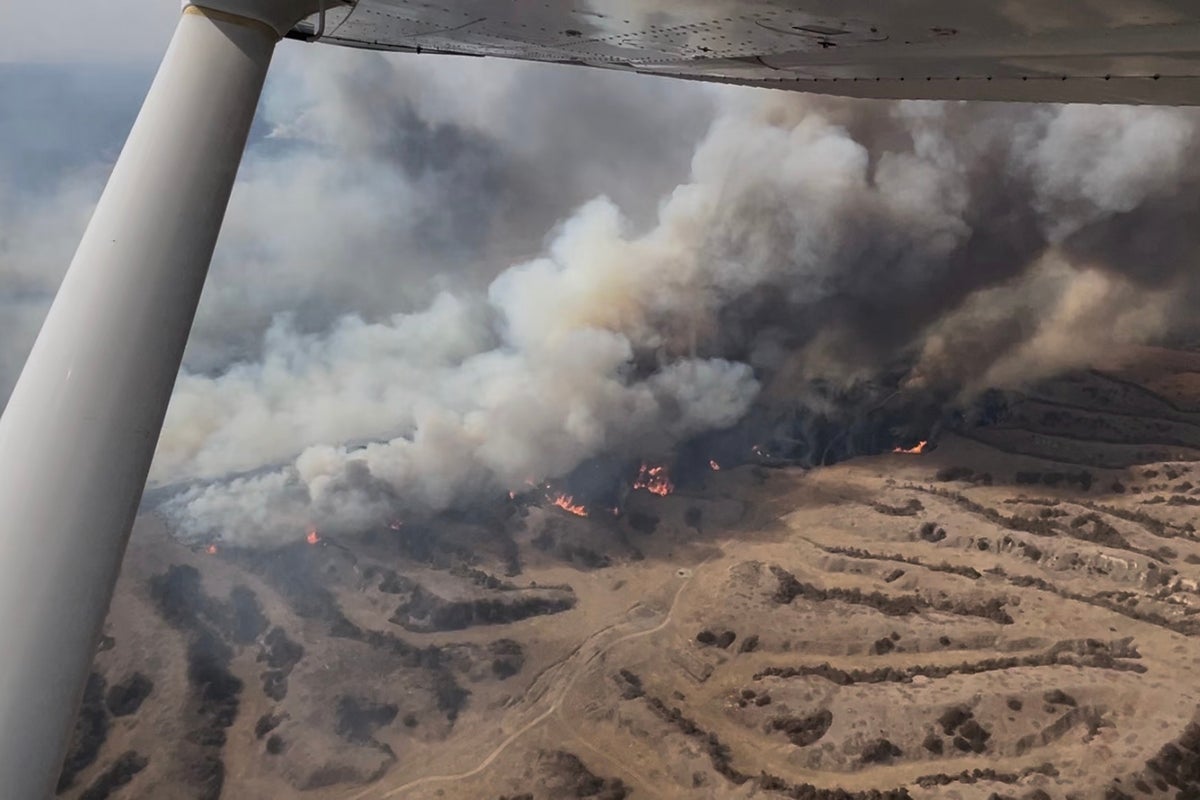
We are currently obsessed with the clock. Headline after headline fixates on the "Day 7" milestone of the Nebraska wildfires as if we are watching a marathon runner hit a wall. The narrative is always the same: brave crews, shifting winds, and the "looming danger." It is a script written in 1950, performed in 2026, and it is fundamentally broken.
The "danger" isn't the wind. The danger is a century of aggressive fire suppression that has turned the Great Plains into a tinderbox. We treat fire like an invading army that must be repelled at the border. In reality, fire is a janitor we’ve locked out of the building for seventy years. Now that the janitor is kicking down the door to deal with the mountain of trash we’ve let pile up, we act shocked. You might also find this similar coverage interesting: Strategic Asymmetry and the Kinetic Deconstruction of Iranian Integrated Air Defense.
If you are waiting for the winds to die down so we can "win" this fight, you are asking the wrong question. The question isn't how we stop the fire today. It's why we were arrogant enough to think we could stop it forever.
The Suppression Paradox
Every dollar spent "dousing" a flame in a grassland ecosystem is a down payment on a bigger disaster five years from now. This isn't a theory; it is the Suppression Paradox. As discussed in detailed reports by Al Jazeera, the implications are notable.
When we stop small, low-intensity fires, we allow woody encroachment—specifically the Eastern Red Cedar—to take over Nebraska’s grasslands. These trees are essentially vertical cans of gasoline. They don't just burn; they explode. By "protecting" the land from fire, we have curated a landscape that is now capable of producing fires so hot they sterilize the soil and kill the very root systems that prevent erosion.
I’ve stood on charred ridgelines where "successful" suppression efforts ten years prior led to a total ecological collapse during the next heatwave. We aren't saving nature. We are inflating a bubble. And like any bubble, the pop is catastrophic.
The Weather Scapegoat
News outlets love to blame the wind. It’s an easy villain. "If only the gusts would subside, we’d have the upper hand."
This is a convenient lie. We use weather as an excuse for poor land management. Nebraska’s climate has always featured high-velocity wind events and dry spells. That is the definition of the Great Plains. Building a strategy that relies on "cooperative weather" is like building a boat that only works when the water is dry.
We focus on the $100,000-per-hour slurry bombers because they look great on the evening news. They provide the illusion of control. But aerial suppression in high-wind grassland fires is often a performative waste of resources. Most of that retardant drifts or evaporates before it hits the fuel bed. It is theater designed to make the public feel like "something is being done."
The Counter-Intuitive Fix: More Smoke
The only way to stop having "Day 7" crises is to have "Day 1" intentionality. We need more smoke in the air during the "safe" months, not less.
- Mandatory Prescribed Burns: We need to stop treating fire permits like a hobbyist's request. In many jurisdictions, the liability for a prescribed burn that gets out of control is so high that land managers won't risk it. We need to shift the legal framework: make landowners liable for the fuel load they accumulate, not just the fire they light.
- Defund the Bombers, Fund the Goats: This sounds like a joke. It isn't. Targeted grazing and mechanical removal of invasive cedars do more to break fire lines than a fleet of 747 Supertankers ever will. We are subsidizing the "cure" while ignoring the "prevention."
- Redefining "Containment": A fire is not "contained" just because there is a line around it. If the interior is still packed with volatile fuels, that line is a suggestion, not a border. We need to stop reporting percentages and start reporting fuel-load reduction.
The Brutal Truth of the Wildland-Urban Interface
People are building homes in places that are biologically destined to burn. We call these "tragedies" when they catch fire. A more honest term would be "statistical certainties."
When we divert massive resources to save a single cabin built in a cedar-choked canyon, we often leave the broader landscape to melt. We are prioritizing private property over ecosystem health, and in the process, we are making the entire region less safe.
If you want to live in the beauty of the Nebraska breaks, you must accept that fire is your neighbor. If you haven't cleared a 100-foot defensible space and replaced your cedar siding with non-combustible materials, you aren't a victim of a wildfire. You are an active participant in its spread.
Stop Waiting for the Rain
The "danger" will always loom as long as we treat fire as an anomaly. It is not an anomaly. It is a biological necessity.
The crews in Nebraska are exhausted because they are fighting a ghost. They are trying to hold back a natural process that has been bottled up for too long. The pressure is too high. The "Day 7" fatigue is a symptom of a management philosophy that refuses to admit defeat.
We don't need the winds to ease. We need our arrogance to ease. We need to stop fighting the fire and start working with the inevitability of it.
The next time you see a headline about a "brave battle" against a prairie fire, remember that the most courageous thing we could do is put down the hose, pick up the drip torch, and burn the fuel on our own terms before the wind does it for us.
Stop hoping for a calm day. Start preparing for a black one.

.jpeg?width=1200&auto=webp&trim=0%2C0%2C399%2C0)