The obsession with lineage is the first sign of a creative drought.
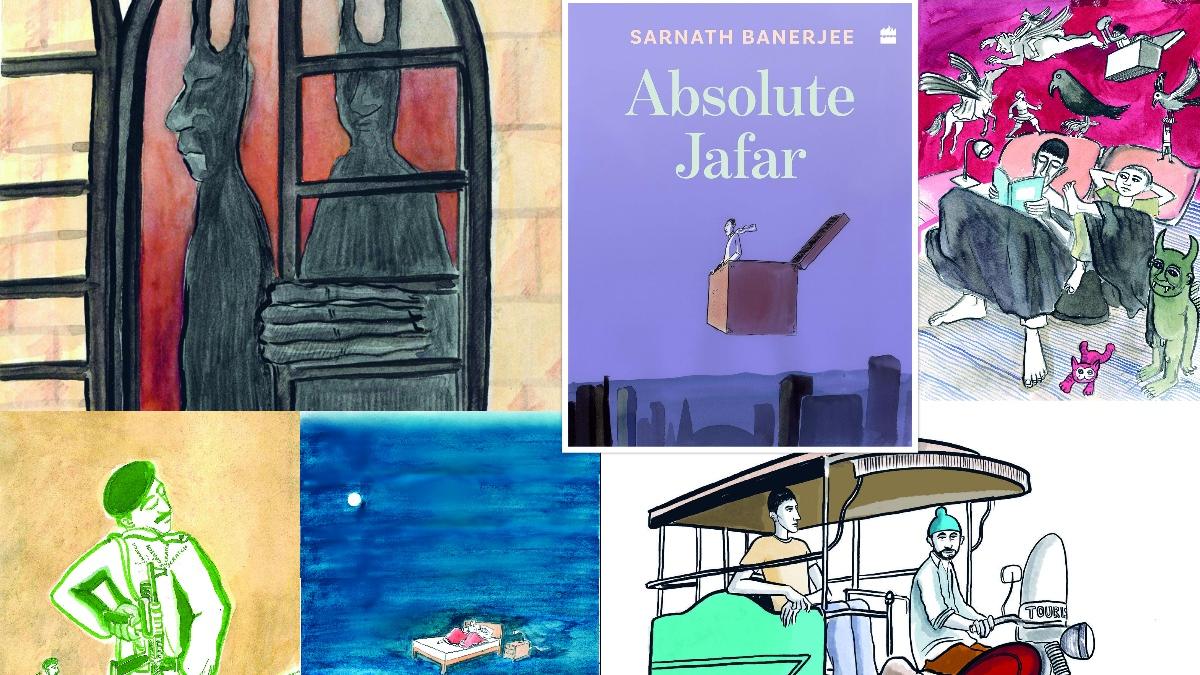
Whenever a prominent Indian graphic novelist like Sarnath Banerjee releases a work, the cultural gatekeepers immediately scramble to find a historical tether. They ask about M.V. Dhurandhar. They look for ghosts of the Bombay School of Art. They try to validate a modern, digital-age medium by anchoring it to a 19th-century academic painter who probably wouldn't have known what to do with a speech bubble.
It’s lazy. It’s intellectually dishonest. And frankly, it’s killing the medium.
The "lazy consensus" in Indian arts journalism suggests that every sketch of a flâneur in a Delhi or Mumbai alleyway is a direct descendant of colonial-era draftsmanship. We are told that referencing the greats provides "depth." In reality, it provides a convenient exit strategy for artists who are failing to innovate within the visual grammar of the 21st century.
The Dhurandhar Delusion
M.V. Dhurandhar was a master of the "Indianized" academic style—a man who navigated the tension between British instruction and Indian soul. To ask a contemporary graphic novelist if they are "influenced" by him is like asking a Tesla engineer if they were inspired by a Victorian horse carriage. Sure, they both have wheels, but the mechanical logic is entirely different.
Graphic novels are not just "drawings with words." They are a sophisticated system of sequential storytelling that relies on the "gutter"—the space between panels where the reader’s mind connects two separate moments in time. Dhurandhar dealt in the static, the iconic, and the illustrative.
When critics push this comparison, they are performing a high-brow defensive maneuver. They want to elevate the "comic book" to the status of "Fine Art" by association. By doing so, they strip the graphic novel of its most potent weapon: its status as a disruptive, populist, and messy medium.
The Flâneur is a Ghost
We need to talk about the "flâneur."
Banerjee and his contemporaries have built a brand on the wandering observer—the man who walks the city and records its oddities. It’s a trope that felt fresh in Corridor (2004). Twenty years later, it’s a stylistic crutch.
The middle-class intellectual wandering through a changing urban landscape has become the "Live, Laugh, Love" of Indian graphic literature. It’s safe. It’s palatable to European publishers who want a specific, nostalgic version of India that smells of old paper and rain-soaked concrete.
But look at the reality of the Indian street today. It isn't a slow-motion walk through a bazaar. It is a high-velocity, digital-first, neon-lit, socio-political powder keg. By clinging to the aesthetic of the "gentleman observer," creators are missing the actual pulse of the country. They are drawing the past and calling it the present.
Why the "Graphic Novel" Label is a Trap
I’ve seen publishers pour hundreds of thousands into "prestige" hardcovers that sell fewer than five hundred copies. Why? Because they are chasing the "Graphic Novel" label as a badge of sophistication rather than a functional storytelling tool.
In the West, the term "Graphic Novel" was a marketing trick used by Will Eisner and later popularized by Art Spiegelman to tell bookstores, "Hey, this isn't for kids, please don't put it next to Archie." In India, we skipped the "trashy" phase and went straight to the "literary" phase.
We missed the evolution. We don't have a thriving ecosystem of single-issue pulps, underground zines, or genre-defying weekly serials. We have high-concept books that look great on a coffee table but fail to move the needle on a cultural level.
- The Expertise: I’ve sat in rooms with distributors who can’t move "artistic" Indian comics because the creators refuse to engage with genre.
- The Reality: If you aren't selling to the masses, you aren't a movement; you're a boutique.
The Myth of Visual Literacy
People often ask: "Why hasn't the Indian graphic novel exploded like Manga or French Bande Dessinée?"
The standard answer is "lack of visual literacy." Critics claim Indian audiences just don't know how to read images yet.
That is absolute nonsense.
India has some of the highest visual literacy in the world. We have been decoding complex iconography for millennia. From the narrative scrolls of Patachitra to the visual shorthand of Bollywood posters, the Indian eye is incredibly sophisticated.
The problem isn't the audience. It’s the content.
The current crop of "serious" graphic novels is often too self-indulgent, too obsessed with its own intellectualism, and too terrified of being "entertaining." There is a persistent fear that if a comic has a plot, or—heaven forbid—action, it loses its status as Art.
The Nuance Everyone Misses: The Digital Disconnect
While the literary elite are arguing about Dhurandhar, the real revolution is happening on Instagram and Webtoon.
There is a generation of Indian artists who couldn't care less about the "literary graphic novel." They are making short-form, high-impact visual commentary that reaches millions. They are using the "vertical scroll"—a new visual grammar that is as significant as the invention of the panel.
These creators are the true descendants of the populist tradition. They are the ones actually documenting the "city," not by walking through it with a sketchbook, but by living in its digital reflections.
The "controversial truth" is that the 200-page black-and-white hardcover is becoming an architectural relic. It is a format designed for a world that moved at a different speed.
The Danger of "Indian-ness"
There is a crushing pressure on Indian creators to perform a specific kind of "Indian-ness."
If you draw a book set in London, it’s "derivative." If you draw a book set in a mythical Vedic past or a crumbling Kolkata mansion, it’s "authentic."
This creates a feedback loop of clichés. We see the same sepia tones, the same hand-lettered fonts, and the same meditations on memory. We are trapped in a museum of our own making.
True disruption happens when an artist stops trying to be an "Indian Artist" and just becomes an artist. Look at the global success of creators who lean into hyper-specificity without the burden of "representation." When you stop trying to explain your culture to an outsider, you actually start creating something worth reading.
The Technical Failure: Why Layouts Matter More Than Lines
Let’s get technical. The biggest weakness in modern Indian graphic storytelling isn't the drawing; it's the cinematography.
Most creators are illustrators first and storytellers second. They create beautiful individual images, but they don't understand the "eye-path."
Imagine a scenario where a reader opens a page. Their eye should be led effortlessly from top-left to bottom-right, guided by the weight of the ink, the placement of the balloons, and the internal geometry of the panels.
Instead, we get cluttered pages that require "work" to decipher. This isn't "challenging art"; it's bad design. We are so focused on the "Dhurandhar-esque" quality of the line that we forget that a comic is a machine for moving a story through time.
Stop Asking the Wrong Questions
The question shouldn't be "Was your book influenced by Dhurandhar?"
The question should be:
"Why should a 19-year-old in a tier-2 city care about your book?"
"Does this story require the visual medium, or could it have been a mediocre essay?"
"Are you pushing the boundaries of what a page can do, or are you just illustrating a script?"
The industry is at a crossroads. We can continue to produce expensive, niche products for a shrinking circle of coastal intellectuals who like the idea of graphic novels more than the books themselves. Or, we can burn the pedestals.
We need to stop treating the graphic novel as a fragile artifact that needs protection. It’s a brawling, loud, dirty medium. It belongs in the hands of the people, not on the walls of a gallery.
If the Indian graphic novel is to survive, it must kill its ancestors. It must stop looking for validation in the oil paintings of the past and start looking at the chaos of the present.
Throw away the sketchbook. Pick up a digital pen. Stop walking. Start running.
The flâneur is dead. Long live the creator.
Don't buy a book because it's "important." Buy it because it's undeniable. If it isn't making you uncomfortable, it isn't doing its job.