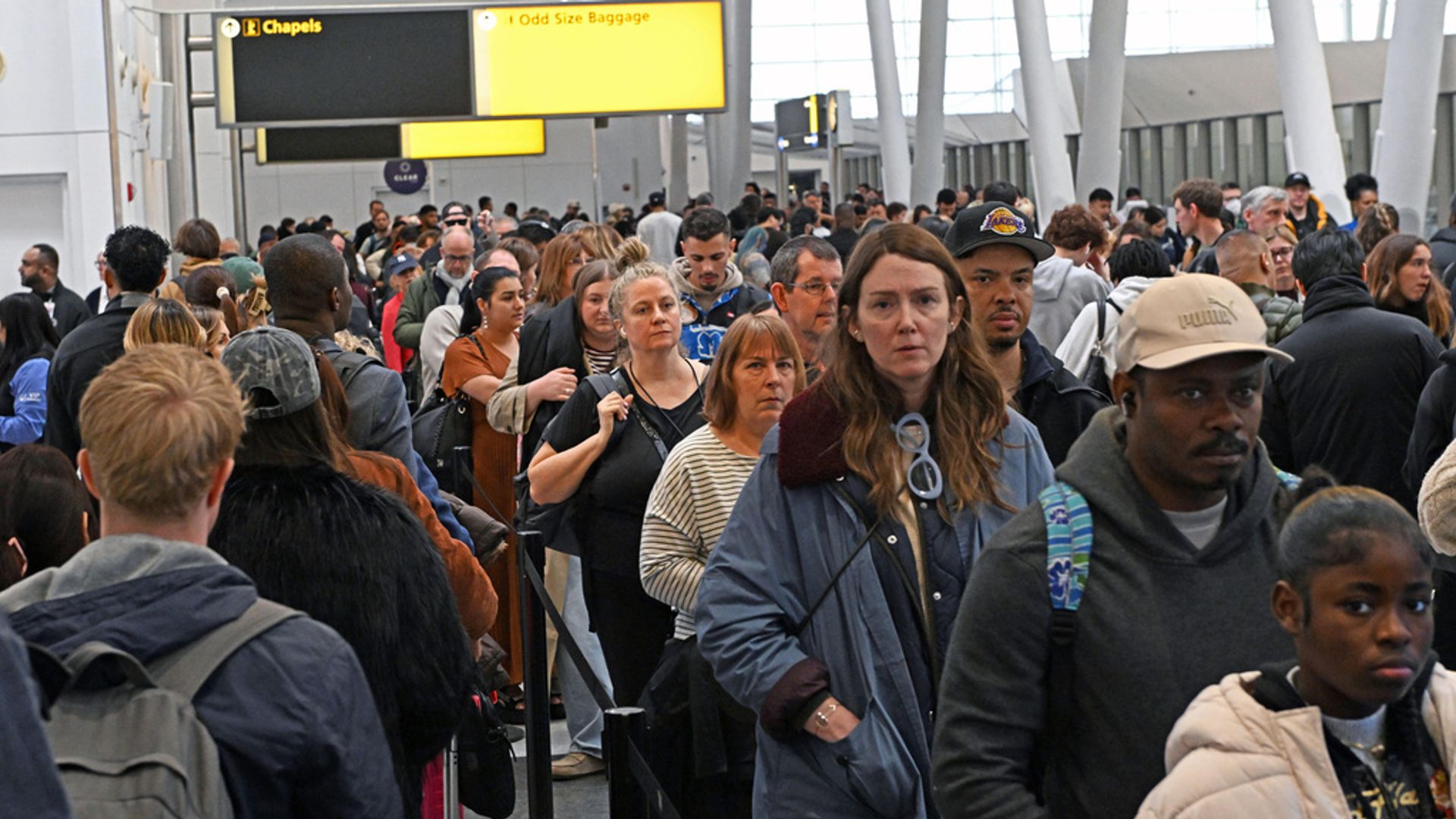
The British press is currently obsessed with a phantom menace. They are churning out frantic reports about "new EU rules" and "border chaos" as if the European Union suddenly decided to install a labyrinth between the duty-free shop and the boarding gate. It is a convenient lie. It sells papers. It gives the average holidaymaker a villain to shake their fist at while they sit on a cold floor in Terminal 5.
Here is the truth: The rules aren’t the problem. Your refusal to acknowledge that travel has changed—and your reliance on outdated "hacks"—is what’s costing you your flight.
We are witnessing the death of the "casual traveler." The era of showing up ninety minutes before a flight with a printed PDF and a sense of entitlement is over. If you missed your flight because of the Entry/Exit System (EES) or the 10-year passport rule, you didn't fall victim to a "crackdown." You fell victim to your own lack of preparation.
The Passport Rule Myth That Refuses to Die
Let's address the biggest piece of misinformation clogging up the headlines: the 10-year validity rule. For years, the UK issued passports with extra months carried over from previous documents. You might have a passport that says it expires in June 2026, but if it was issued in January 2016, it is already "dead" for EU travel the moment it hits that ten-year anniversary.
The media frames this as a "hidden trap." It isn't hidden. It has been the standard for years. The real failure here is a collective refusal to read the fine print. I have seen travelers scream at gate agents, waving their 10-year-plus-three-months passports as if their indignation can rewrite international law.
The rule is binary:
- Your passport must be less than 10 years old on the day you enter.
- It must have at least three months of validity left on the day you plan to leave.
If you are waiting until the month before your trip to check these dates, you are gambling with your annual leave. The "unpredictable" wait times at the Passport Office aren't an excuse; they are a constant. Treat them as a fixed cost of doing business.
Biometrics Aren't the Enemy, Efficiency Is
The upcoming Entry/Exit System (EES) is being treated like the arrival of the Four Horsemen. Critics argue that scanning fingerprints and taking photos at the border will create "miles-long tailbacks."
This assumes that the previous manual system—where a bored border guard squinted at a blurry photo and manually stamped a page—was the pinnacle of German engineering. It wasn't. It was slow, prone to human error, and fundamentally unscalable.
The EES is a data play. Once the initial registration "hump" is cleared, the flow of traffic will eventually surpass the old manual methods. The friction we see now isn't a design flaw; it's a transition cost. The smart traveler doesn't complain about the kiosks; they learn how to use them.
The Fallacy of the Three-Hour Rule
"Show up three hours early," the airlines say. "It’s a disaster," the tabloids scream.
Both are wrong. Showing up three hours early is a defensive crouch that actually contributes to the congestion. When thousands of people for 10:00 AM flights show up at 6:00 AM, they clog the security lines for the people whose flights are actually departing. This "buffer creep" creates a self-fulfilling prophecy of chaos.
The problem isn't the amount of time you spend in the airport; it's what you do before you get there.
- Digital Wallets: If you are still fumbling with paper boarding passes in 2026, you are the bottleneck.
- Bag Hygiene: Every time a "liquids" bag gets pulled for inspection because someone forgot a tube of lip balm, the entire line slows by an average of three minutes. Multiply that by 200 people.
- Check-in Logic: If you have a bag to drop, you aren't a "traveler"—you're cargo. Carry-on only is no longer a lifestyle choice; it’s a tactical necessity for anyone who values their time.
Why the "Missing Flights" Narrative is Useful to Airlines
Airlines love it when you blame "EU rules" for missing your flight. Why? Because it absolves them of the responsibility to staff their check-in desks. If they can point to a "border crisis" as the reason you missed your departure, they don't have to compensate you under UK261 or similar regulations.
They are leaning into the chaos narrative to mask their own operational lean-to-the-point-of-breaking models. I’ve watched carriers close bag drops exactly 60 minutes before a flight, knowing full well the security queue is two hours long. They get to keep your money, and you get to tweet angrily at a government department that doesn't care.
The Infrastructure Delusion
We are trying to run 21st-century passenger volumes through 20th-century terminals. Dover wasn't built for post-Brexit checks, and many European regional airports were designed for a fraction of the budget-airline traffic they now handle.
The "contrarian" take here is that travel should actually be more expensive and more difficult. The era of the £15 flight to Benidorm created an unsustainable expectation of frictionless movement. When something is that cheap, you aren't the customer; you're the inventory. And inventory gets moved when it's convenient for the warehouse, not the other way around.
If you want a seamless experience, you have to pay for it. Fast-track security, private lounges, and flexible tickets aren't luxuries anymore—they are insurance policies against a crumbling infrastructure.
Stop Asking if it’s "Fair"
The most common question in travel forums is: "Is it fair that I lost my holiday because of a rule I didn't know?"
The answer is irrelevant. Logistics don't care about fairness. The border doesn't care about your "intent" or how hard you worked for your vacation.
Stop looking for sympathy and start looking for data.
- Check your passport issued date, not just the expiry.
- Register for any digital pre-clearance apps the moment they become available.
- Treat "gate closing" times as the absolute limit, not a suggestion.
The "chaos" is only for those who are reacting to the world as it was five years ago. The rules have changed. The stakes have changed. Either adapt your process or get used to the view from the departure lounge floor.
Stop reading the warnings. Start reading the regulations.
Go check your passport issued date right now. Not tomorrow. Now.