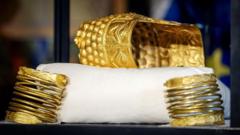
Art thieves used a homemade firework bomb and a sledgehammer to blow open the doors of the Drents Museum in the Netherlands. They grabbed a 2,500-year-old golden helmet, snatched three ancient armbands, and vanished into the night. It was January 2025, and the heist felt like a bad movie plot.
Fast forward to April 2026, and the legendary Helmet of Coțofenești is finally back. Heavily armed, balaclava-clad police just unveiled the artifact at a packed press conference in Assen. It's a massive win for art investigators, but the story behind how we got here—and what this artifact actually represents—is wilder than the theft itself.
If you just look at the headlines, it's a simple story about recovered loot. Look a little closer, and you'll see a messy intersection of international diplomacy, motorcycle gangs, desperate plea deals, and ancient psychological warfare.
The Heist That Almost Sparked a Diplomatic Crisis
Let’s be honest about something. When a small museum in a quiet Dutch city loses a priceless foreign national treasure on the very last weekend of an exhibition, people are going to get fired. And they did. The head of the National History Museum of Romania was axed shortly after the robbery for approving the loan in the first place.
To understand why this caused such a massive uproar, you have to understand what this helmet means to Romania. For the Dutch, this would be like someone marching into a gallery and slicing Rembrandt’s The Night Watch right out of its frame.
The Helmet of Coțofenești isn't just a pretty piece of gold. It is a cultural icon of the lost Dacian civilization, dating back to around 450 BC. When the theft happened, Romanian officials lost their minds—and rightfully so. Romanian politicians called the incident a "crime against our state."
The Dutch government ended up paying out a staggering 5.7 million euros in insurance compensation to Romania while the search dragged on. That is a lot of taxpayer money on the line for a museum security failure.
How Investigators Bored the Truth Out of the Suspects
Everyone in the art world was terrified the thieves would simply melt the helmet down. Solid gold is easy to melt and impossible to trace once it's liquid.
But investigators had a hunch that didn't happen. Why? Because the Dutch police moved fast. They rounded up three primary suspects from the town of Heerhugowaard just four days after the explosion. The problem was that the suspects weren't talking. For over a year, they sat in pre-trial hearings and kept their mouths shut.
Authorities tried every trick in the book to locate the stash:
- They offered to slash one suspect's prison sentence in half.
- An undercover officer posing as a criminal boss reportedly offered 400,000 euros for the location.
- Police put up a direct 100,000-euro reward for tips.
Ultimately, it wasn't the cash that worked. It was a classic legal squeeze. With the trial set to begin in mid-April 2026, the suspects' defense team finally handed over the helmet and two of the three stolen bracelets on April 1 as part of a negotiated plea deal.
The third bracelet is still missing. Finding it is the next obvious priority.
The Myth and Magic Hammered Into the Gold
There is a weirdly poetic twist to the recovery. Drents Museum director Robert van Langh pointed out that the helmet is famously decorated with two massive, glaring eyes.
In ancient times, these were apotropaic symbols. Basically, they were hammered into the gold to ward off the evil eye, protect the wearer, and repel dark magic spells. Van Langh joked at the press conference that after surviving centuries of chaos and a modern explosive heist, those gold eyes seem to have done their job.
Visually, the helmet is stunning. It features heavy studs on top and a famous scene on the cheek-pieces depicting a man kneeling to sacrifice a ram with a short knife. It is a masterpiece of Geto-Dacian art, weighing in at almost a full kilogram of electrum (a natural alloy of gold and silver).
It didn't come back completely spotless. The thieves dropped it during the getaway, leaving a small dent. A previous repair made with glue also popped loose. But experts say it can be fully restored to its original state in about an hour of professional work. The two recovered bracelets are in perfect condition.
Now that the artifacts are back in daylight, Romania will be returning that massive 5.7 million euro insurance payout to the Dutch state. The helmet will soon head back to Bucharest, where it belongs.
If you're ever in Romania once it is back on display, go look at it. Just don't blink when it stares back at you.
Keep an eye on the court proceedings starting on April 14, 2026. That is when the full details of the suspects' plea deal will go public, and we will finally learn exactly where this ancient masterpiece was buried for the last fourteen months.