The floor of a heavy munitions factory does not sound like a spreadsheet. It sounds like a heartbeat. Specifically, it sounds like the rhythmic, bone-shaking thud of a hydraulic press shaping high-grade steel into the sleek, lethal geometry of a Caesar self-propelled howitzer. For years, this sound was a murmur in the background of European industry. It was a relic of a twentieth-century anxiety that many believed we had outgrown.
Then the world changed.
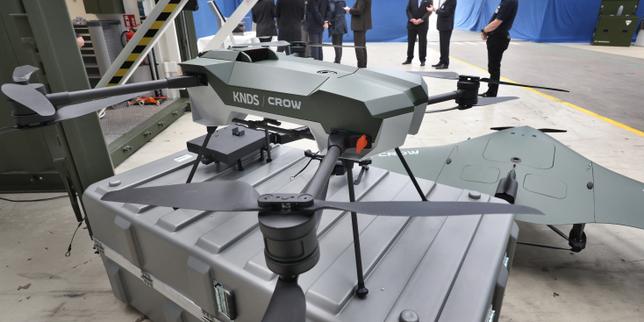
Now, that murmur has become a roar. KNDS, the Franco-German titan born from the union of Nexter and Krauss-Maffei Wegmann, is no longer just a defense contractor. It has become the industrial barometer for a continent that suddenly realized its peace was borrowed. As the company prepares to move toward the stock market, seeking a massive infusion of capital through an Initial Public Offering, it isn't just selling shares. It is selling a stake in the literal rebuilding of European sovereignty.
The Cost of a Long Silence
To understand why a defense company going public matters to anyone outside of a trading floor, you have to look at the people who actually weld the hulls. Consider a technician we will call Marc. For a decade, Marc worked in a facility that felt like a museum. The orders were trickle-thin. Governments talked about "peace dividends" and "soft power." The Caesar cannon, a brilliant piece of French engineering capable of hitting a target miles away and vanishing before the enemy could blink, was a boutique item. It was a masterpiece without a gallery.
Marc and his colleagues lived in a state of managed decline. In that era, the idea of KNDS seeking billions on the public market would have been laughable. Investors wanted software, not hardware. They wanted "disruption" in the form of food delivery apps, not the literal disruption of 155mm artillery shells.
But history has a way of returning with a vengeance. When the first Russian tanks crossed the Ukrainian border, the "peace dividend" vanished overnight. The "tapestry"—to use a word I’ll avoid in favor of something more visceral—the very fabric of European safety was torn. Suddenly, the boutique item became the most hunted prize on the continent. The Caesar wasn't just a machine anymore. It was a lifeline.
The Mathematics of Survival
The shift from a peacetime economy to what French President Emmanuel Macron calls a "war economy" is not a flick of a switch. It is a grueling, expensive, and logistically violent process. KNDS found itself at the center of a paradox: they had the best product in the world, but they didn't have the capacity to feed the hunger of a continent in panic.
Before 2022, Nexter produced maybe two Caesar guns a month. Think about that. Two. In a modern high-intensity conflict, that is less than a rounding error. To scale that up to six, eight, or twelve units a month requires more than just overtime. It requires new assembly lines, a completely overhauled supply chain, and, most importantly, an ocean of cash.
This is where the Stock Exchange enters the narrative.
When a company like KNDS goes to the Bourse, they are looking for the fuel to build the forge. They are looking for the capital to ensure that when a democracy calls for a shield, the shield is actually there. The "invisible stakes" here aren't just about profit margins or dividends. They are about lead times. If it takes three years to deliver a battery of howitzers, those howitzers are useless to the soldiers currently standing in a muddy trench. Money buys speed. Speed buys lives.
The Franco-German Marriage
The story of KNDS is also a deeply human story of two cultures trying to speak the same language. On one side, you have the French—proud, centralized, and viewing defense as the ultimate expression of national grandeur. On the other, the Germans—methodical, wary of militarism due to the weight of their own history, yet possessors of the most formidable industrial engine on the planet.
For years, KNDS was a marriage of convenience that felt more like a cold war. They shared a logo, but they often fought over whose tank would lead the way and whose engineers would hold the pen. The "Main Ground Combat System" (MGCS), the project to build a successor to the Leopard 2 and the Leclerc tanks, became a symbol of this friction.
However, the sheer gravity of the current threat has acted as a catalyst. The bickering has been silenced by the sound of the forge. The move toward a public listing suggests a level of maturity and integration that the company previously lacked. It signals to the world—and to the predatory powers watching from the East—that Europe is finally getting its act together.
The Investor’s Dilemma
If you are an investor, the prospect of KNDS is both exhilarating and terrifying. On one hand, the order books are full for the next decade. Every Ministry of Defense from Warsaw to Paris is clutching a checkbook. The demand is guaranteed. The "product-market fit" is absolute.
On the other hand, defense is a volatile business. It is tethered to the whims of voters and the shifting winds of diplomacy. What happens if a peace treaty is signed tomorrow? What happens if the political will to "rearm" dissolves as quickly as it formed?
Investing in KNDS is an act of cynical realism. You are betting that the world will remain a dangerous place. You are putting your money into the production of things that are designed to destroy other things. There is an emotional weight to that. It isn't like buying shares in a tech company that makes pixels prettier. When KNDS succeeds, it means more cannons are rolling off the line. For some, that is a grim necessity. For others, it is a moral complication.
The Invisible Supply Chain
Let’s go back to the factory floor. The Caesar cannon is not just steel. It is a collection of thousands of tiny parts sourced from hundreds of small family-owned businesses across Europe. There is a man in a small workshop in rural France who makes a specific type of gasket. There is a firm in Bavaria that specializes in the sensors that guide the shell.
When KNDS goes to the stock market, the ripples reach these people. This is the "human element" of the IPO. It provides stability to the entire ecosystem of European engineering. It means that the specialized knowledge—the "know-how" that takes generations to perfect—doesn't disappear.
During the lean years, we almost lost that knowledge. We almost became a continent that knew how to design an app but forgot how to forge a barrel. KNDS going public is a declaration that we are choosing to remember.
Beyond the Ticker Symbol
The roar of the factory floor is getting louder. The rhythmic thud of the presses is accelerating. For Marc, the technician, the shift is no longer about maintaining a museum. It is about a sense of purpose that he hasn't felt in a generation. He knows where these machines are going. He knows the weight of the steel he is shaping.
The financial analysts will talk about "EBITDA," "market capitalization," and "liquidity." They will use cold terms to describe a process that is, at its core, about the survival of a way of life. They will look at KNDS and see a ticker symbol.
But if you look closer, you see something else. You see a continent waking up from a long, comfortable sleep. You see the recognition that freedom is not a natural state, but something that must be built, piece by piece, out of high-grade steel and the sweat of people who have decided that "never again" requires a very large cannon.
The stock market listing is just the paperwork. The real story is the steel. It is the realization that in a world of ghosts and shadows, the most persuasive argument is often the one that weighs eighteen tons and can hit a target from forty kilometers away.
As the first shares change hands, the factory floor will continue its thud. The heartbeat of European industry is back. It is steady. It is loud. And for the first time in a long time, it is synchronized across the Rhine.
Would you like me to look into the specific financial projections of the KNDS IPO or perhaps explore the technological specifications of the MGCS tank project?