The January economic data confirms what many feared but few dared to say aloud. We are stuck. While a technical recession might be dodged by a fraction of a percentage point, the reality on the ground is a flatline. The economy produced exactly zero growth in the first month of the year, paralyzed by a dual-threat of exhausted consumer spending and a supply chain still reeling from distant conflicts. This isn't a temporary dip or a seasonal fluke. It is a structural failure where the tools used to fight inflation have finally started to choke off the oxygen of the marketplace.
Governments and central banks have spent the last eighteen months trying to perform a delicate surgery on the global economy. They wanted to lower prices without killing the patient. They failed. The "war-linked inflation" mentioned in hushed tones in boardroom meetings is no longer a peripheral risk. It is the primary driver of a new, lean era where the cost of moving goods across oceans has become a permanent tax on the middle class.
The Mirage of the Soft Landing
For months, the narrative pushed by official channels was one of resilience. We were told the consumer was strong. We were told that the labor market would act as a safety net. That net has developed significant holes. When growth hits zero, the margin for error vanishes.
The stagnation in January is the direct result of a "wait and see" approach that has backfired. Businesses, spooked by the unpredictability of energy costs and the shipping disruptions in the Red Sea and Eastern Europe, have pulled back on capital expenditure. You cannot grow an economy when the people who own the factories are too afraid to turn on the lights.
This isn't just about high interest rates. While the cost of borrowing has certainly squeezed the life out of the housing market, the deeper issue is the total breakdown of predictable pricing. When a manufacturer cannot tell you what a ton of raw material will cost in three months because a drone strike might happen tomorrow, they stop hiring. They stop expanding. They enter survival mode.
The Energy Tax Nobody Mentions
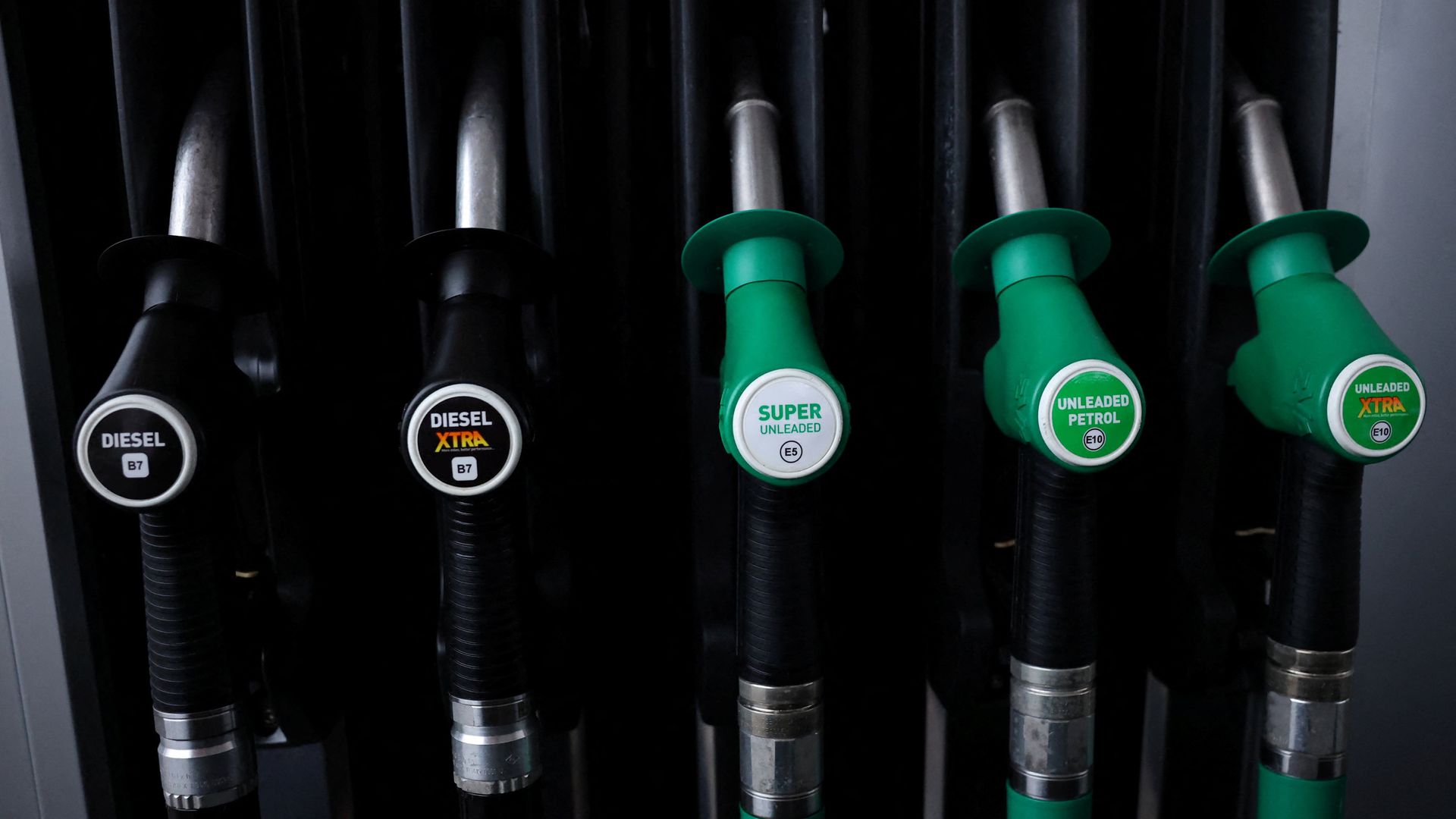
Inflation is often discussed as a monolithic force, but the current wave is specifically tied to the geography of power. We are seeing a "geopolitical premium" baked into every gallon of fuel and every kilowatt of electricity. Even as headline inflation numbers seem to cool in some sectors, the core costs of keeping a modern society running remain stubbornly high.
The transition to greener energy, while necessary, has hit a wall of reality. The bridge fuels—specifically natural gas—are being weaponized in global conflicts. This has created a floor for inflation that central bank interest rate hikes cannot touch. You can raise rates to 10%, and it still won't make a tanker move faster or a pipeline safer. We are trying to solve a supply-side catastrophe with demand-side punishment.
Why the Consumer Finally Broke
Retailers are feeling the burn. For a long time, households managed to stay afloat by draining the savings they accumulated during the pandemic years. That well is dry. Credit card delinquencies are ticking upward for the first time in a decade, and the "revenge spending" on travel and dining has been replaced by a grim focus on the grocery bill.
The January stagnation proves that the consumer can no longer carry the weight of the entire GDP on their back. When the price of basic necessities stays high due to war-linked supply shocks, discretionary spending is the first thing to die. This creates a feedback loop. Small businesses see less foot traffic, they reduce hours for staff, and those staff members then have even less to spend at other businesses.
It is a slow-motion grinding of the gears.
The Invisible Supply Chain Fracture
We used to talk about "just-in-time" manufacturing as the pinnacle of efficiency. Now, it looks like a suicide pact. The reliance on long, fragile supply chains that pass through contested waters has turned into a massive liability.
In January, the impact of these fractures became undeniable. Parts didn't arrive. Shipments were diverted around the Cape of Good Hope, adding weeks of transit time and millions in fuel costs. These costs don't just disappear; they are passed down the line until they hit the person buying a toaster at a big-box store. The "zero growth" figure is the mathematical representation of a world that has become too expensive to function at its previous speed.
The Policy Failure of the Century
The people in charge are looking at the wrong map. They are using 20th-century economic models to solve 21st-century geopolitical problems. The obsession with a 2% inflation target is starting to look like a fetish rather than a functional policy.
By keeping rates high to fight inflation caused by war and scarcity, central banks are making it impossible for the very companies that could fix the supply issue to get the financing they need. If we need more domestic energy, more efficient logistics, and more local manufacturing, we need investment. But investment is currently priced at a premium that the average entrepreneur cannot afford.
It is a circular trap. We keep the economy stagnant to stop prices from rising, but the lack of growth prevents the innovation that would eventually bring prices down.
The Reality of the Global Re-Ordering
We are witnessing the end of the era of cheap everything. The globalization that defined the last thirty years was built on the assumption of permanent peace between major powers. That assumption is dead.
The inflation we see now isn't just a spike; it's a recalibration. Moving forward, growth will be harder to find because the hidden subsidies of global stability have been removed. We are now paying the real price for our goods, including the cost of protecting the routes they travel and the political risk of the countries they originate from.
The Strategy for Survival
If you are waiting for a return to the "old normal," you are going to go broke. The stagnation of January is a signal that the rules have changed.
Businesses need to prioritize redundancy over efficiency. This means holding more inventory, sourcing closer to home, and accepting lower margins in exchange for higher reliability. It is a hard pill to swallow for a generation of managers raised on the gospel of lean operations, but the alternative is total paralysis whenever a new conflict breaks out.
Investors need to look toward the sectors that provide the fundamental architecture of the new economy. Defense, localized energy production, and automated logistics are no longer optional "trends." They are the only areas where growth is likely to persist in a high-inflation, low-stability environment.
The economic outlook is indeed clouded, but the fog is mostly of our own making. We ignored the risks of over-globalization and under-investment in domestic resilience. Now, the bill has come due, and January was just the first payment.
Stop looking at the monthly GDP charts and start looking at the map. The geography of the world is now the geography of your wallet. If the routes are blocked and the factories are silent, no amount of financial engineering is going to save the quarterly earnings report. The era of easy growth is over. The era of the "geopolitical tax" has begun.
Calculate your exposure to the next supply shock today. If your business model relies on a peaceful world and cheap credit, you don't have a business model—you have a hope. And hope is not an economic strategy.