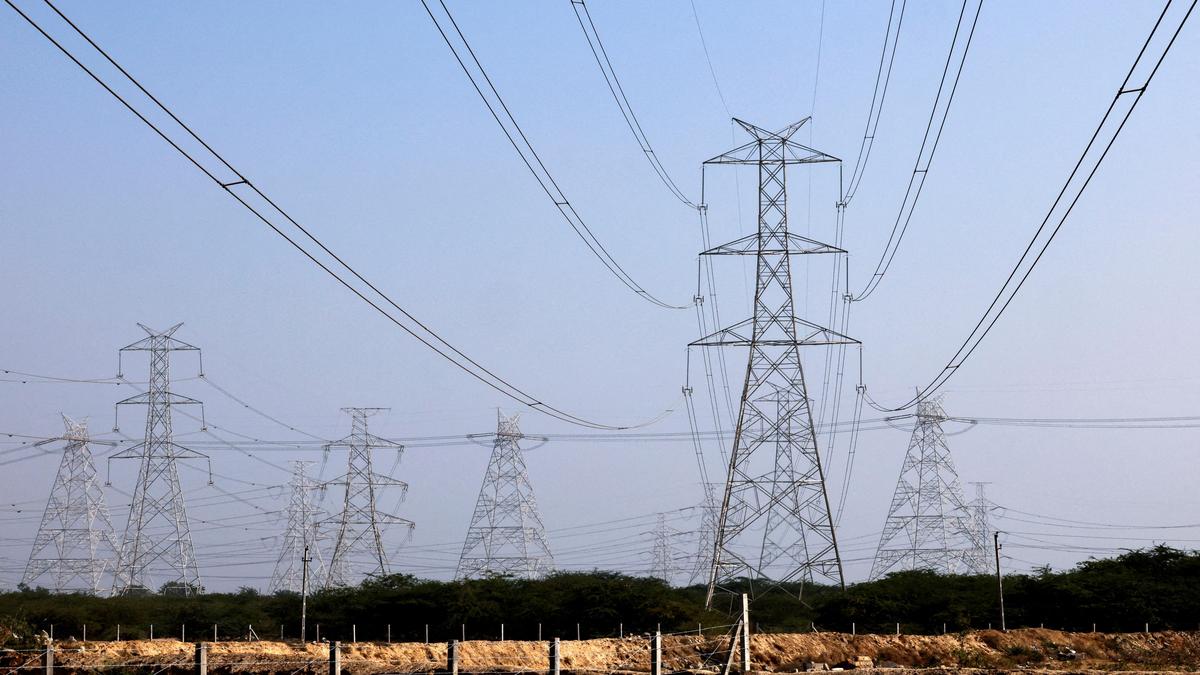
Sri Lanka is panicking because the Ceylon Electricity Board (CEB) just hiked tariffs and issued "strict" energy conservation guidelines. The media is mourning. The public is furious. The "experts" are calling it a death knell for the manufacturing sector.
They are all wrong. For a more detailed analysis into this area, we recommend: this related article.
The lazy consensus suggests that cheap, subsidized power is a human right and a prerequisite for economic growth. This is a fairy tale. Subsidies are not a discount; they are a high-interest loan taken out against the country’s infrastructure, paid back in the form of grid collapses, rolling blackouts, and a total lack of innovation. By raising prices, Sri Lanka isn’t "punishing" the consumer. It is finally performing an overdue autopsy on a bloated, inefficient monopoly and forcing the private sector to actually compete.
Stop looking at the tariff hike as a cost. Start looking at it as the only mechanism capable of killing the "subsidy trap" that has kept the country’s energy grid in the dark ages. To get more information on this development, detailed analysis can be read at Forbes.
The Myth of the "Cheap Power" Advantage
Economists often argue that low energy costs provide a competitive edge for developing nations. In reality, artificially low prices lead to capital misallocation. When electricity is "cheap" because the government is eating the loss, businesses have zero incentive to invest in energy-efficient machinery or smart-grid integration. They stay fat and happy on 1970s tech while the rest of the world moves toward high-precision, low-energy manufacturing.
I’ve watched industries in South Asia cling to ancient induction motors and leaky HVAC systems because the math for an upgrade didn't "pencil out" against subsidized rates. The moment those rates hit market reality, the CFOs suddenly find the budget for VFDs (Variable Frequency Drives) and IoT monitoring. High prices are the primary driver of industrial modernization. Without the sting of a high bill, "efficiency" is just a buzzword in a corporate social responsibility report.
Why "Conserving" Is a Loser’s Game
The government’s new guidelines focus on "conservation." Switch off the lights. Turn down the AC. Use less.
This is poverty-mindset thinking. It assumes that the goal of an economy is to shrink its footprint until it disappears. A growing economy needs more energy, not less. The problem in Sri Lanka isn't that people are using too much electricity; it’s that the marginal cost of production is decoupled from the marginal utility of consumption.
When you tell a factory to "conserve," you are telling them to reduce output. That’s a recipe for a recession. Instead of conservation, the focus must be on Energy Intensity.
$$Energy\ Intensity = \frac{Total\ Energy\ Consumption}{GDP}$$
The goal isn't to use less power; it’s to generate more dollars per kilowatt-hour ($kWh$). By raising tariffs, the CEB is forcing a shift from low-value, energy-heavy production to high-value, tech-driven output. If your business model only survives when the government pays half your light bill, you don't have a business—you have a charity case.
The CEB Monopoly: A Dead Man Walking
The competitor articles love to focus on the "burden on the common man." They ignore the fact that the CEB has been a fiscal black hole for decades. In any other industry, a company that loses money on every unit sold while maintaining a total monopoly would be dismantled by the morning.
The tariff hike is a signal that the monopoly is failing. And that is excellent news.
High prices create a "bypass incentive." When the grid becomes expensive, the ROI on rooftop solar, industrial-scale battery storage, and microgrids suddenly drops from ten years to three. We are witnessing the forced democratization of energy.
- Distributed Generation: Factories will stop begging the CEB for more load and start building their own solar arrays.
- Energy Arbitrage: Smart companies will install Lithium Iron Phosphate (LiFePO4) storage to draw power during off-peak windows and run on batteries during peak tariff hours.
- Deregulation: As the "big players" exit the grid, the CEB will lose its leverage, eventually forcing a breakup of the generation, transmission, and distribution arms.
Imagine a scenario where 40% of Colombo’s commercial district is powered by interconnected building-to-building microgrids, completely independent of the national supplier. That doesn't happen when power is cheap. It only happens when the cost of staying on the grid becomes unbearable.
The Solar Fallacy and the "Intermittency" Tax
Don't mistake this for a "green" fluff piece. Most people advocating for a pivot to renewables ignore the System Integration Cost. You cannot just slap solar panels on every roof and call it a day. The grid requires "firm" power—electricity that is there when the sun isn't.
$$Total\ Cost = Generation\ Cost + Integration\ Cost + Backup\ Cost$$
As Sri Lanka pushes toward renewables to offset high fossil fuel costs, the public needs to understand that the "free" energy from the sun comes with a massive "intermittency tax" in the form of grid stabilization and storage. The recent tariff hikes are, in part, a down payment on this transition. Anyone telling you that switching to 100% solar will immediately lower your bills is lying to you. It will make the system more resilient, but the capital expenditure required is astronomical.
The Brutal Truth About Manufacturing
"But the export sector will collapse!"
If an apparel manufacturer in Sri Lanka cannot compete with a factory in Vietnam or Bangladesh because of a 20% increase in electricity costs, the electricity isn't the problem. The problem is labor productivity, supply chain logistics, and a lack of automation.
In high-cost energy environments like Germany or Japan, manufacturers don't whine about the bill; they engineer their way out of it. They use heat recovery systems to recycle waste energy. They use AI-driven load balancing to shave peak demand.
Sri Lankan industry has been coddled. The "pain" of these new tariffs is actually the friction required to generate heat. Without that friction, the country will continue to produce low-value commodities while the rest of the world moves toward high-complexity exports.
Stop Asking "When Will Prices Go Down?"
That is the wrong question. The right question is: "How do I make my energy consumption irrelevant to my bottom line?"
The era of cheap, state-funded electrons is over. Not just in Sri Lanka, but globally. The transition from centralized fossil fuel generation to decentralized, renewable-heavy grids is inherently inflationary in the short term.
The winners of the next decade won't be those who successfully lobbied the government for a tariff reversal. They will be the ones who:
- Redesigned their facilities for passive cooling to kill HVAC load.
- Invested in proprietary energy storage.
- Treated $kWh$ as a raw material to be optimized, not an overhead cost to be ignored.
The tariff hike isn't an obstacle. It's the starting gun for a race toward a modern, decentralized economy. If you’re still waiting for the government to "fix" the prices, you’ve already lost.
Get off the grid, or get efficient. There is no third option.