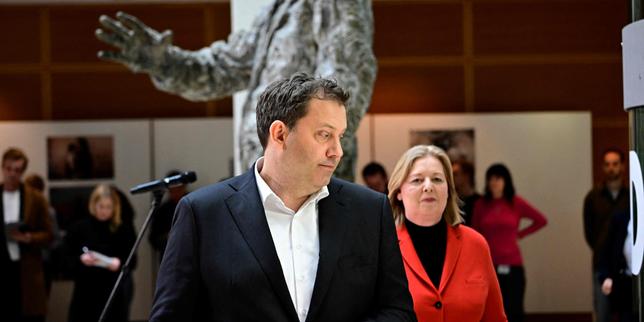
The German Social Democratic Party is currently in a state of controlled panic. After a string of bruising electoral defeats, most notably in regional contests and the European elections, the oldest political party in Germany has decided its brand is the problem. They’re calling it a "social-liberal turn." I call it a desperate identity crisis that could alienate the very people who still bother to show up for them.
If you’ve followed German politics for more than five minutes, you know the SPD has always struggled to balance its pro-labor roots with the demands of a modern, globalized economy. But this recent shift isn’t just a minor adjustment. It’s a full-blown retreat from the left-leaning promises that helped Olaf Scholz clinch the Chancellery in 2021. The party leadership seems convinced that the only way to stop the bleeding is to move closer to the center, mimicking the fiscal conservatism of the FDP and the security rhetoric of the CDU. It’s a risky gamble.
The Myth of the Middle Ground
Political strategists in Berlin love to talk about the "center." They think that’s where the votes are. In reality, the center is a crowded, confusing space where parties go to lose their souls. By pivoting toward social-liberalism, the SPD is trying to appeal to urban professionals and moderate conservatives who are tired of the AfD but don’t quite trust the Greens.
This strategy ignores a massive reality. The voters the SPD lost didn't go to the center. They went to the fringes or they stayed home. When workers in the Ruhr valley or the industrial hubs of the East see their party talking about "fiscal responsibility" and "market-driven solutions," they don't see a party that represents them. They see more of the same neoliberalism that has squeezed the middle class for two decades.
The SPD leadership argues that they need to show "economic competence." In German political shorthand, that usually means cutting spending and keeping the debt brake (Schuldenbremse) intact. But you can't build a modern infrastructure or transition to a green economy on a shoestring budget. By adopting the language of their coalition partners, the SPD is essentially admitting that their own traditional platform is obsolete. It’s a self-inflicted wound.
Security and Migration as a Distraction
Part of this rightward drift involves a much tougher stance on migration and internal security. The SPD is suddenly very keen on deportations and border controls. This is a direct response to the rise of the AfD, which has successfully turned every election into a referendum on "who belongs in Germany."
It’s easy to see why the SPD is scared. When you lose double-digit percentages to a far-right party, you want to do something—anything—to make it stop. But chasing the AfD on migration is a losing game. If voters want hardline anti-immigrant policies, they’ll go to the original source, not a watered-down version from a center-left party.
The SPD used to win because they focused on the "social" in Social Democracy. They talked about rents, pensions, and wages. Now, they’re spending their energy trying to out-tough the conservatives on crime. It’s a distraction from the fact that they haven't solved the housing crisis or fixed the crumbling rail system. People don't just want "security" in terms of police on the street; they want economic security. They want to know they can afford their heat bill and that their kids have a future.
Breaking the 2021 Promises
During the last federal election, the SPD campaigned heavily on the idea of "Respect." It was a brilliant slogan. It targeted the "forgotten" workers—the nurses, the delivery drivers, the factory staff. They promised a higher minimum wage and stable pensions. They won because people believed they’d finally put labor back at the heart of the government.
This new social-liberal turn feels like a betrayal of that "Respect" agenda. When the party starts talking about "incentivizing work" through welfare cuts or stalling on rent controls to appease developers, the "Respect" promise rings hollow.
Let's look at the numbers. Real wages in Germany have struggled to keep up with inflation over the last two years. The manufacturing sector, the backbone of the economy, is facing a structural crisis. Volkswagen is talking about closing plants for the first time in history. In this climate, the SPD should be the loudest voice in the room demanding massive public investment and worker protections. Instead, they’re debating how to make the labor market more "flexible."
The FDP Trap
The SPD is currently trapped in a "traffic light" coalition with the Greens and the FDP. The FDP, led by Christian Lindner, has been incredibly effective at holding the government hostage with their obsession with the debt brake.
By shifting toward a social-liberal stance, the SPD is basically surrendering to Lindner’s worldview. They think that by meeting the FDP halfway, they can make the coalition function more smoothly and look "governable" to the public. But all they’re doing is making themselves look weak. If the SPD doesn't stand for something distinct from the liberals, why does the SPD even exist?
A History of Failed Pivots
This isn't the first time the SPD has tried this. You might remember the "Agenda 2010" reforms under Gerhard Schröder in the early 2000s. Back then, it was also called a necessary modernization. It was supposed to make Germany the "sick man of Europe" healthy again by slashing unemployment benefits and deregulating the labor market.
Technically, the reforms worked to lower unemployment, but at a massive social cost. It created a huge low-wage sector and fractured the SPD. The party lost hundreds of thousands of members and hasn't truly recovered its dominant status since. The current pivot feels like Agenda 2010 Part Two. The leadership thinks they’re being pragmatic, but they’re actually just repeating the mistakes of the past. They’re trading their long-term identity for a short-term bump in the polls that might never even come.
What a Real Social Democratic Turn Looks Like
If the SPD actually wanted to win back voters, they wouldn't be looking at social-liberalism. They’d be looking at a bold, unapologetic social-industrial policy. Germany is at a crossroads. The transition to electric vehicles and renewable energy is terrifying for millions of workers whose jobs depend on internal combustion engines and cheap gas.
A real Social Democratic party would be leading the charge on:
- Massive state-led investment in new industries to replace the ones that are dying.
- A "Job Guarantee" for workers displaced by the green transition.
- Radical housing reform that treats shelter as a right, not a speculative asset.
- Taxing extreme wealth to fund the schools and hospitals that are currently falling apart.
Instead, we get debates about how many people can be deported to Afghanistan or how to slightly tweak the tax code to help "the middle." It’s uninspiring. It’s small-minded. And it’s exactly why the party is sitting at 15% in the polls.
The "social-liberal" label is just a fancy way of saying "we give up." It’s an admission that the party no longer believes it can change the fundamental economic structures of the country. They’re settling for being the junior managers of a system that isn't working for the majority of Germans.
The Strategy for Survival
The SPD needs to stop being afraid of its own shadow. They spend so much time worrying about what the tabloid Bild will say or how the markets will react that they’ve forgotten how to lead. Leadership isn't about following the polls; it’s about changing them.
If you’re a member of the SPD or a voter who still cares about social justice, the next few months are critical. The party is drafting its platform for the 2025 federal election. If this social-liberal shift becomes the official party line, the SPD risks becoming a permanent junior partner in German politics—a vestigial organ of a once-great movement.
Don't buy the narrative that there’s "no alternative" to austerity and border crackdowns. There’s always an alternative. It just requires the courage to stand for something. The SPD used to have that courage. It’s time they found it again.
If you want to understand where the party is actually headed, watch the upcoming labor union conferences. Watch how the party handles the next budget showdown. If they fold on the debt brake again, you’ll know the "social-liberal" turn is complete, and the workers of Germany are officially on their own.
Check the latest polling data from infratest dimap to see if this pivot is actually moving the needle. It usually isn't. Keep an eye on the internal opposition from the Jusos (the party's youth wing). They’re the only ones still putting up a fight for the party's soul. Supporting their efforts is basically the only way to pull the SPD back from the ledge. It's not just about one party; it's about whether the left in Germany has any future at all.