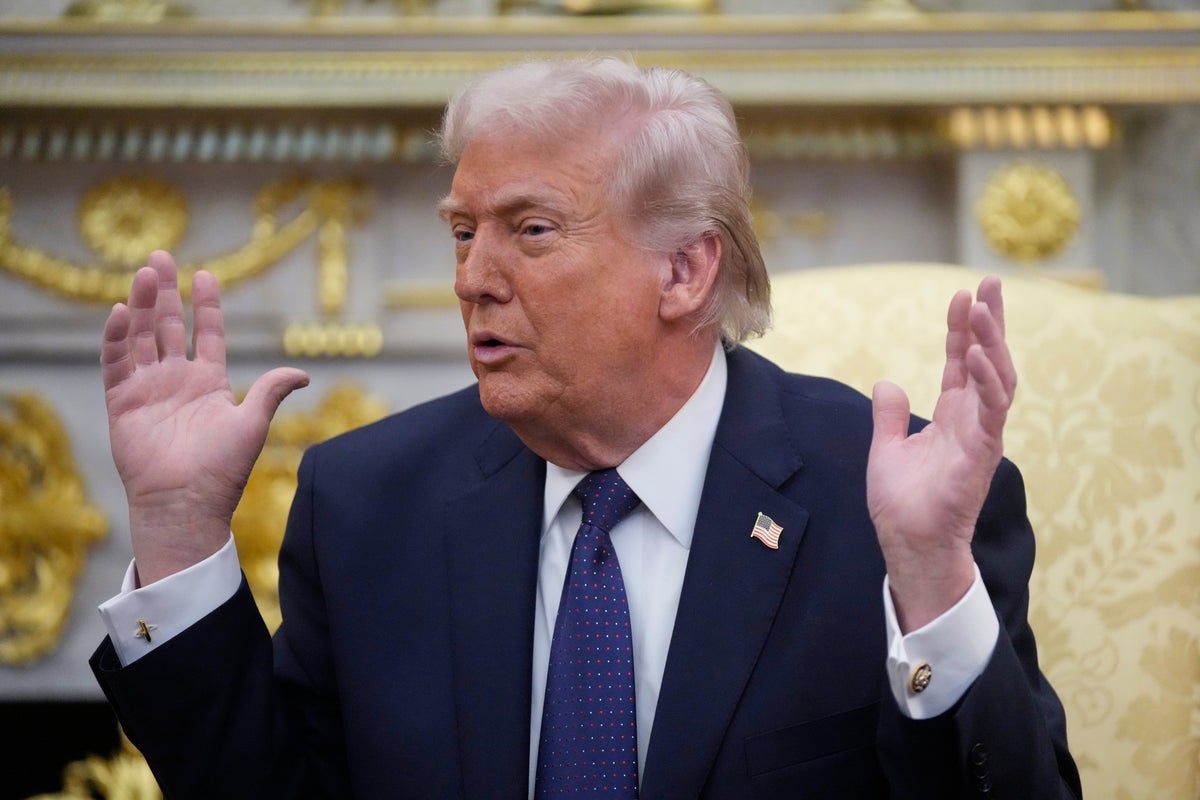
Donald Trump just signaled the most aggressive rupture in the NATO alliance since its 1949 inception by threatening a total trade embargo against Spain. The move follows Madrid’s refusal to permit American aircraft to use joint military bases at Rota and Morón for strikes against Iran, a decision Spanish Foreign Minister José Manuel Albares grounded in a strict adherence to the United Nations Charter. In the Oval Office on Tuesday, alongside a visibly uncomfortable German Chancellor Friedrich Merz, Trump declared that he had already instructed Treasury Secretary Scott Bessent to "cut off all dealings" with the eurozone’s fourth-largest economy.
The logic from the White House is as much about accounting as it is about ammunition. Trump remains fixated on Spain’s refusal to meet his 5% of GDP defense spending target, a benchmark he has successfully imposed on almost every other European ally. By framing the base denial as an act of "unfriendliness," the administration is testing a new legal theory: that the Supreme Court’s recent rejection of broad global tariffs actually cleared a path for country-specific total embargoes under national security mandates.
The Geography of Defiance
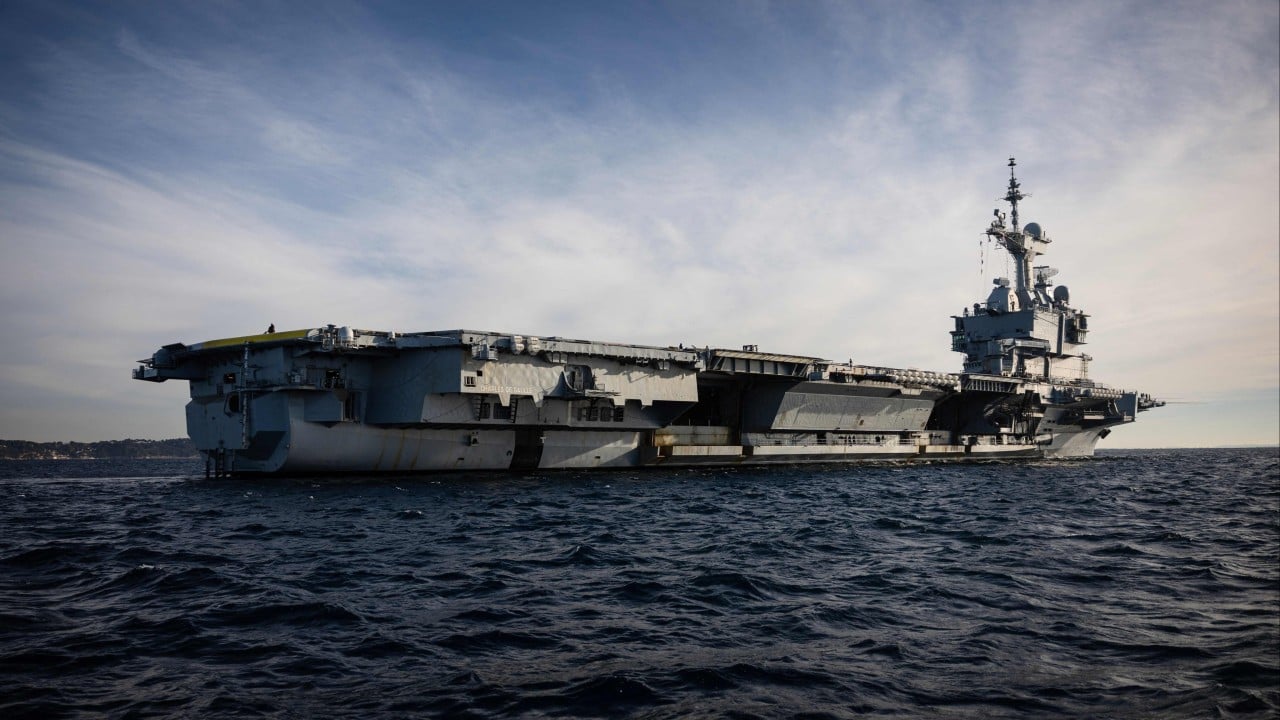
For decades, the Naval Station Rota and Morón Air Base have served as the fundamental hinges of American power projection into the Mediterranean and Africa. They are not merely refueling stops. Rota is the homeport for four U.S. Navy Aegis destroyers, the backbone of Europe’s ballistic missile defense. By blocking their use for the current conflict with Iran, Prime Minister Pedro Sánchez has effectively neutralized a key piece of the American global chessboard.
Spain’s calculation is rooted in a domestic reality that the White House seems to ignore. Sánchez leads a fragile left-wing coalition that views the current offensive in the Middle East as an "unjustifiable intervention." For Madrid, sovereignty isn't a bargaining chip for trade concessions; it is a legal shield against being dragged into a regional war without a UN mandate.
The Economic Blast Radius
The threat of a total trade cutoff is being treated by many in Madrid and Brussels as a bluff, but the numbers suggest a high-stakes gamble for both sides. The United States currently maintains a trade surplus with Spain, exporting $26.1 billion in goods last year while importing $21.3 billion. If Trump follows through, he is effectively firing on his own balance sheet.
| Sector | Impact of Potential Embargo |
|---|---|
| Olive Oil | Spain is the world’s top exporter; prices in the U.S. would quintuple overnight. |
| Aerospace | Supply chains for Boeing and Airbus components would be severed. |
| Energy | U.S. LNG exports to Spain—a critical alternative to Russian gas—would cease. |
| Automotive | Major U.S. manufacturers in Spain, like Ford, would face an operational vacuum. |
Treasury Secretary Scott Bessent has already indicated that the Treasury and Commerce Departments will begin formal "investigations" to penalize Spain. However, the European Union operates as a single trade bloc. An embargo on Spain is, by treaty and law, an embargo on the entire EU. Friedrich Merz made this clear after his meeting with Trump, stating that there is "no way to treat Spain particularly badly" without triggering a collective European response.
The 5 Percent Fracture
The deeper rot in the relationship stems from the June summit in The Hague, where Trump demanded NATO members move from the 2% spending target to 5%. While Germany and Poland pivoted under pressure, Spain held firm at 2.1%. Trump’s rhetoric suggests he views this as a form of financial "theft."
"They have absolutely nothing that we need other than great people," Trump remarked, dismissing a country that is the 11th-largest investor in the United States. This transactional view of diplomacy ignores the reality of the Rota-Morón complex. You cannot easily relocate a deep-water port capable of servicing a carrier strike group or an airbase that sits at the literal crossroads of three continents.
Sovereignty vs. Superpower
The administration’s claim that it can "just fly in and use" the bases regardless of Spanish permission is perhaps the most dangerous rhetoric to emerge from the Oval Office in years. It is an open threat to the territorial integrity of a NATO ally. If the U.S. military were to ignore Spanish air traffic control or dock vessels against the express orders of the Spanish government, the North Atlantic Treaty would effectively be dead.
Spain’s response has been one of cold professionalism. They are betting that the "autonomy of private companies" and the weight of international law will hold the line. But for the American businesses integrated into the Spanish industrial landscape—chemicals, pharmaceuticals, and machinery—the uncertainty is already acting as a de facto tax.
The era of the "reliable ally" is over, replaced by a system of "wrecking-ball politics" where trade is the primary weapon of war and military bases are treated like rented office space. Madrid has signaled it will not blink. The question is whether Washington realizes that cutting off Spain means cutting off the very infrastructure that allows the U.S. to operate in that hemisphere at all.
The standoff is no longer about Iran or defense budgets. It is about whether the Atlantic alliance can survive a leader who views a treaty as a subscription service that can be canceled at the first sign of a dispute. If the embargo begins, the ships at Rota may find themselves in a harbor that has suddenly become very small and very cold.