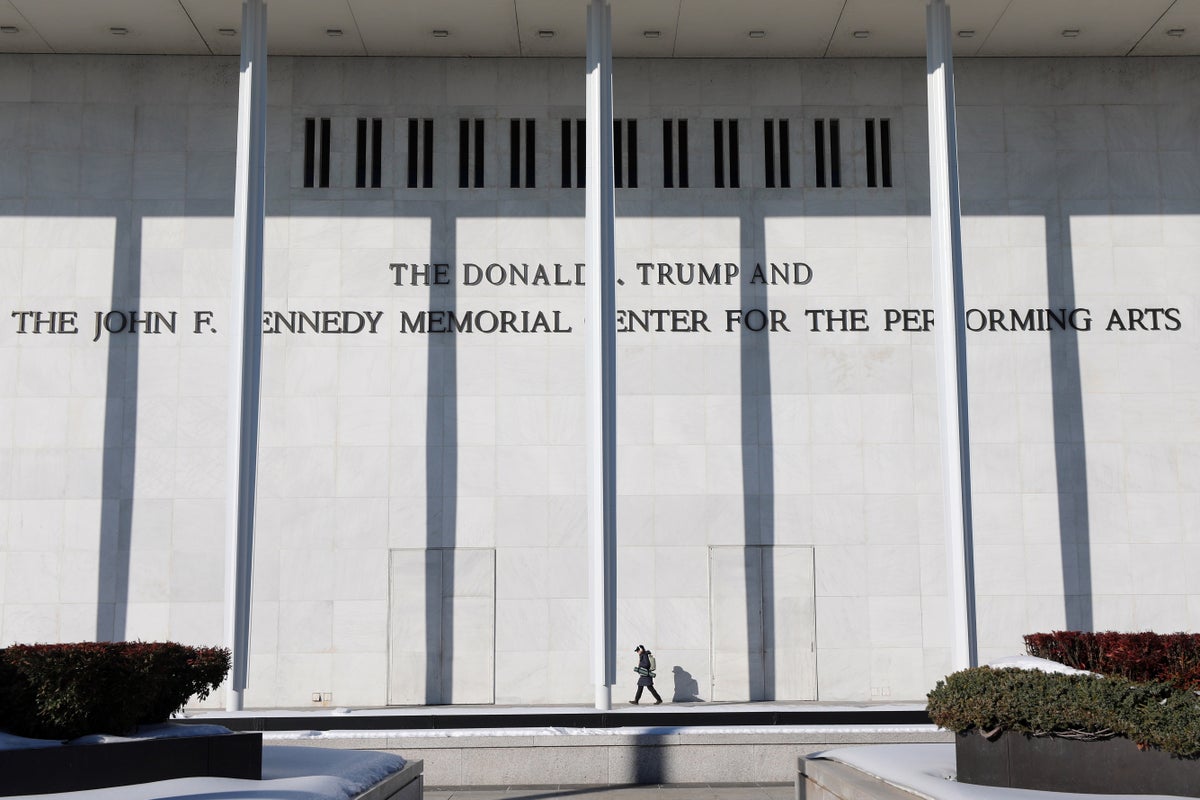
The media loves a "gotcha" moment that involves a tech mishap. When a lawmaker accuses a high-profile figure like Donald Trump of excluding them from a Kennedy Center meeting, only to discover the invitation was rotting in a spam folder, the internet treats it like a sitcom plot. It is framed as a personal embarrassment or a funny quirk of the digital age.
That perspective is lazy. It misses the systemic decay of professional communication in the highest levels of government.
This isn't a story about a missed email. This is a story about the total collapse of operational standards. If a high-stakes invitation to meet with the President of the United States—or any head of state—ends up in a junk folder, the failure isn't the filter. The failure is the person behind the screen. We have become so reliant on automated systems that we have forgotten how to actually manage information.
The Myth of the "Unfortunate Accident"
The narrative surrounding this incident suggests that "technology failed us." That is a lie. Spam filters are designed to work on probability. They are aggressive because the alternative is a flooded inbox that renders the tool useless.
In a high-stakes political environment, relying on a standard Gmail or Outlook filter to handle diplomatic protocol is the equivalent of leaving the keys to the White House under a doormat and being surprised when a burglar finds them.
I have seen corporate executives lose multi-million dollar contracts because they "didn't see the email." In the private sector, that results in a firing. In Washington, it results in a press release blaming the algorithm. We are validating incompetence by treating "check your spam" as a valid excuse for a breakdown in national communication.
The Death of the Follow-Up
Why was there no phone call? Why was there no physical courier? Why was there no second attempt?
The "lazy consensus" here is that sending an email constitutes communication. It does not. Sending an email is merely a data transfer. Communication requires confirmation of receipt.
In any functional organization, a meeting of this magnitude would involve a multi-channel approach:
- Digital: The initial invite.
- Verbal: A staff-to-staff phone call to confirm availability.
- Physical: A printed agenda or formal invitation.
By stripping away these layers, we have made our government "efficient" but incredibly fragile. We are running a nuclear superpower with the same logistical rigor as a weekend brunch group chat. When the stakes are this high, "I didn't see it" should be an admission of professional negligence, not a get-out-of-jail-free card.
Algorithms Are the New Scapegoat
Politicians have discovered a brilliant new way to avoid accountability: blame the black box.
If you want to snub a rival without looking like the aggressor, you send the invite from an unverified server or a new address that you know will trigger a flag. If you want to claim you were silenced, you simply ignore your inbox and wait for the "censorship" narrative to bake. I am not saying that happened in this specific Kennedy Center instance, but the precedent is now set.
We are entering an era where "The Algorithm Ate My Homework" is a legitimate political strategy. By accepting the "spam folder" excuse at face value, we are giving every bad actor in D.C. a blueprint for plausible deniability.
The Reality of Government IT
Let's talk about the technical debt. Most government agencies are running on infrastructure that would make a Silicon Valley intern weep. They use legacy systems patched together with digital duct tape.
When you mix high-security protocols with outdated software, you get "false positives." You get crucial communications being diverted to the void. This isn't a glitch; it's the baseline.
If you are a lawmaker and you aren't white-listing the executive branch's domain, you aren't doing your job. If you are the executive branch and you aren't verifying that your invites were received by the opposition, you are intentionally creating a vacuum.
Why You Should Stop Empathizing With the Mistake
The common reaction to this story is, "Oh, I've done that too."
Stop. You are not a United States Representative. You are not managing the optics of the Kennedy Center. Your stakes are a missed dental appointment or a 20% off coupon for shoes.
When we project our own personal tech struggles onto world leaders, we lower the bar for what we expect from them. We should expect—demand—that their offices operate with a level of redundancy that makes "spam" an impossibility.
The Protocol for Real Professionals
If you are handling high-value communication, you follow these rules or you fail:
- The 24-Hour Rule: If you don't get a "confirmed" reply within one business day, you pick up the phone.
- The Dedicated Liaison: High-stakes meetings are brokered by people, not servers. If there isn't a human-to-human connection, the meeting doesn't exist.
- Domain Reputation Management: If your emails are consistently hitting spam, your IT department has failed to manage your SPF, DKIM, and DMARC records. This is a technical failure of the sender as much as the receiver.
The Brutal Truth About Digital Laziness
We have traded a culture of "getting it right" for a culture of "sending it out."
The lawmaker who complained about being excluded was more interested in the grievance than the attendance. If she actually cared about being at the table, her staff would have been hounding the organizers the moment the meeting was whispered about in the halls.
Conversely, if the organizers wanted her there, they wouldn't have relied on a single point of failure.
The "spam folder" is the perfect metaphor for modern politics: a place where important things go to die because nobody cared enough to check the lock.
Stop blaming the software. Start blaming the people who think a "Sent" status is a substitute for leadership.
Pick up the phone. Confirm the receipt. Do the work.