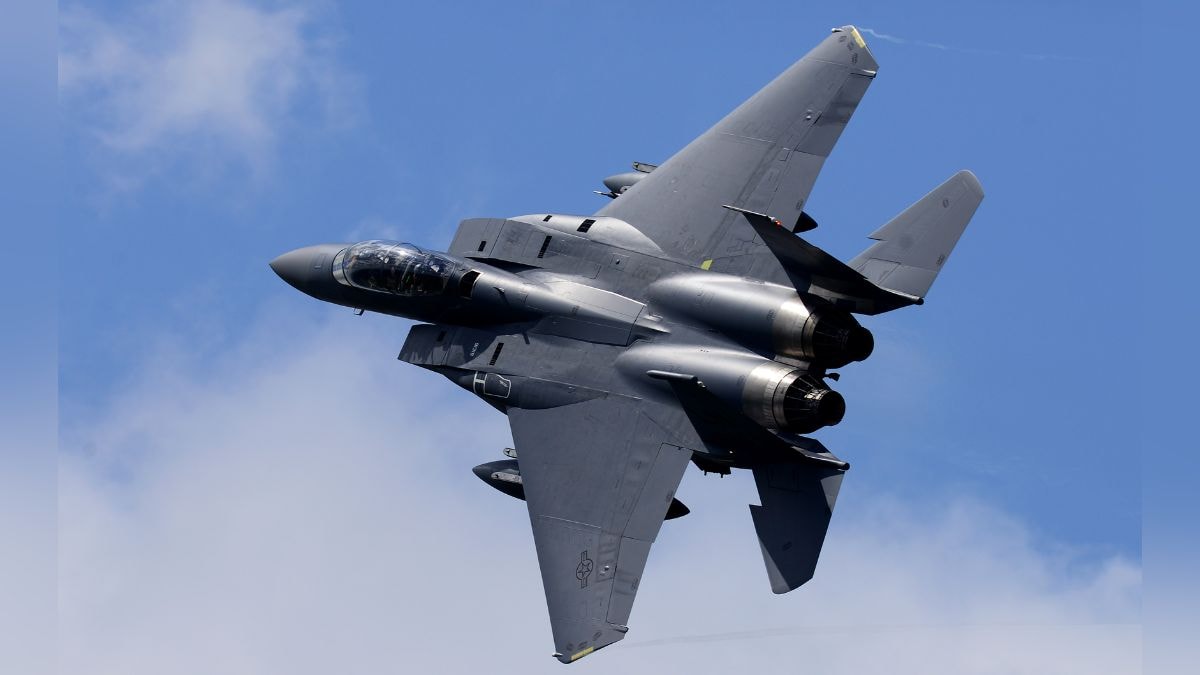
The headlines are screaming about a "rift" in NATO. They want you to believe that Madrid has grown a spine, stood up to the Pentagon, and sent American fighter jets packing because they refuse to be a launchpad for a strike on Iran.
It is a beautiful narrative for anyone who loves a David vs. Goliath story. It is also fundamentally wrong.
If you believe the US Air Force is "leaving" Spain because of a diplomatic spat, you are falling for a surface-level interpretation of a much deeper, more calculated shift in global power projection. This isn't a breakup. It is a re-tooling. The idea that Spain is suddenly a neutral bystander in Mediterranean security is a fantasy sold to appease local voters while the real logistics of war move behind a curtain of administrative jargon.
The Base Myth and the Rota Reality
The common argument claims that Spain’s refusal to allow its territory for offensive operations against Iran forced a US withdrawal. This assumes that the US military operates like a houseguest who leaves if they aren't allowed to use the grill.
In reality, the US presence in Spain—specifically at Naval Station Rota and Morón Air Base—is governed by the Agreement on Defense Cooperation (ADC). This isn't a handshake deal. It is a deeply integrated structural dependency.
When you see aircraft "leaving," you aren't seeing a retreat. You are seeing the implementation of Agile Combat Employment (ACE).
The Pentagon has realized that massive, static bases are nothing more than target practice for modern ballistic missiles. Whether it's Iran's Fateh-110 or higher-end hypersonic threats, parking a fleet of F-15s or tankers at a known coordinate in Spain is a 20th-century strategy. The "withdrawal" the media is buzzing about is actually a transition toward rotational, unpredictable deployments.
The US isn't leaving Spain because Spain said "no." The US is moving assets because staying still is suicide.
Sovereignty is a Performance
Let’s look at the "refusal" itself.
Publicly, Spanish officials must maintain the optics of sovereignty. The domestic political climate in Madrid is a minefield. Any Prime Minister who openly signs off on using Spanish soil to ignite a regional war in the Middle East is committing political hara-kiri.
But talk to anyone who has actually managed flight paths and refueling orbits. The US doesn't need to launch a strike from Morón to make Morón essential to a strike.
Logistics is the boring part of war that determines who wins. If a strike package departs from a carrier in the Eastern Mediterranean or a base in Djibouti, they still need the massive logistical tail that Rota and Morón provide. Cargo, maintenance, and medical evacuation don't require "offensive" status.
Spain gets to keep its "anti-war" credentials. The US keeps its most important logistics hub in the Atlantic. Everybody wins, except the person reading the news who thinks a genuine geopolitical shift just occurred.
The Iran Distraction
The obsession with Iran misses the bigger picture. The US military is currently obsessed with the GIUK gap (Greenland, Iceland, United Kingdom) and the movement of Russian submarines in the Atlantic.
Spain is the gatekeeper of the Mediterranean. To think the US would abandon that gate over a disagreement about Tehran is to misunderstand the hierarchy of American interests. The Mediterranean is the flank of the European theater.
If the US is shifting air assets, it’s not because they are "mad" at Spain. It’s because the mission has changed. We are seeing a pivot toward high-end maritime patrol and electronic warfare. Heavy bombers and strike fighters are being repositioned to locations like Al-Udeid in Qatar or Camp Lemonnier in Djibouti, which are closer to the actual target sets.
Moving a squadron of F-15s out of Spain isn't a punishment. It's a tactical optimization. Why fly six hours from Spain when you can fly two hours from a closer regional partner who doesn't have a vocal anti-war voting bloc?
The Costs of the "Contrarian" Stance
I have seen planners burn through millions of dollars trying to maintain the "big base" model because it's comfortable. It’s easy to manage. But the second a theater turns hot, those bases become liabilities.
The real story isn't that Spain said "no." The real story is that the US Air Force is finally admitting that its footprint in Europe is outdated.
Why the "Refusal" Narrative is Dangerous
- It overestimates European agency: European nations are so deeply integrated into the US intelligence and logistics lattice that "opting out" of a conflict is nearly impossible.
- It underestimates US flexibility: The US doesn't need a specific base anymore. Between aerial refueling and long-range precision fires, a base is just a gas station.
- It ignores the technical reality: Modern warfare is about data links and sensor fusion. As long as Spain hosts the ground stations and the cables, they are involved, regardless of where the jets take off.
Stop Asking if They Left
People keep asking: "Will the US return to Spain?"
You’re asking the wrong question. You should be asking: "How much of the US military is already there under a different name?"
The US isn't a tenant that can be evicted. It is the architect of the building. The "leaving" of aircraft is a shell game designed to keep the public quiet while the machinery of global surveillance and logistics continues to hum in the background.
Spain hasn't kicked the US out. The US has simply moved its pieces to a different square on the board to keep the game going. If you think this is a victory for Spanish neutrality, you don't understand how the hardware works.
The planes are gone. The infrastructure remains. The mission hasn't changed; it just got a new coat of paint.
Go back and look at the tail numbers. Watch the transponders. The "refusal" was a press release. The logistics are forever.